

 Posted by
 Uncover the key differences between gluten-free and regular pizza, from texture and flavor to cost. Pizza has always been one of those foods that brings people together. Whether you are grabbing a slice on a Friday night or ordering in for a movie marathon, pizza is comfort food at its finest. But what happens when gluten enters the conversation and suddenly you find yourself standing in front of a menu, wondering if gluten-free pizza can measure up to the traditional version you have loved your entire life?
I remember the first time I tried gluten-free pizza. My friend had just been diagnosed with celiac disease and we were determined to find a pizza place that could accommodate her without making her feel like she was missing out. The pizza arrived and I have to admit, I was skeptical. How could something made without traditional wheat flour possibly taste like real pizza?
The truth is that gluten-free pizza and regular pizza are more different than you might think, yet they share the same soul. Both aim to deliver that perfect combination of crispy crust, tangy sauce, melted cheese, and your favorite toppings. But the journey to get there takes very different paths.
Regular pizza dough relies on wheat flour, which contains gluten proteins that give the dough its characteristic stretch and chew. When you knead traditional pizza dough, those gluten strands develop and create a network that traps air bubbles during fermentation. This is what gives you that perfect bite, that slight resistance when you sink your teeth into a slice, followed by a tender interior with just the right amount of chewiness.
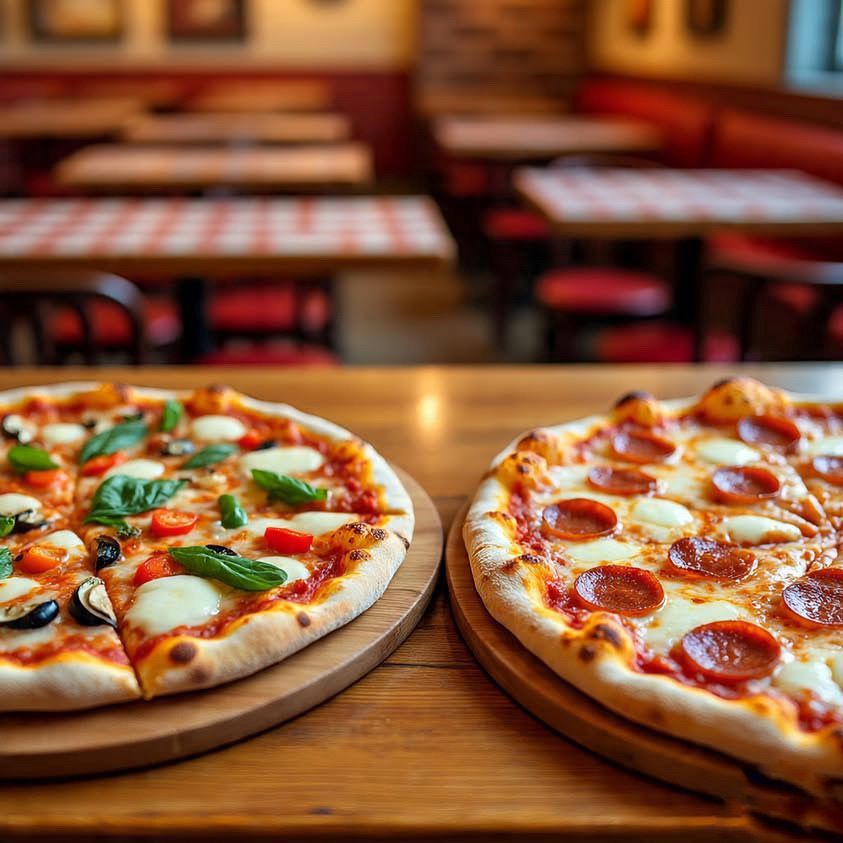
Gluten-free pizza dough, on the other hand, has to work a lot harder to achieve something similar. Without gluten to provide structure, bakers turn to alternative flours like rice flour, almond flour, tapioca starch, or potato starch. Often these flours are combined to create a blend that mimics some of the properties of wheat flour. Xanthan gum or psyllium husk frequently make an appearance too, acting as binding agents that try to replicate what gluten does naturally.
The texture difference is probably the most noticeable aspect when comparing these two styles. Traditional pizza crust has that iconic pull when you bite into it, especially if you are eating a New York-style slice or a classic Neapolitan pie. The crust bends slightly when you pick it up, but it holds its shape. Gluten-free crusts tend to be more delicate and crumbly. Some versions are thin and cracker-like, while others aim for a thicker, more bread-like consistency. Neither approach is wrong, they are just different expressions of what pizza can be.
Flavor profiles shift too. Wheat flour brings a subtle nuttiness and complexity to pizza dough that develops even further during fermentation. Many pizzerias let their traditional dough rest for hours or even days, allowing natural yeasts to work their magic and create deeper flavors. Gluten-free doughs can taste quite good, but they often have their own distinct flavor depending on which alternative flours are used. Rice flour tends to be neutral, while almond flour adds a slightly sweet note. Some people actually prefer these flavors once they get used to them.
Making pizza at home with either type of dough presents its own challenges. I have made countless pizzas in my kitchen over the years, and I can tell you that working with traditional dough feels intuitive once you get the hang of it. You can feel when the dough is properly kneaded, when it needs more flour, or when it has risen enough. Gluten-free dough is trickier. It is often wetter and stickier, more like a thick batter than a dough you can toss in the air. You cannot really stretch it by hand the way you would with regular dough.
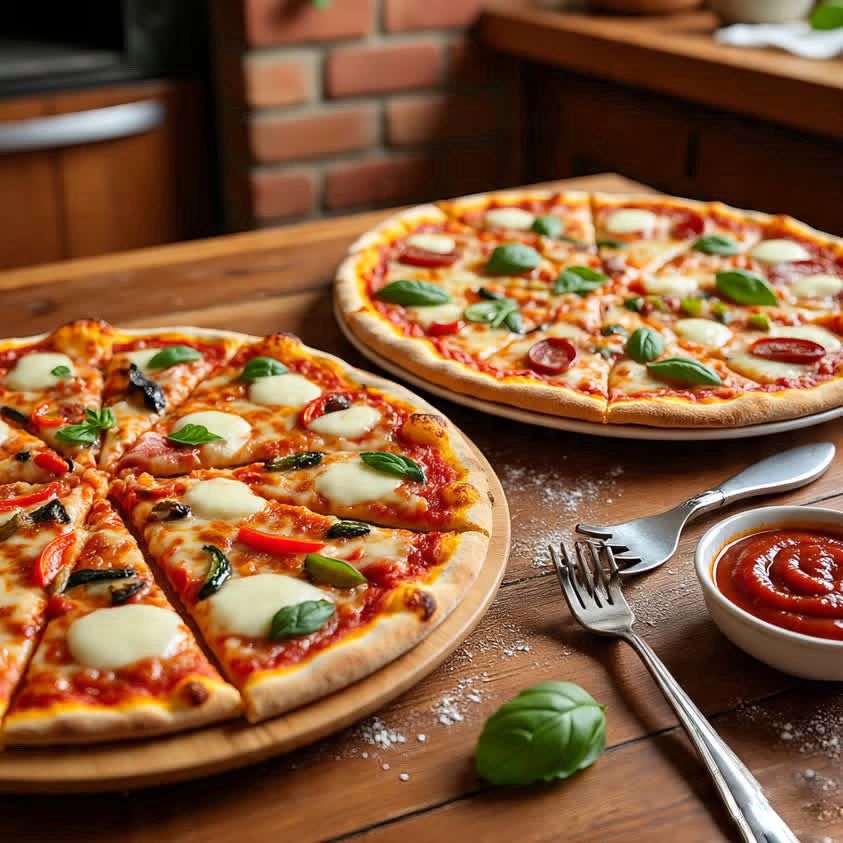
The price point differs significantly too. When you order gluten-free pizza at a restaurant, expect to pay extra. This is not restaurants trying to take advantage of dietary restrictions, it is simply because gluten-free ingredients cost more and require separate preparation areas to avoid cross-contamination. At Pizzapedia, we recognize that understanding these cost differences helps pizza lovers make informed decisions about their orders.
Nutritionally speaking, neither option is inherently healthier than the other. Some people assume gluten-free automatically means healthy, but that is not necessarily true. Gluten-free pizza can be just as caloric and carb-heavy as regular pizza, depending on the ingredients used. The main health benefit comes for those who genuinely need to avoid gluten due to celiac disease or gluten sensitivity.
So which one wins? That depends entirely on your perspective and your dietary needs. For someone with celiac disease, gluten-free pizza is not just a preference, it is a necessity. For everyone else, it comes down to personal taste and what you value in your pizza experience. Traditional pizza offers that classic texture and flavor that has been perfected over centuries. Gluten-free pizza provides an alternative that keeps pizza accessible to more people.
What matters most is that both versions exist and continue to improve. The gluten-free options available today are light-years ahead of what was available just a decade ago, and that is something worth celebrating in the pizza world.
Reference
National Institute of Diabetes and Digestive and Kidney Diseases. (2025, October 2). Definition & facts for celiac disease. U.S. Department of Health and Human Services. https://www.niddk.nih.gov/health-information/digestive-diseases/celiac-disease/definition-facts
Rubio-Tapia, A., Ludvigsson, J. F., Brantner, T. L., Murray, J. A., & Everhart, J. E. (2012). The prevalence of celiac disease in the United States. American Journal of Gastroenterology, 107(10), 1538–1544. https://doi.org/10.1038/ajg.2012.219
Singh, P., Arora, A., Strand, T. A., Leffler, D. A., Catassi, C., Green, P. H., Kelly, C. P., Ahuja, V., & Makharia, G. K. (2018). Global prevalence of celiac disease: Systematic review and meta-analysis. Clinical Gastroenterology and Hepatology, 16(6), 823–836.e2. https://doi.org/10.1016/j.cgh.2017.06.037