
 Posted by
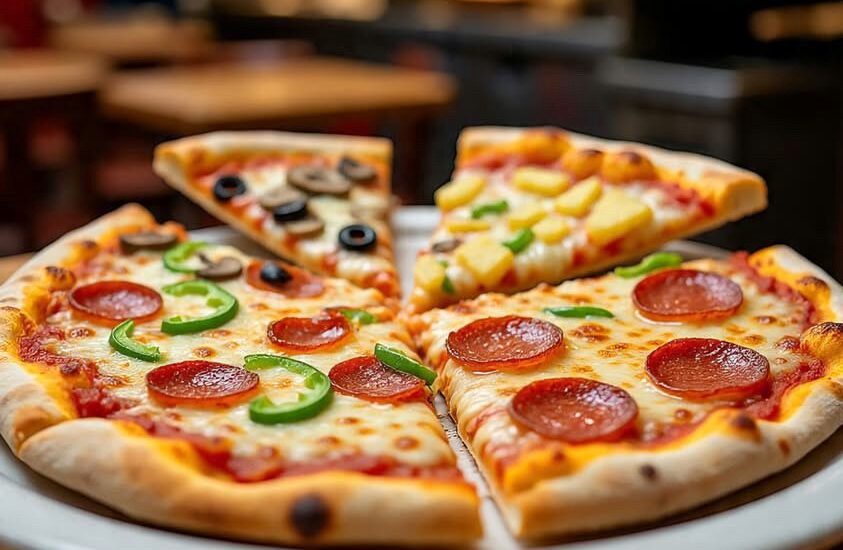
 Spent more time than I probably should admit thinking about pepperoni placement on pizza. You know that moment when the delivery arrives and you open the box, and your eyes immediately scan the surface of your pie? That is when you notice it.
Some pizzas have their pepperoni distributed with almost mathematical precision, each slice guaranteed its fair share of the cured meat glory. Others look like someone tossed the pepperoni from across the kitchen and called it a day. Both camps have their devoted followers, and I find myself somewhere in the middle of this deliciously contentious debate. Explore the pepperoni pizza debate between scattered and orderly topping placement. Which method creates the perfect slice? Discover the pros and cons of each.
The orderly approach to pepperoni placement has an undeniable appeal. When I order from one of those chains that pride themselves on consistency, I know exactly what I am getting. Each slice will have roughly the same number of pepperoni rounds, arranged in concentric circles or perhaps a neat grid pattern.
There is something deeply satisfying about this predictability. Nobody argues over which slice has more toppings. Nobody feels shortchanged when they grab their piece. The pizza becomes a perfect democracy of flavor distribution, and honestly, sometimes that is exactly what you want after a long day.
I remember working at a local pizzeria during my college years, and the owner was obsessed with this kind of precision. He would actually count out the pepperoni for each size pizza. A small got exactly 18 pieces, a medium got 24, and a large got 32.
He had this whole system worked out where you would place them in a specific pattern that ensured every potential slice would have at least two full pieces of pepperoni. At the time, I thought he was being unnecessarily rigid about the whole thing. Now I realize he was solving a problem that has plagued pizza lovers since pepperoni first graced a flatbread.
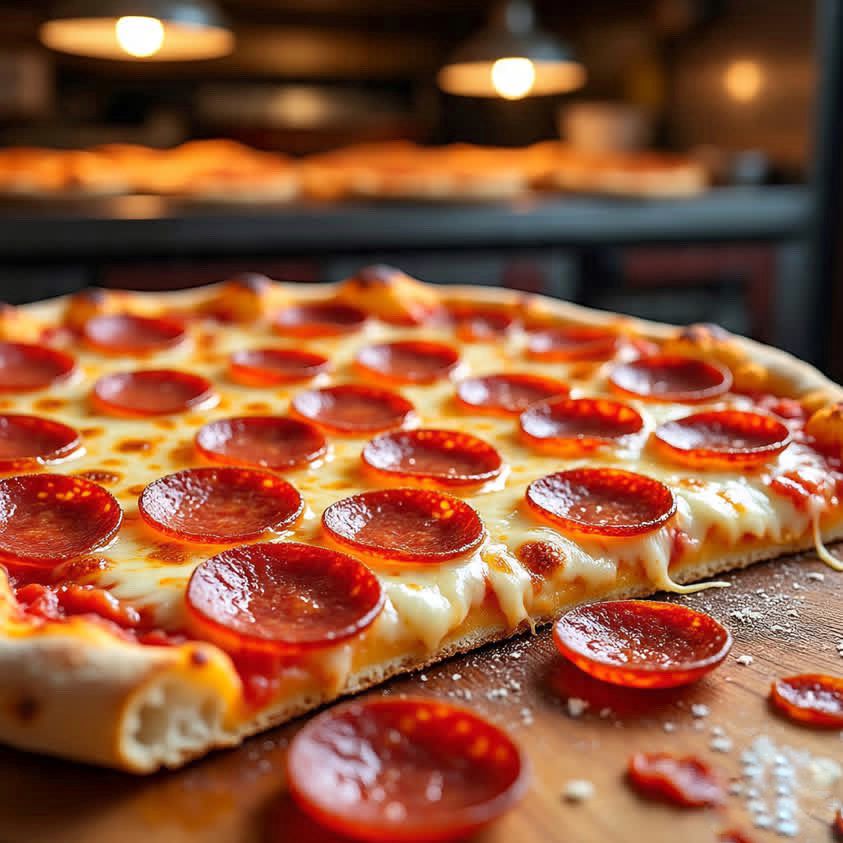
But here is where things get interesting. The scattered approach, which might seem chaotic or even lazy at first glance, actually has its own kind of genius. When pepperoni is placed more randomly across the pizza surface, you get something that orderly placement can never quite achieve: variation. Some bites are pepperoni-heavy explosions of spicy, salty goodness. Other bites let the cheese and sauce shine through with just a hint of that cured meat flavor. Your pizza becomes an adventure rather than a predictable journey.
The scattered method also tends to be more common in authentic pizzerias, especially those old-school Italian places where the pizza maker has been doing this for decades. They are not counting pepperoni slices or consulting placement guides.
They are working from muscle memory and instinct, and somehow the pizza always comes out right. Maybe not perfectly symmetrical, but right. These pizzas have character. They have personality. You might get a slice that is absolutely loaded with pepperoni, and your friend might get one with just a few pieces, but somehow nobody minds because the whole experience feels more genuine.
From a practical standpoint, the scattered method often leads to better cooking outcomes. When pepperoni is placed somewhat randomly, with pieces sometimes overlapping or clustered together, you get more variation in how those pieces cook. Some curl up into little grease cups, others stay flat, some get crispy edges while others remain tender. This textural variety adds another dimension to eating pizza that uniform placement simply cannot replicate. The way pepperoni releases its oils during cooking also means that scattered placement helps those flavors migrate across the pizza in more interesting patterns.
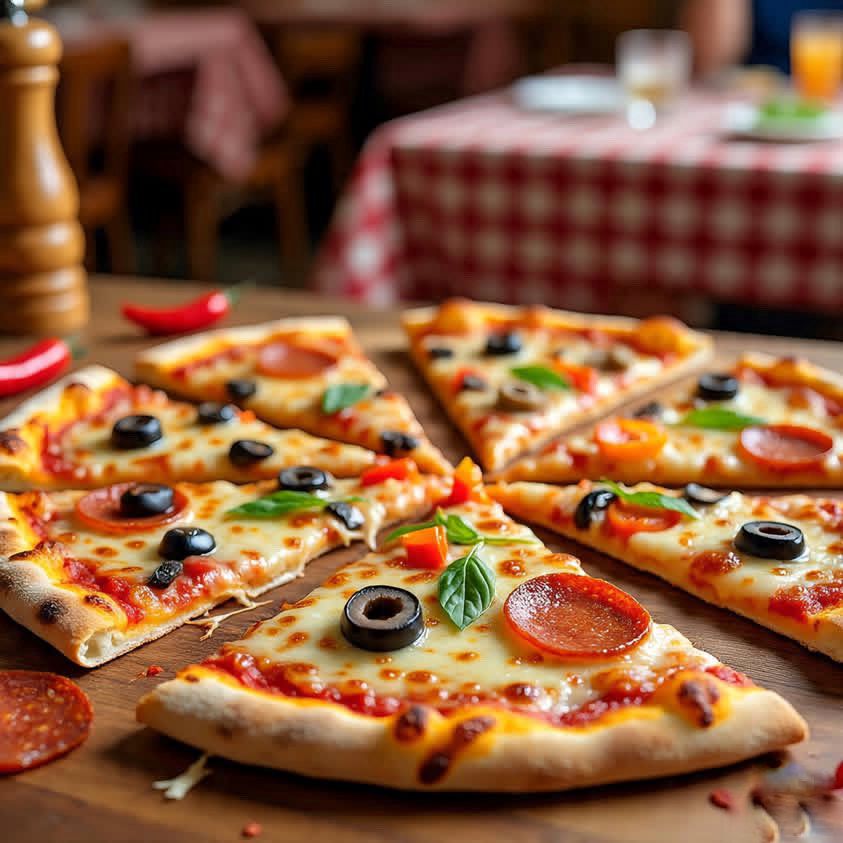
The orderly camp would argue that precision ensures quality control. Every customer gets the same product every time, which matters for business consistency and customer satisfaction. They would point out that their method eliminates complaints and ensures that nobody feels cheated. Fair enough. But the scattered enthusiasts would counter that pizza is not supposed to be a factory product. It should be a craft, something made by human hands with all the beautiful imperfection that implies.
What strikes me most about this debate is how it reflects larger philosophies about food and life. Do we want everything measured and controlled, or do we embrace a little chaos? Are we willing to trade some unpredictability for the chance at something more interesting? Your preference in pepperoni placement might say more about you than you realize.
These days, I find myself appreciating both approaches depending on my mood. Sometimes I want that reliable, evenly distributed pepperoni pizza where I know exactly what I am getting. Other times I crave the wild card, the pizza where each slice is its own little mystery. Maybe the real answer is that both methods have their place in the grand tradition of pizza making. Or maybe I just think about pizza way too much. Either way, I am okay with that.
Reference
Chen, J., & Rosenthal, A. (2015). Food texture and viscosity: Concept and measurement (2nd ed.). Academic Press.
Food and Drug Administration. (2022). Food code 2022. U.S. Department of Health and Human Services. https://www.fda.gov/food/fda-food-code/food-code-2022
Grasseni, C. (2017). The heritage arena: Reinventing cheese in the Italian Alps. Berghahn Books.