
 Posted by
 I have eaten a lot of pizza in my life. Like, a lot. And I am not talking about the sad, cardboard-tasting stuff from the freezer aisle. I mean the real deal: the kind where the crust is blistered, the cheese is bubbly, and you have to fold the slice just to keep it from flopping over. So when flatbread pizza started showing up everywhere on menus, on Pinterest boards, even at my friend’s casual dinner party, I will admit I was skeptical.
Does this thin, crunchy thing actually hold up against a proper New York or Neapolitan pie? Or is it just a pretender trying to steal the throne? Let me just say this right now. I have spent years testing both styles in my own kitchen, and here is the truth: flatbread pizza versus traditional pizza is not a fight to the death, but rather a choice between two very different moods. The real secret? You do not have to pick a side. You just have to know what you are hungry for.
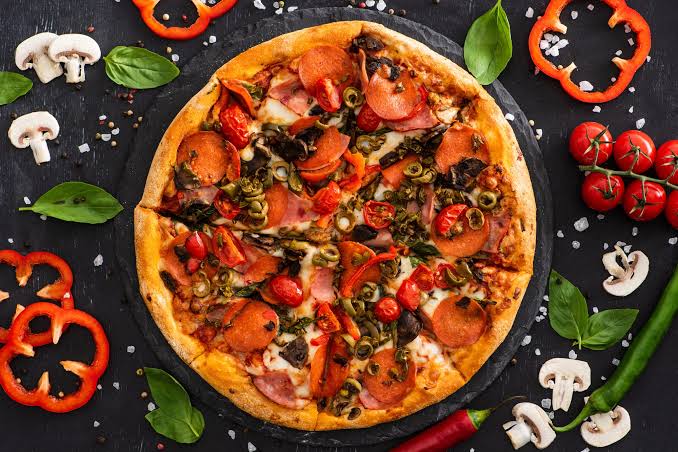
Traditional pizza is an emotional experience for me. The dough alone flour, water, yeast, and salt, takes time to develop that signature chew. I remember trying to make my first Neapolitan-style crust from scratch. I let it ferment for almost three days, checking on it like a nervous parent. When I finally slid it into a screaming-hot oven, the kitchen smelled like a bakery in Naples. That crust had a crisp exterior, a soft interior, and a depth of flavor you cannot rush. Honestly, it was worth every minute.
But here is the thing. I do not always have three days. Or even three hours. Some nights, I get home from work, and the idea of waiting for the dough to rise feels like a personal insult. That is where flatbread pizza comes in, and I used to think of it as the lazy cousin of real pizza. But I was wrong. Flatbread is not trying to be traditional pizza. It is doing its own thing.
The dough is usually unleavened or only lightly leavened, so you skip the long fermentation process. No yeast? No problem. You can mix the dough, roll it out thin, and have a flatbread pizza on the table in fifteen minutes flat. Fifteen minutes. That is faster than delivery, and honestly, more satisfying because you made it yourself.
Now, let us talk about toppings, because this is the area where flatbread absolutely shocks me every single time. A traditional pizza has a weight limit. Have you ever piled on too many mushrooms, olives, and sausage? The whole middle turns into a sad, soggy mess. The crust cannot handle the pressure. But flatbread? It is thin and crisp, so it works better as a backdrop.
Delicate toppings that would get lost on a thick, yeasty crust actually shine here. I am talking about a handful of fresh arugula after it comes out of the oven, some shaved parmesan, a drizzle of balsamic glaze, or even thin slices of pear and gorgonzola. Have you ever tried smoked salmon on a flatbread with dill cream cheese? Do not knock it until you try it. It feels fancy, but it takes almost zero effort.
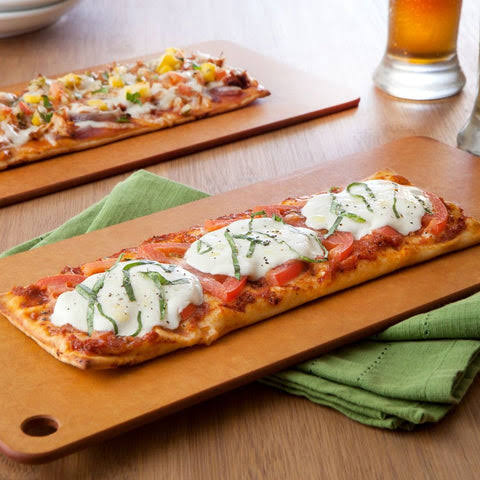
Is flatbread pizza healthier than traditional pizza? That depends entirely on what you put on it, and I think people get too caught up in this question. Both are carbohydrate-heavy foods. For anyone searching for a lighter meal option, flatbread pizza often uses a thinner base and can be loaded with vegetables, making it a fantastic choice for weeknight cooking when you want flavor without the heavy dough coma.
But if you pile that flatbread with three kinds of cured meat and extra cheese, you are right back where you started. So do not fool yourself. The real nutritional difference comes down to portion size and toppings, not the crust itself. That said, I have found that using a whole grain or chickpea-based flatbread does add a little extra fiber, and my stomach thanks me later.
So where does that leave us in the great flatbread pizza versus traditional pizza debate? Honestly, I think we have been asking the wrong question. It is not about which one is “better.” It is about what you are eating. If it is a lazy Saturday night and I want the ritual of it all, kneading, waiting, and the smell of yeast blooming in warm water, then I am making a traditional pizza.
That is the meal you build an evening around. You invite friends over. You open a bottle of red wine. You argue about whether pineapple belongs anywhere near a pizza (it does, and I will die on that hill). But for a quick Tuesday lunch? Or a creative appetizer before dinner? Or a night when my partner wants mushrooms, and I want prosciutto, and we cannot agree on a single topping?
Flatbread is not a compromise. It is a genuinely great choice. You can make two different flatbread pizzas at the same time with almost no extra work. Try doing that with a traditional dough that requires proofing, stretching, and careful handling. You know what I think? The debate is overrated. Both styles are good.
They just belong to different moments. And the next time someone tries to tell you that flatbread pizza does not “count” as real pizza, just smile, take a bite of your crispy, arugula-topped creation, and ask them: Does it really have to be one or the other?
References
Reinhart, P. (2009). Peter Reinhart’s Artisan Breads Every Day. Ten Speed Press. https://www.penguinrandomhouse.com/books/210436/peter-reinharts-artisan-breads-every-day-by-peter-reinhart/
Tettamanti, G., et al. (2021). Nutritional composition of traditional and alternative pizza bases. Journal of Food Composition and Analysis, 96. https://doi.org/10.1016/j.jfca.2020.103727
U.S. Department of Agriculture. (2023). FoodData Central. https://fdc.nal.usda.gov