
 Posted by
 I have a confession to make. For years, I thought I knew onions. I chopped them, I cried over them, I tossed them into sauces and stir-fries without a second thought. But it wasn’t until I started obsessively making pizza at home that I realized how little I actually understood about what those humble layers can really do. And honestly? The question of caramelized versus sautéed onions has kept me up at night.
Not in a dramatic way. More in that quiet, three-in-the-morning, what-am-I-doing-with-my-life kind of way. So I did what any reasonable person would do. I made more pizza. A lot more pizza. And I took notes. Struggling to choose between caramelized and sautéed onions for your homemade pizza? This guide breaks down the flavor, texture, and moisture differences so you can finally stop guessing and start building a better pie. I will also share the one technique that completely changed how I approach pizza toppings forever.
Let us start with the obvious difference, which is time. Sautéed onions are the fast food of the onion world. You heat a pan, add some oil or butter, toss in the onions, and cook them over medium-high heat for maybe five to ten minutes. They soften. They lose that raw crunch. But they still taste like onions. Sharp. Pungent. Unapologetically themselves. Caramelized onions, on the other hand, demand patience. You turn the heat down to low and you wait.
Twenty minutes. Thirty. Forty-five. You stir occasionally, watching the slices go from white to golden to deep amber. You think about giving up. You check your phone. You stir again And then something magical happens. The onions collapse into themselves, turning sweet and silky, almost jammy. That is the Maillard reaction at work, the same browning magic that makes seared steak and toasted bread so irresistible. It is chemistry, sure.
But it also feels a little like alchemy. When I first started making pizza, I used sautéed onions because they were easy. I was impatient. I wanted dinner on the table, not a science experiment. And those onions were fine. But fine is not what I want from pizza. Pizza is supposed to be transcendent. Or at least really, really good. The problem with sautéed onions on pizza is not just their flavor.
It is their moisture. Onions contain a lot of water, and when you cook them quickly, much of that water remains trapped. Then you put them on raw dough, slide the pizza into a hot oven, and that moisture releases during baking. The result? A soggy center A crust that never quite crisps. It is heartbreaking, honestly, to spend time stretching dough and sourcing good cheese only to have it undermined by a vegetable.
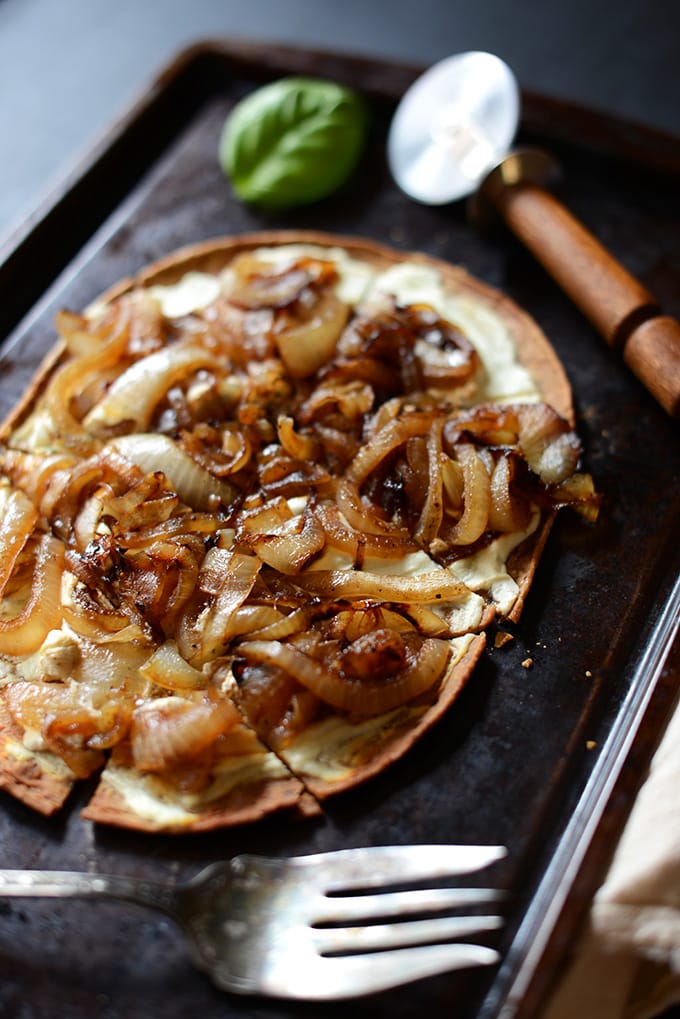
Caramelized onions solve this problem. By the time they have finished their slow, patient transformation, they have surrendered most of their water to the pan. What remains is concentrated flavor and a texture that practically melts into the pizza. You do not bite into a stringy piece of onion. You get sweetness. Complexity. Depth.
The onions become part of the whole instead of fighting for attention. There was one pizza, in particular, that changed my mind forever. I had made a batch of caramelized onions on a Sunday afternoon, mostly because I had three pounds of yellow onions sitting on my counter and no plan. I stored them in a jar, forgot about them for a few days, and then pulled them out on Tuesday night when I needed dinner.
I made a simple white pizza with ricotta, lemon zest, and those onions. No sauce. No heavy toppings. And when I took that first bite, I actually stopped chewing. It was that good. The onions had transformed into something else entirely, little pockets of savory sweetness that made the cheese and citrus sing. I have not gone back since. That said, I am not here to tell you sautéed onions have no place on pizza. They do.
On a heavy, meat-loaded pie with spicy sausage and pepperoni, sometimes you want an onion that punches back. Something that refuses to blend in. Sautéed onions hold their ground. They announce themselves. If you are building a pizza that thrives on bold, clashing flavors, they might be exactly what you need. But for most pizzas, the ones where balance and harmony matter, caramelized onions are the superior choice. They elevate rather than dominate.
They work with other ingredients instead of competing against them. And despite the longer cooking time, they are actually more practical. You can make a big batch on the weekend, store them in the refrigerator for up to a week, and add them to pizzas, pastas, sandwiches, or eggs without any additional prep. That convenience, ironically, makes them more weeknight-friendly than sautéed onions ever were. I realize this sounds like a lot of passion for such a small ingredient.
But that is the thing about pizza. It is built on small decisions. The dough hydrated. The cheese ratio. The tomato variety. And yes, the onions. Each choice nudges the final result in one direction or another. Get enough of them right, and you are eating something memorable. Get them wrong, and you are eating regret. So here is where I have landed, after all those pizzas and all those notes. Caramelized onions belong on pizza. Not as a compromise.
Not as a substitute. But as the first choice. The intentional one. Sautéed onions still have their place, just not on my pizza stone anymore. And if you have not tried it yet, I hope you will. Slow down. Give the onions time. Let them do what they do best.You might be surprised what a little patience can taste like.
References
National Onion Association. (2018). Faster Caramelized Onions with Baking Soda. Retrieved from https://www.onions-usa.org/onionista/faster-caramelized-onions-with-baking-soda/
Pizzablab. (2025). How to Make Pizza Crispier: Complete Guide to a Crispy Crust. Retrieved from https://www.pizzablab.com/learning-and-resources/practical-guides/guide-to-crispy-pizza/
Brooklyn Brainery. Cook your onions BETTER STRONGER FASTER: Speeding up the Maillard reaction. Retrieved from https://brooklynbrainery.com/blog/cook-your-onions-better-stronger-faster-speeding-up-the-maillard-reaction
Food52. (2023). How Long Does It Take to Caramelize Onions? Retrieved from https://food52.com/story/27932-the-right-way-to-caramelize-onions