

 Posted by
 Let me be honest with you right from the start. I have eaten a lot of sandwiches in my life. I am talking about the good, the bad, and the truly forgettable. But there is one sandwich that I think about more than any other, and it is always piled high with pastrami. There is something almost theatrical about a proper pastrami sandwich.
You know the one I am talking about. The way the meat is stacked so high you are not sure how you are supposed to take a bite. The steam rising from a freshly sliced pile of meat. The rye bread barely holds everything together. It feels less like lunch and more like a statement. It feels like history. I remember the first time I had real pastrami.
I was in New York, standing in a deli that had been there for over a hundred years. The guy behind the counter was moving fast, slicing meat by hand, and when he handed me that sandwich, I almost dropped it because of the weight. That is when it hit me. This is not just food. This is immigrant ingenuity wrapped in butcher paper.
The story of pastrami is, in many ways, the story of survival and creativity. We are talking about Romanian Jewish immigrants who brought a preservation technique to New York in the late 19th century. They had to adapt. They took beef brisket and navel cuts of the cheap stuff, the tough stuff that nobody else really wanted and they turned it into gold. They rubbed the meat in spices, cured it in brine, smoked it low and slow over wood, and then steamed it until it became something extraordinary.
If you are looking for the best pastrami preparation methods or wondering how to cook pastrami at home, understanding this original process is the key to getting that authentic deli flavor right in your own kitchen. What started as a way to make tough, inexpensive cuts edible eventually became one of the most iconic foods in American culinary history.
So what actually separates pastrami from other cured meats? It is the layered process, honestly. You are not just salting something and calling it a day. That does not work. The brine infuses the beef with flavor from the inside out. Then you have the dry rub typically a mix of black pepper, coriander, garlic, and mustard seed which builds a crust on the outside.
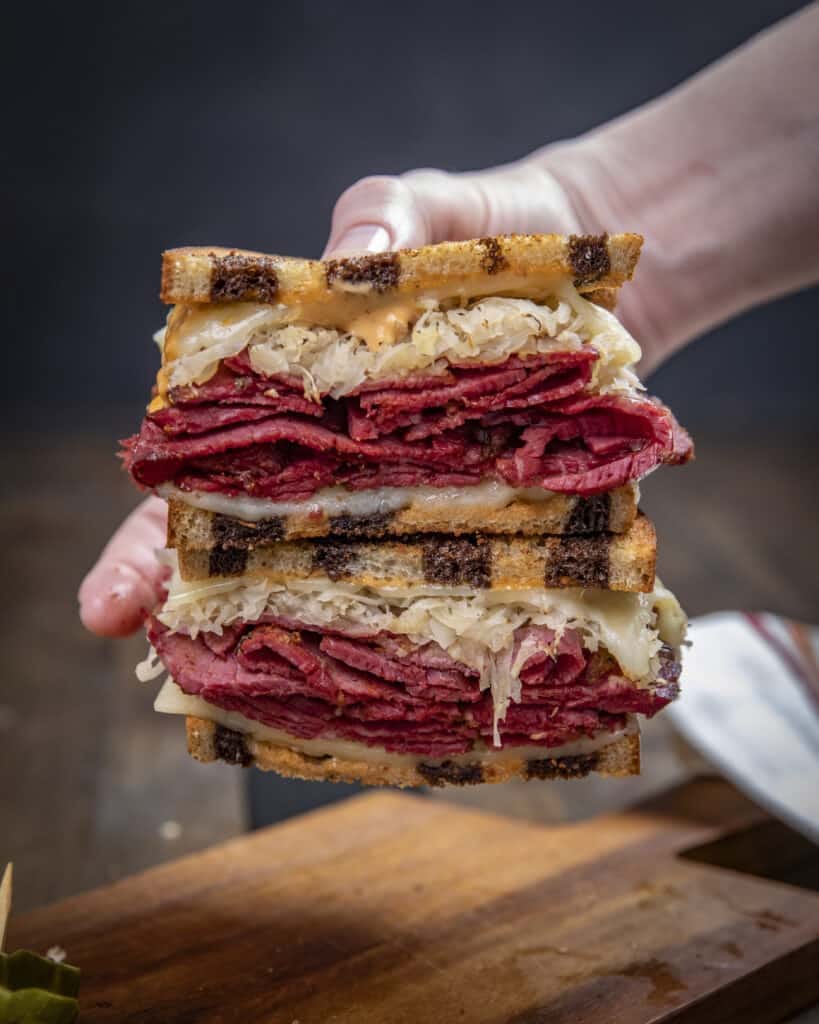
The smoking adds that deep, woodsy flavor. But the final steam? That is the secret. That is what gives properly made pastrami its signature tenderness. You skip any one of those steps, and you have something decent. You follow all of them, and you have something worth traveling for. Now, I need to talk about the elephant in the room. The fat. I know some people recoil at the amount of fat in a classic pastrami.
They want leaner slices. They want trimmed edges. They want a tidier eating experience. I understand the impulse, I really do. Nobody wants to feel like they are eating a stick of butter. But I think asking for lean pastrami misses the point entirely. The fat in a good navel cut pastrami is not something to apologize for. It is the reason the meat stays moist through hours of cooking.
It is the reason each bite has that rich, almost buttery quality that lean cuts simply cannot replicate. Lean pastrami exists, but honestly, it is a compromise. And with a meat like this, why would you want to compromise? Where I will absolutely not compromise is on the bread. This might sound like I am being stubborn, but pastrami belongs on rye. Not a soft sandwich roll.
Not sourdough. Not a pretzel bun. Rye bread, preferably seeded, with a schmear of mustard. The slight bitterness of the rye cuts through the richness of the meat in a way that no other bread can manage. People experiment, and that is fine. But the classic combination exists because it works perfectly. Why try to fix something that is not broken?
Pastrami also has this weird way of sparking loyalty in people. Ask anyone who grew up near a great Jewish deli, and they will tell you with complete certainty that their spot makes the best pastrami in the world. I have had arguments with friends about this. We have gone back and forth about who has the better meat, the better spice blend, the better sandwich construction.
That kind of devotion is not an accident. It is the product of a food that genuinely delivers every single time. If you have never made pastrami at home, I am telling you right now it is a weekend project worth attempting at least once. The process is long but mostly hands-off, and the result will permanently change your relationship with the deli counter.
You will walk in there, see the price per pound, and think to yourself, “I know exactly what went into this, and it is worth every penny.” For those interested in diving deeper into the history and techniques behind this iconic meat, I highly recommend checking out this resource on pastrami preparation and history.
References
Kraig, B. (2009). Hot Dog: A Global History. Reaktion Books.
Smith, A. F. (2007). The Oxford Companion to American Food and Drink. Oxford University Press.
U.S. Department of Agriculture. (2023). Cured and smoked meat products.