
 Posted by
 Ground beef pizza is the topping you have been sleeping on. Discover why this bold, savory ingredient deserves a real spot on your next homemade pie. I have been obsessed with pizza for longer than I care to admit. Growing up, Friday nights at my house meant one thing: a cardboard box hitting the kitchen counter and the whole family crowding around before the lid was even fully open.
Back then, I never thought twice about toppings. Pepperoni, obviously. Maybe some mushrooms if my dad was feeling adventurous. Ground beef? That was something you put in tacos or spaghetti, not on a pizza. I was wrong for a long time, and I am only now comfortable saying that out loud.
Ground beef pizza is one of those topics that does not get nearly enough attention in the pizza world. When people talk about the best pizza toppings, you hear about prosciutto, arugula, truffle oil, things that feel fancy and deliberate. Ground beef gets lumped in with the casual, the ordinary, the everyday.
But here is the thing about everyday ingredients: when they are done right, they hit harder than anything with a French name on it. Ground beef, seasoned well and cooked properly before it ever touches a pizza, brings a depth of savory flavor that very few toppings can match.
The keyword there is “cooked properly.” This is where a lot of homemade pizza attempts go sideways. Raw ground beef dropped onto a pizza and tossed in the oven will steam instead of brown, and you end up with something mealy and sad.
The best results come from browning the meat in a hot skillet first, really getting that crust on it, letting the fat render out, maybe finishing with a little garlic, fennel seed, or red pepper flakes, depending on what direction you are taking the pizza. Once you do that, the meat becomes something concentrated and intense. It holds up under heat. It pairs beautifully with tomato sauce in a way that feels almost obvious once you have tasted it.
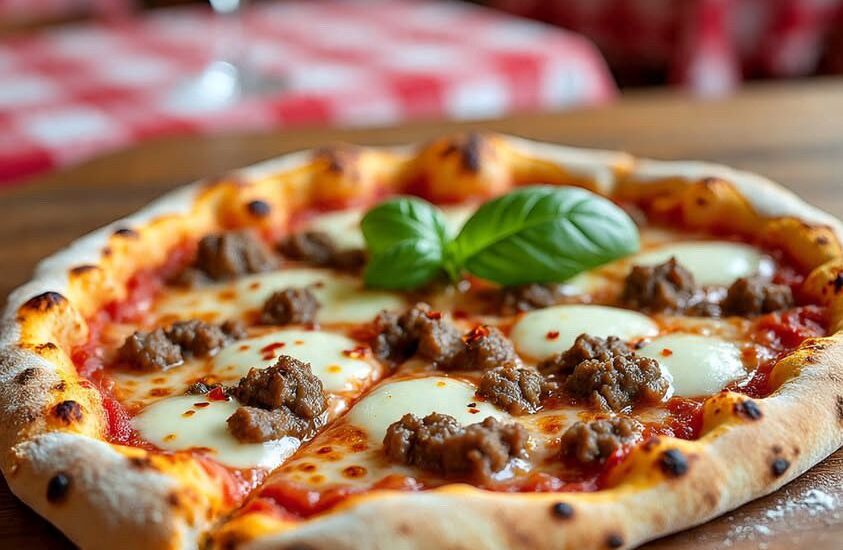
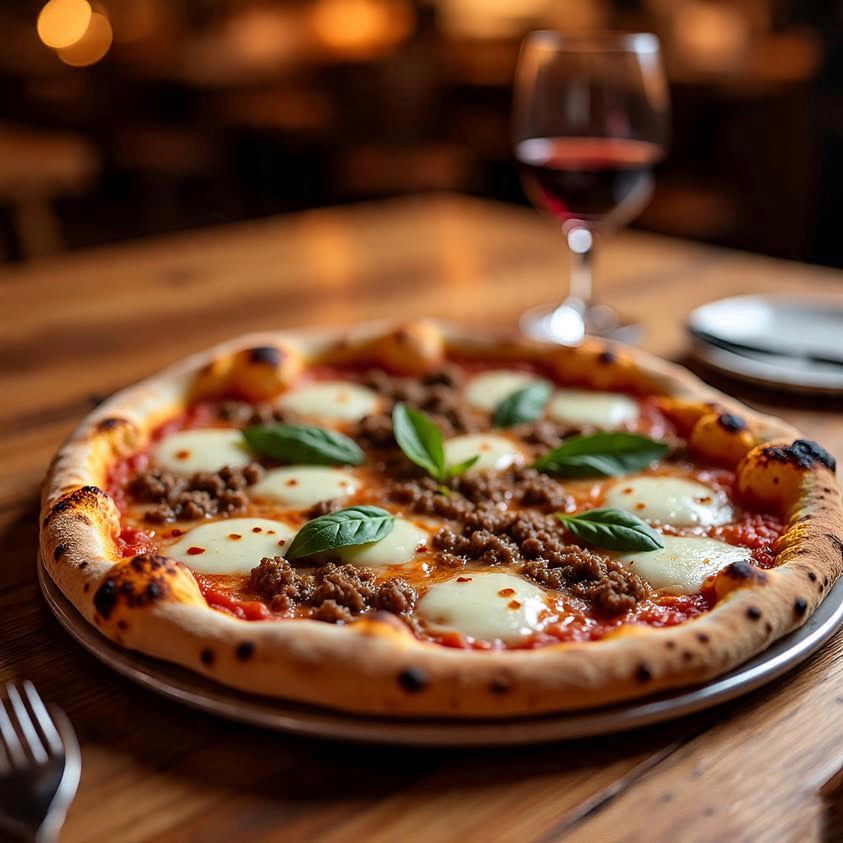
I remember the first time I ordered a ground beef pizza at a place I had never been to before, a small spot that did not look like much from the outside. The menu called it a “beef and mozzarella pie,” which felt understated to the point of being misleading. What arrived at the table was this deeply bronzed, slightly charred pizza with crumbles of browned ground beef scattered across a bright, acidic tomato base.
The cheese had melted into the meat in places. There was a faint warmth from black pepper and something else I could not identify at the time. Later, I found out it was a pinch of cinnamon, which sounds strange but works in ways that are hard to explain. That pizza rearranged my understanding of what a topping could do.
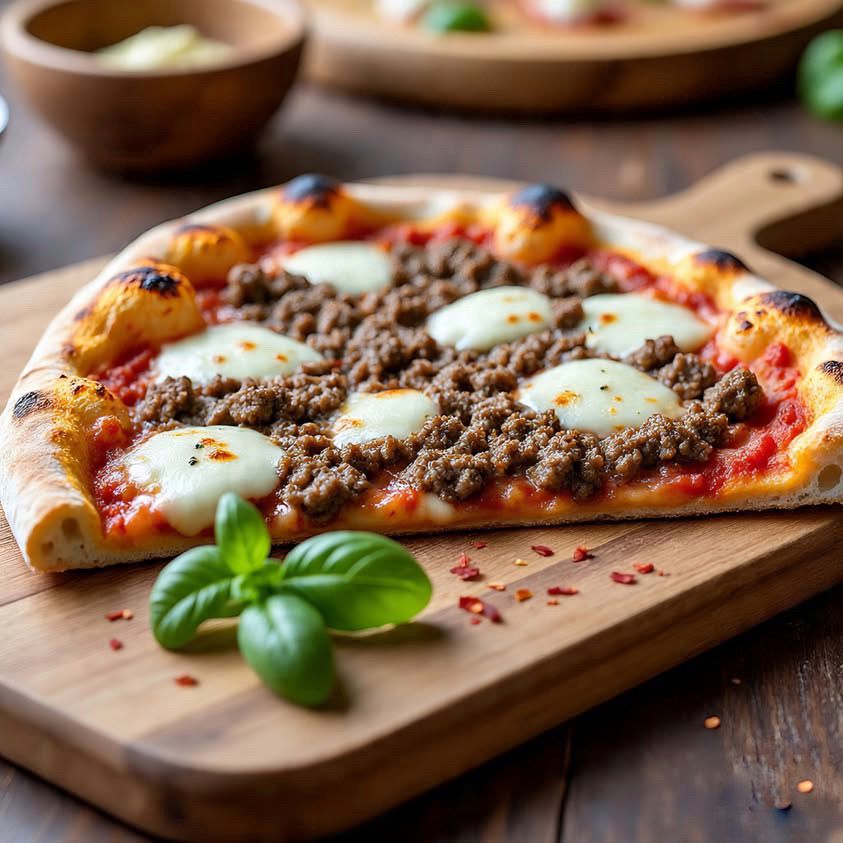
From a purely practical standpoint, ground beef pizza makes a lot of sense for home cooks. It is accessible, affordable, and adaptable in a way that, say, a specialty cured meat is not. You can season it for a classic American pizza profile, salt, pepper, a little onion powder, or push it toward something more Italian-inspired with oregano and crushed red pepper.
It works on a thick Sicilian-style crust where the richness of the meat stands up to all that bread, and it works on a thin, crispy New York-style base where every ingredient has to earn its place. That kind of flexibility is genuinely rare in the topping world.
At Pizzapedia, the philosophy has always been that great pizza starts with understanding your ingredients, where they come from, how they behave under heat, and what they bring to the overall balance of a slice. Ground beef fits perfectly into that framework.
It is an ingredient with real history in American pizza culture, particularly in the Midwest, where it has been showing up on pizzas since the early days of the regional pizza boom. The taco pizza, which has ground beef as its foundation, became a legitimate regional staple. The cheeseburger pizza, another ground beef vehicle, has made its way onto menus from small-town parlors to fast-casual chains. The ingredient has a range.
What I find most interesting about the renewed interest in ground beef as a pizza topping is how it is being treated with more intention now. Pizza makers who care about sourcing are thinking about fat content, an 80/20 blend melts into the pizza differently than a leaner grind, contributing more richness and flavor.
Reference
Kraig, B. (2009). Hot dog: A global history. Reaktion Books.
Piazza, J., & Graeber, C. (2015). Meat eating and moral disengagement. Journal of Agricultural and Environmental Ethics, 28(5), 873–891.
Horowitz, R. (2006). Putting meat on the American table: Taste, technology, transformation. Johns Hopkins University Press.