
 Posted by
 You know that moment when you discover two ingredients that just belong together? I am talking about that culinary spark that makes you wonder why nobody told you about this sooner. For me, that revelation happened with artichoke and goat cheese. And honestly? I cannot believe this combination does not get more attention.
Let me be honest with you right from the start. Artichokes have always made me a little nervous. There is the whole question of how to prepare them properly. Then you have to figure out how to actually eat the thing without making a mess. And through all of that, you find yourself wondering if the effort is even worth it.
Discovering the perfect artichoke and goat cheese pairing transforms this humble thistle into something extraordinary, and once you try it you will understand why this combination deserves a permanent spot in your recipe rotation.
I have learned that it almost always is worth it but the real magic happens when you bring goat cheese into the picture. Together, these two create something earthy, tangy, and genuinely satisfying in a way that most vegetable dishes never quite manage. Here is something that might surprise you.
The artichoke is, botanically speaking, a thistle. I know, right? It sounds more like something you would pull out of your garden than something you would pay money for at the grocery store. But people have been cultivating these things in the Mediterranean for thousands of years.
I recently fell down a rabbit hole reading about ancient Roman texts that reference artichokes as a luxury food. Apparently, even back then, people recognized that these funny-looking plants were something special. These days, California produces the overwhelming majority of artichokes grown in the United States.
There is this town called Castroville in Monterey County that has earned the unofficial title of artichoke capital of the world. I have never been, but it is on my list. The plant is fussy to grow and labor-intensive to harvest, which partly explains why artichokes have never quite become an everyday vegetable in American kitchens. Such a shame, really.
Goat cheese, by contrast, has made enormous progress over the past few decades. I remember when finding good chevre meant making a special trip to some fancy cheese shop. Now it is stocked in pretty much every grocery store. Fresh chevre, the soft, young form of goat cheese, is what works best for this pairing. It has this clean, bright acidity that plays beautifully against the mild bitterness of the artichoke.
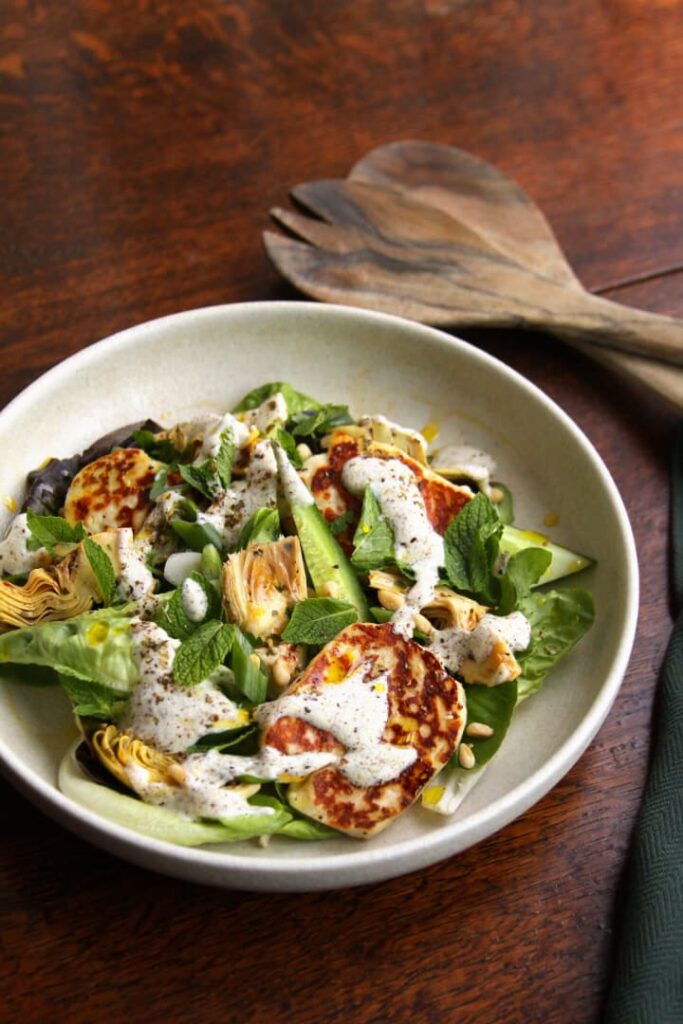
I have tried using aged goat cheese before, and trust me on this, it tends to overpower everything rather than complement it. The most approachable entry point I have found is a simple flatbread or tart. I make these all the time now. You just spread a layer of chevre across the base, add artichoke hearts canned in water, drained well, is perfectly acceptable here.
Nobody is judging and finishes with lemon zest, a drizzle of olive oil, and fresh thyme. Pop it in a hot oven until the edges catch and the cheese begins to color slightly. What comes out is something that feels far more considered than the effort it actually required. Perfect for those nights when you want to impress without working too hard.
For something a bit more ambitious, you should try stuffed artichoke hearts. This is my go-to when I have people over for dinner. You hollow out the center of par-cooked hearts, fill them with a mixture of goat cheese, garlic, breadcrumbs, and herbs, and roast until golden. The artichoke softens further in the oven, and the filling becomes almost soufflé-like at the edges.
It is a good dinner party dish because you can prepare everything in advance and finish it just before serving. I have lost count of how many times guests have asked for this recipe. What makes this pairing work, beyond the obvious flavor connection, is texture.
There is something about the slight chewiness of a properly cooked artichoke against the creaminess of fresh goat cheese that creates a contrast worth paying attention to. Each bite stays interesting. It is not a flashy combination by any means, but it is an honest one.
And honestly, in a food landscape full of overcomplicated dishes with foams and gels and things that belong in a science lab, honesty at the table counts for quite a lot. Have you ever noticed how some food combinations just feel right? Like they have been waiting for you to discover them? That is how I feel about artichoke and goat cheese.
It is earthy and tangy and satisfying in ways that keep bringing me back. If you have been nervous about artichokes, let this be your sign to give them another chance. And if you are already a fan, well, you know what to do. For more inspiration on Mediterranean cooking and ingredient pairings, check out The Mediterranean Dish for authentic recipes and techniques.
References
Bittman, M. (2007). How to Cook Everything Vegetarian. John Wiley & Sons. https://www.wiley.com/WileyCDA/PressRelease/pressReleaseId-55197.html
U.S. Department of Agriculture Agricultural Research Service. (2023). Artichoke Production in the United States.
Fox, P. F., Guinee, T. P., Cogan, T. M., & McSweeney, P. L. H. (2017). Fundamentals of Cheese Science (2nd ed.). Springer. https://link.springer.com/book/10.1007/978-1-4899-7681-9
Flanders, A., & Abdulkarim, S. M. (1985). The composition of seed and seed oils of Cynara cardunculus. Journal of the American Oil Chemists Society, 62(7), 1211–1214. https://aocs.onlinelibrary.wiley.com/doi/abs/10.1007