
 Posted by
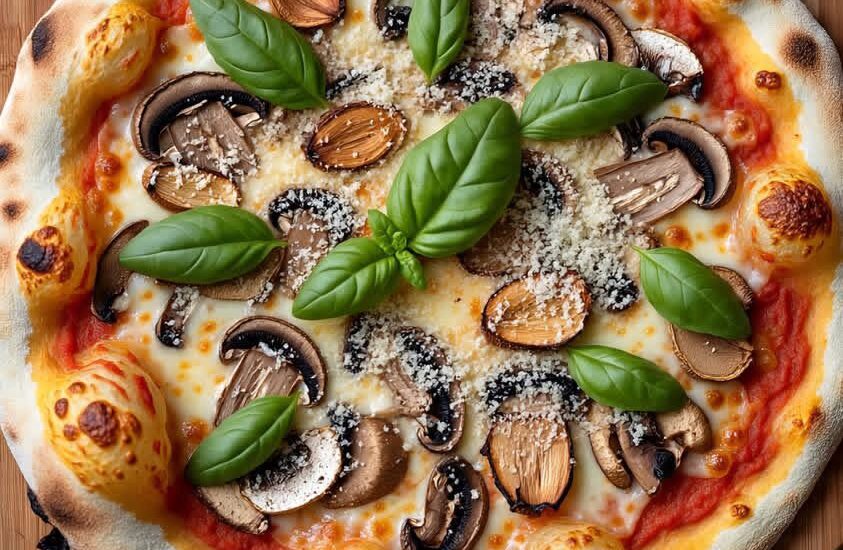
 Learn how to make roasted garlic and mushroom pizza at home with rich, caramelized toppings. I did not grow up thinking of mushrooms as something worthy of a pizza. For most of my early years, pizza meant pepperoni, maybe sausage, and a lot of mozzarella. Mushrooms felt like a consolation topping, the thing you added when you ran out of better ideas.
It took one cold evening and a small wood-fired spot in my neighborhood to completely change that perspective. The roasted garlic and mushroom pizza I ordered on a whim that night was unlike anything I had expected, and I have been chasing that flavor ever since.
What makes a roasted garlic and mushroom pizza so different from a standard vegetable pizza is the depth that comes from properly preparing both components before they ever touch the dough. Roasting garlic transforms it entirely. The sharp, pungent bite disappears, and what replaces it is this mellow, buttery sweetness that spreads across the base of the pizza like a slow warmth.
I usually roast a full head of garlic by slicing the top off, drizzling it with olive oil, wrapping it in foil, and letting it sit in a 400-degree oven for about 40 minutes. The cloves come out soft and golden and almost spreadable. That roasted garlic base is what gives this pizza its personality.
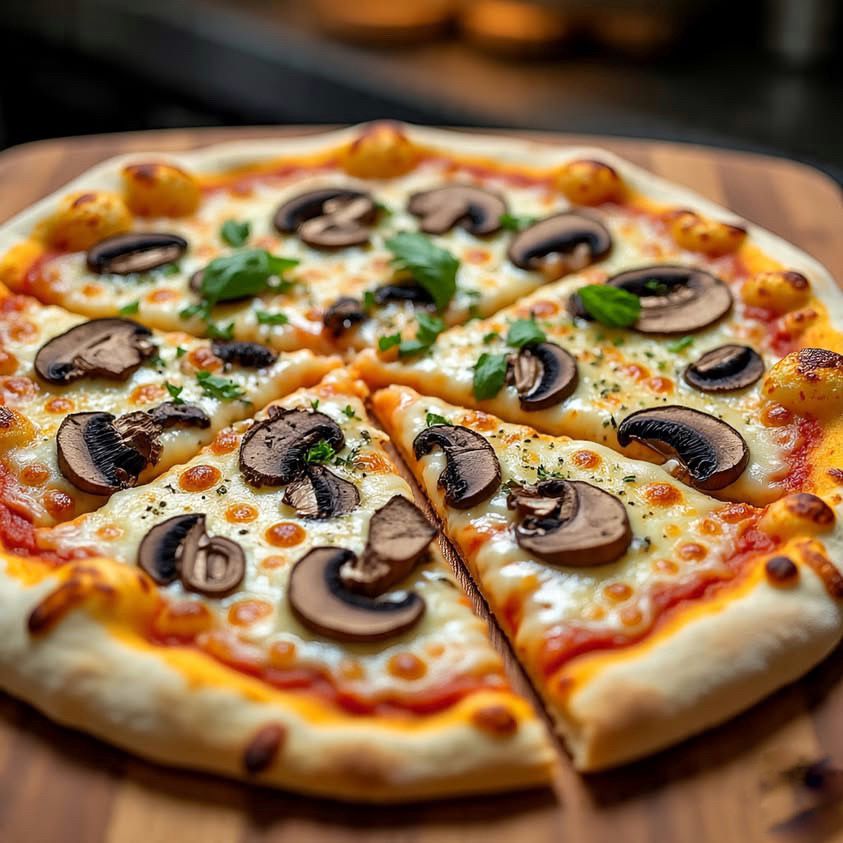
The mushrooms require just as much attention. One of the biggest mistakes people make when building a homemade mushroom pizza is tossing raw mushrooms directly onto the dough. Mushrooms hold a tremendous amount of water, and when they cook in the oven, they release all of it, which turns your crust soggy and dilutes everything around it.
I learned this the hard way after a few disappointing attempts in my own kitchen. The fix is simple but important: saute the mushrooms in a hot pan with olive oil, a pinch of salt, and a few sprigs of fresh thyme until they are deeply browned, and most of their moisture has cooked off. Cremini and shiitake mushrooms both work beautifully here, and combining the two gives you a layered, earthy flavor that single-variety versions just cannot match.
At Pizzapedia, we have spent a lot of time thinking about what separates a good mushroom pizza from a genuinely great one, and the answer almost always comes back to balance. The roasted garlic and mushroom pizza recipe we recommend builds from a thin, hand-stretched dough that gets a generous spread of the roasted garlic paste before anything else goes on.
Some recipes call for a tomato base, but I find that a white pizza approach with just the garlic, a drizzle of olive oil, and a light layer of fontina or gruyere lets the mushrooms be the real centerpiece. Mozzarella works too, but those nuttier cheeses have a way of amplifying the umami character of the mushrooms in a way that feels intentional.
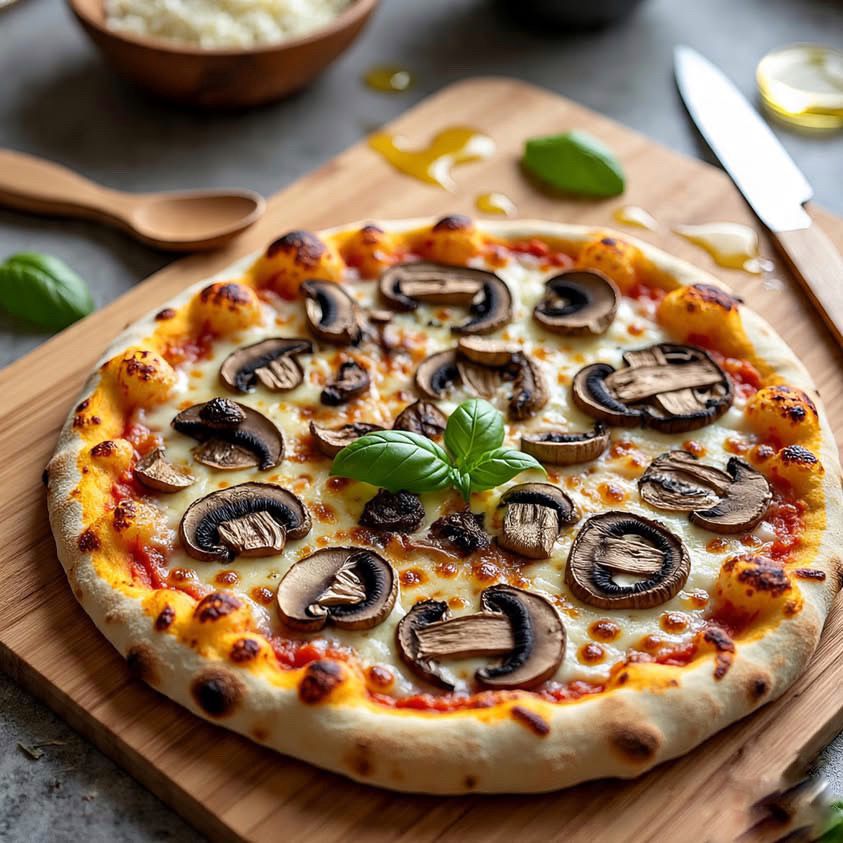
The assembly matters more than most people realize. After the garlic spread goes down, I scatter the sauteed mushroom mixture across the dough and try to leave a little breathing room between pieces rather than piling everything into one dense layer.
Even distribution means even cooking, and it means every bite has a proper ratio of crust, cheese, and topping. A light handful of fresh thyme leaves across the top before it goes into the oven adds fragrance that carries through the whole kitchen. Is it the most glamorous pizza you will ever make? Probably not. But it might be the most satisfying.
When it comes to baking, a hot oven makes all the difference for homemade pizza. I preheat my oven to its highest setting, usually somewhere between 475 and 500 degrees Fahrenheit, and use a baking steel that sits in there for at least 45 minutes before the pizza goes on.
That retained heat is what gives you the crispy, well-browned bottom that makes a roasted garlic mushroom pizza feel like something you ordered rather than something you made at home. A pizza stone works almost as well if that is what you have available. The pizza itself usually only needs about 10 to 12 minutes at that temperature.
One thing I have started doing toward the end of baking is adding a small handful of fresh arugula to the pizza right after it comes out of the oven. The heat wilts it slightly without cooking it fully, and the slight bitterness of the arugula cuts through the richness of the roasted garlic and cheese in a way that feels very deliberate.
A few shavings of Parmesan and a final drizzle of good olive oil finish the whole thing off. It is the kind of detail that feels almost unnecessary until you try it and realize you cannot imagine the pizza without it.
Making roasted garlic and mushroom pizza from scratch is one of those kitchen projects that rewards patience more than skill. The roasting, the sauteing, the proper oven heat, none of it is technically difficult, but each step asks you to slow down and do it right.
References
Barcenas, M. A., & Rosell, C. M. (2006). Effect of sourdough fermentation on breadmaking properties of wheat flour. Journal of Cereal Science, 44(3), 251–261. https://doi.org/10.1016/j.jcs.2006.04.007
Dreher, M. L., & Davenport, A. J. (2013). Hass avocado composition and potential health effects. Critical Reviews in Food Science and Nutrition, 53(7), 738–750. https://doi.org/10.1080/10408398.2011.556759
Ferreira, L. C., Molina, J. C., Brasil, F., & Micheletti, A. C. (2015). Phenolic compounds in mushrooms. Food Chemistry, 178, 145–155. https://doi.org/10.1016/j.foodchem.2015.01.004