
 Posted by
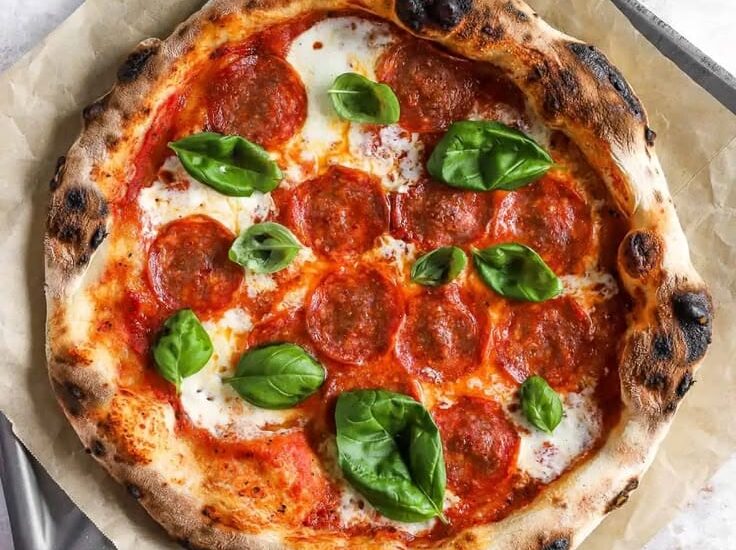
 I have to admit something embarrassing. For years, I thought basil was just basil. Fresh or dried, it did not really matter to me. I would grab whichever one was closest in the pantry or the produce section and call it a day. Then one night, I made two pizzas back to back, one topped with fresh basil after baking, the other with dried basil sprinkled on before it went into the oven.
The difference was so startling that I actually sat there wondering how I had been so oblivious for so long. That was the moment I became a fairly firm believer that fresh basil is the only real choice for topping a finished pie. Here is the thing about basil that genuinely surprised me when I started digging into it. Basil gets its flavor from these volatile compounds like linalool and eugenol.
You know that sweet, slightly peppery aroma you get when you tear a fresh leaf right off the plant? That is those compounds doing their thing.When considering the best basil for pizza, fresh basil offers a bright, complex flavor that dried simply cannot replicate, and understanding why comes down to the chemistry of the leaf itself.
But when you dry the herb, something pretty dramatic happens. It loses something like 85 to 90 percent of its water content, and in that process, a huge portion of those volatile oils degrade. We are talking 60 to 70 percent of them, according to research on basil’s volatile profile (ScienceDirect, 2023). What is left behind? Well, the drying process leaves you with a heavier reliance on a different compound called methyl chavicol.
And that gives you a sharper, almost medicinal note rather than that bright, garden-fresh flavor we all love. It is like comparing a fresh peach to a dried apricot related, but doing completely different things on your palate. This distinction matters enormously for pizza specifically. And I learned this the hard way through a few sad, burnt-leaf experiments.
Pizza is usually a fast, high-heat application. If you add fresh basil before the pie goes into the oven, that intense heat destroys a lot of those delicate oils anyway. You might as well just sprinkle some dried oregano on there and call it a day because you are not really getting the basil experience.
So, the move is to add fresh basil right after the pizza comes out of the oven. That residual warmth just barely wilts the leaf and releases its aroma without cooking it into bitterness. It is this perfect moment where the heat wakes up all those lovely compounds without murdering them. Dried basil, on the other hand, actually performs better in situations with longer cook times.
Think about a simmered marinara that needs twenty minutes or more for the herb to rehydrate and distribute evenly through the sauce. In that context, dried basil makes sense. It has time to wake up and spread out. So my actual recommendation? If you are making your own sauce and it is going to simmer for a while, dried basil in the sauce itself is completely fine.
Maybe even ideal. I have used it that way for years and been perfectly happy with the results. But when it comes to the final flourish on top of a baked pizza, the thing people actually taste first fresh basil is not just nicer, it is chemically a different ingredient doing a different job (see our earlier post on pizza toppings for more on layering flavor).
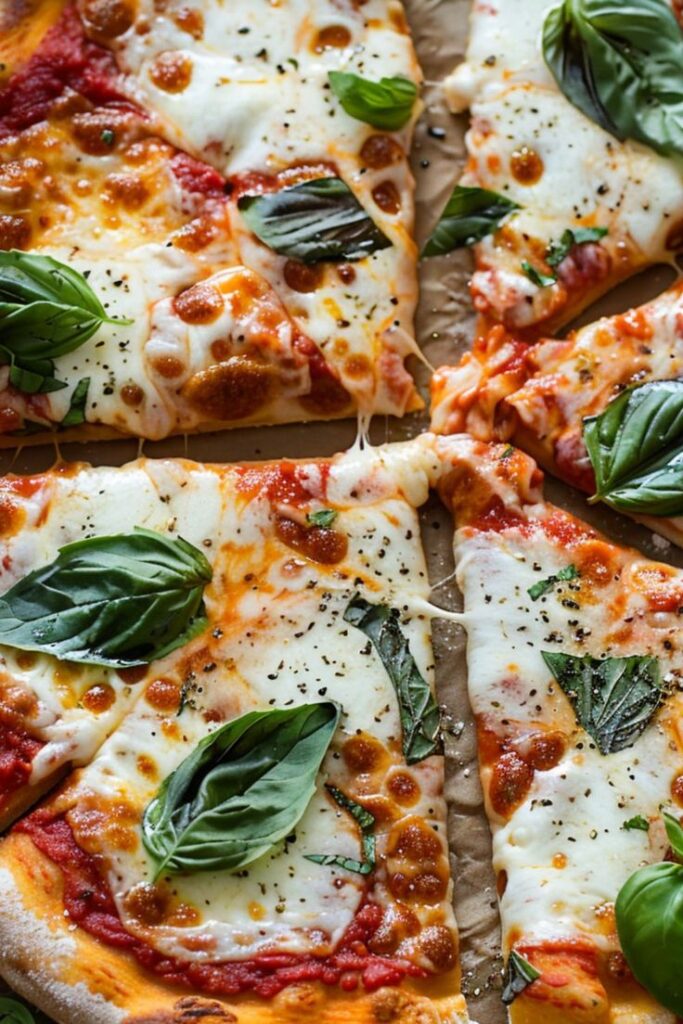
I remember one time I made a Margherita for some friends and used fresh basil from my tiny windowsill plant. One of them asked what I had done differently because it tasted so much brighter than the pizza I had made the week before. The only change was the basil. That is when it really clicked for me.
There is also a nutritional angle worth mentioning, even though I do not think anyone is eating pizza primarily for the vitamin content. USDA nutrient data shows fresh basil carries meaningfully higher vitamin C than the dried version. Drying concentrates certain compounds while destroying others, so you lose some of that nutritional benefit (Alibaba Spice Learning Center, 2025).
Not a reason to choose one over the other on its own, but a nice bonus if freshness was already winning the argument for flavor reasons. And honestly, flavor should be winning. I know some people will push back and say the difference is subtle enough that it does not matter for a home cook throwing together a weeknight pizza. Maybe. I used to be one of those people.
But if you have ever tasted a Margherita where the basil went on after the bake versus one where it just sort of sat under melted cheese the whole time, you know the difference is not subtle at all. It is night and day. The fresh version tastes alive, vibrant, like something that was just picked. The dried version tastes like a memory of basil, something that used to be bright but has faded over time.
Here is what I have landed on after all my experimenting. Keep dried basil in your pantry for sauces, stews, and anything that needs to cook for a while. It is perfectly fine for those applications. But for pizza? The final flourish on top? Fresh, added last, every time. I have stopped buying dried basil entirely at this point because I realized I was only using it as a crutch.
Now I keep a little plant on my windowsill and just snip what I need when pizza night rolls around. It is not complicated, it does not take much effort, and the payoff is enormous. So go ahead, make your pizza, pull it out of the oven, tear up some fresh leaves, and scatter them over the top. Then take a bite and tell me I am wrong. I will wait.
References
Alibaba Spice Learning Center. (2025, November 20). Fresh basil versus dried: Flavor, uses & substitution guide. https://spice.alibaba.com/spice-basics/fresh-basil-versus-dried!
ScienceDirect. (2023, April 27). Changes in volatiles and essential oil composition of three organs (leaf, stem and flower) of purple basil (Ocimum basilicum L.) by GC–MS combined with multivariate statistical approach. https://www.sciencedirect.com/science/article/pii/S2772753X23001132
U.S. Department of Agriculture. (2022). FoodData Central. https://fdc.nal.usda.gov