
 Posted by
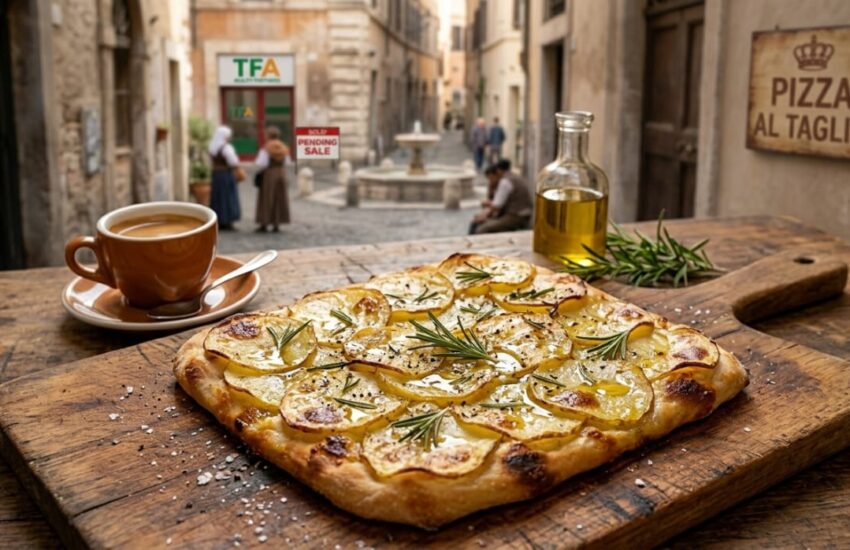
 I used to think Italian pizza was just margherita. Tomato, mozzarella, basil. Simple and perfect. Then I visited Rome and ordered a pizza that changed everything. It had no sauce. No cheese. Just thin slices of potato, olive oil, salt, and rosemary. I felt betrayed at first. Then I took a bite and understood. This wasn’t a mistake. This was a tradition.
Italian pizza is not one thing. It is a reflection of regional identity, local ingredients, and centuries of culinary history. Each region developed its own style and its own toppings based on what was available, affordable, and beloved by locals. The result is a diversity that most of us never experience when we order from a chain.
Neapolitan pizza is the one most of us recognize. It has a thin, soft base with a puffy, charred crust, baked quickly at very high temperatures in a wood-fired oven. The toppings are traditionally simple. The margherita, with tomato, mozzarella, and basil, was named after Queen Margherita on a visit to Naples in 1889. The marinara, even simpler, has tomato, garlic, oregano, and olive oil but no cheese. The Neapolitans are famously protective of their pizza. In 1984, they founded the Associazione Verace Pizza Napoletana to regulate the dough, limiting it to double zero flour, salt, yeast, and water. The tomato was a late arrival, introduced from the New World in the 16th century and initially viewed with suspicion. But once embraced, it became the foundation of the modern pizza.
When I traveled to Sicily, I encountered something completely different. The local specialty is sfincione, a thick, spongy, focaccia-like dough baked in a rectangular tray. The toppings are meatless, featuring a tomato sauce flavored with herbs, onions, and anchovies, topped with crispy breadcrumbs and grated hard cheese like Parmesan or pecorino. Mozzarella, which we associate with pizza, was a later American addition. The traditional Sicilian cheese was tuma, made from raw sheep’s milk. The anchovies, which Americans often reject, have a long history in Italian cuisine. Ancient Romans topped flatbreads with garum, a fermented fish sauce made from anchovies and sardines. This practice predates the use of tomatoes on pizza by centuries. Pizza marinara, one of the earliest Neapolitan pies, was made with tomato, anchovies, and little else- no cheese- because anchovies were cheap, abundant, and packed with flavor.
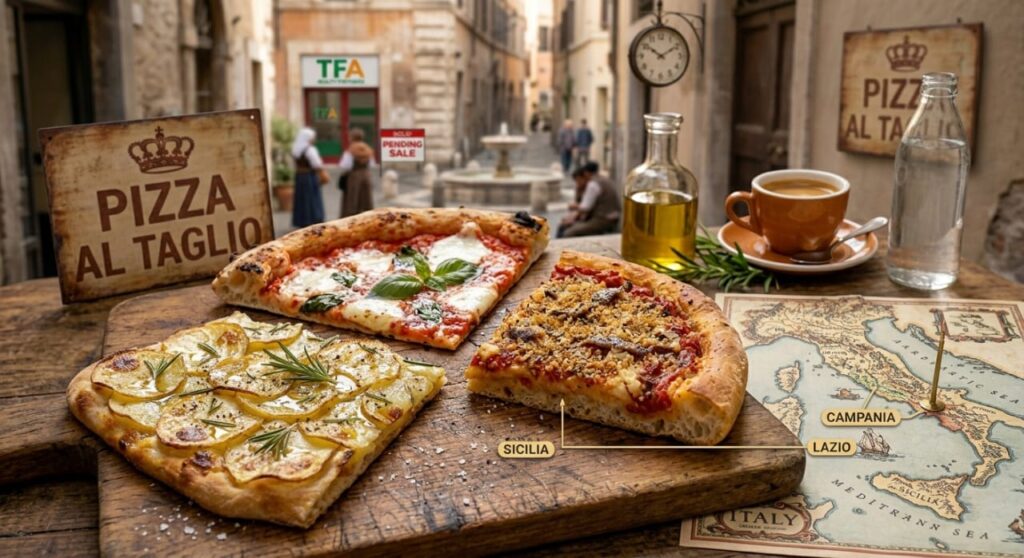
Roman pizza, known as pizza tonda romana, has a thin, crispy, almost cracker-like base. The toppings are often minimal and focused on quality. One of the most beloved Roman pizzas is pizza con patate. It is topped with paper-thin slices of potato, salt, olive oil, and herbs. Sometimes there is cheese; often there is not. It is considered peasant food, satisfying and affordable, which explains why potatoes, a humble ingredient, became the star of the dish. In other parts of Italy, the use of potatoes varies. In the south, potatoes are sometimes mashed and incorporated into the pizza crust itself, making it soft and tender.
The influence of regional ingredients extends to cheese and meats. In Sicily, where the majority of milk production comes from goats or sheep, hard grated cheeses like pecorino are favored. In Campania, the rich volcanic soil and climate produce an exceptionally creamy buffalo mozzarella that is central to the Neapolitan style. Even the sausage we associate with pizza has medieval roots. A late fifteenth-century Neapolitan cookbook describes using cervellato, a type of blood sausage, as a pizza topping.
When Italian immigrants arrived in the United States in the late 19th and early 20th centuries, they brought these regional traditions with them. In America, the styles evolved and merged. Sicilian-style pizza, with its thick, rectangular shape, became a staple in Italian-American bakeries, particularly in New York. The availability of fresh mozzarella from the booming U.S. dairy industry led to its widespread adoption on American pizza, a departure from the hard cheeses used in traditional Sicilian and some other Italian preparations. The New York slice, the Chicago deep dish, and the Detroit-style pizza all have their roots in Italian regional traditions.
What I find remarkable about this history is that the regional diversity of Italian pizza toppings is not just about taste. It is about survival and resourcefulness. Poor communities used what was available to them. The working classes of Naples needed inexpensive food they could eat quickly. They turned to tomatoes and simple toppings. In Rome, potatoes were a filling and affordable addition. In Sicily, the sea provided anchovies. Each region made the best of what it had, and that practicality became tradition.
The next time you order a pizza, consider going beyond pepperoni. Explore the regional styles. Try a simple potato pizza. Seek out a Sicilian slice with anchovies and breadcrumbs. You are not just eating a topping. You are tasting a history of adaptation, identity, and pride. That is the true influence of regional Italian cuisine on pizza toppings.
There is so much more to learn about the regional diversity of Italian food. Our website is filled with articles on culinary history, local ingredients, and authentic recipes. Head over and explore, because every region has a story worth tasting.
References
Sichef Florence Cooking. (2025, February 6). *The history of pizza in Italy: Regional differences, dough varieties, and leavening traditions*. https://sichef-florence.cooking/the-history-of-pizza-in-italy-regional-differences-dough-varieties-and-leavening-traditions/
EatingMeals. (2026, June 3). *Uncovering the authentic flavors: Traditional pizza toppings in Italy*. https://eatingmeals.com/what-are-the-traditional-pizza-toppings-in-italy/
PizzaPack. (2025, September 30). *Regional pizza styles explained: From New York to Naples*. https://pizzapack.com/blogs/news/regional-pizza-styles-explained-from-new-york-to-naples
Spice Electronics. (2020, July 5). *Pizzas and Italian regions: What are the substantial differences?* https://www.spice-electronics.com/en/blog/insights/pizza-difference-between-pizzas-in-the-italian-regions
Encyclopedia of Italian cuisine. (n.d.). *Italian cuisine*.