
 Posted by
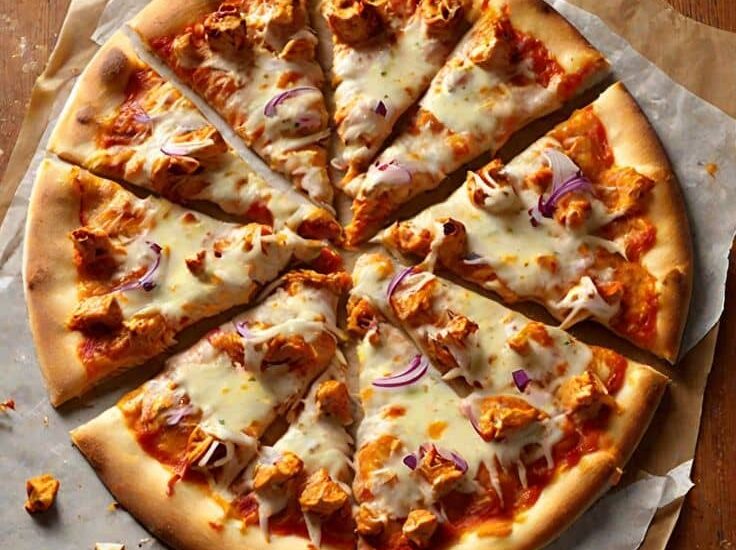
 I have to be honest with you. I did not grow up anywhere near Buffalo, New York. I grew up in a house where pizza was either plain cheese or pepperoni, and if you wanted to get crazy, maybe some mushrooms. But over the years, I have come to believe that Buffalo chicken pizza is one of the smartest, most satisfying mashups in all of American food. And I want to make the case for why blue cheese dressing, not ranch, is the correct partner for it.
If you are looking for the best Buffalo chicken pizza recipe, the secret is not in the crust or the cheese, it is in that funky, tangy blue cheese dressing that brings everything together. The whole story of Buffalo flavor starts back in 1964 at the Anchor Bar in Buffalo. I find it kind of amazing that such a huge culinary phenomenon came from such a simple, unplanned moment.
The co-owner, Teressa Bellissimo, apparently tossed some leftover chicken wings in hot sauce as a late-night snack for her son and his friends. That is it. That is how a legend was born. And here is the part that I think a lot of people forget. She served those wings from the start with celery and blue cheese dressing. Why? Not because of some elaborate marketing strategy. It was largely because that is what happened to be on hand in the kitchen that night.
That pairing was not a calculated decision. It was an accident of convenience. And I think that accident turned out to be absolute genius. So when I see pizza makers who swap in ranch dressing, I cannot help but feel like they are missing the point entirely. They are messing with a classic that got it right the first time.
Here is the thing about Buffalo sauce. It is built on cayenne pepper hot sauce and butter, and it delivers heat and acidity in roughly equal measure. That is a powerful combination right there. Now, blue cheese is made using a specific type of mold, Penicillium roqueforti, which develops those sharp, salty, slightly funky flavor compounds as the cheese ages. And that funk, that salinity, it does something magical. It cuts directly through the heat of the sauce. It does not simply cool things down the way a milder ranch dressing tends to do.
Ranch is built mostly around buttermilk, garlic, and herbs. It softens the heat. It makes things comfortable. Blue cheese dressing does not do that. Blue cheese dressing argues with the heat. It challenges it. And I firmly believe that a good Buffalo chicken pizza needs that argument to feel complete. You need that tension on your tongue. It is what keeps you coming back for another bite.
On a pizza specifically, this whole dynamic matters even more than it does with a plate of wings. Think about it. Pizza dough and melted mozzarella already bring their own richness and salt to the table. They are heavy, comforting, and delicious. If you top that with Buffalo chicken and then drizzle on a mild, creamy dressing, what do you end up with? A pie that tastes flat. One-note. All richness with no contrast. It is like a song with only bass and no treble.
Making homemade Buffalo chicken pizza is easier than you think, especially when you use a quality buffalo chicken pizza sauce and finish with a generous drizzle of creamy blue cheese. But blue cheese dressing, drizzled on after the pizza comes out of the oven? That adds a cold, sharp, tangy layer that keeps every single bite interesting.
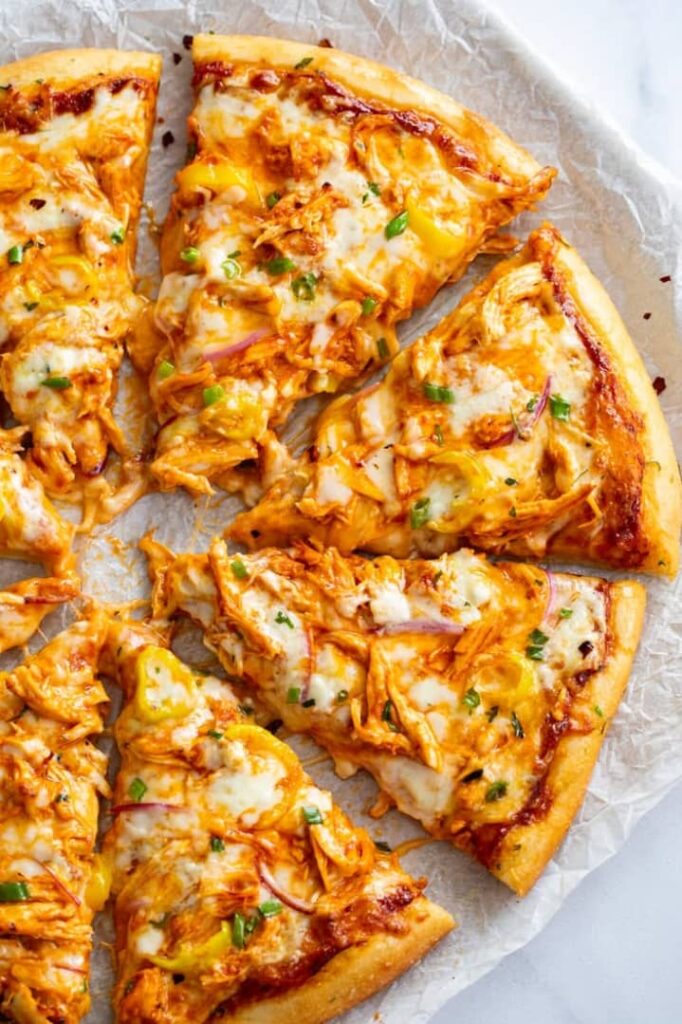
It is the difference between a pizza that is merely spicy and one that has real, genuine depth. I remember the first time I made this at home. I was skeptical. I thought, “Blue cheese on pizza? That seems like a lot.” But the moment I took that first bite, I was a convert. The hot, spicy chicken, the gooey mozzarella, the crispy crust, and then that cold, funky burst of blue cheese. It was a revelation.
I will admit that blue cheese is a polarizing ingredient. I know that. I have friends who literally gag at the sight of it. And I understand why some people default to ranch just to avoid the fuss. The ranch is safe. Ranch is familiar. But here is my challenge to you. If you are going to commit to Buffalo chicken pizza at all, commit to it fully.
Do not half-step this. Use real blue cheese dressing with visible crumbles. Do not use that smooth, bottled stuff that tastes more like mayonnaise than cheese. Get the good stuff with the chunks. And here is another pro tip. Add the chicken after tossing it separately in Buffalo sauce so it does not get soggy under the cheese. Nobody wants soggy chicken on their pizza.
And please, finish with a light scatter of chopped celery for crunch. That little bit of freshness and texture is the final piece of the puzzle. That is the version that honors where this flavor combination actually came from.
Food trends come and go. I have seen so many weird food fads come and go over the years. Remember when everyone was putting gold leaf on everything? Or that phase where everything was served in a mason jar? But some pairings earn their staying power through decades of testing in bars, kitchens, and backyard parties. Buffalo chicken and blue cheese have absolutely earned that staying power.
It is not a gimmick. It is not a trend. It is a classic for a reason. Whether you call it Buffalo chicken pizza with blue cheese or just a spicy chicken pizza, this dish has earned its place as a game-day favorite and a weeknight dinner hero. Ranch is a fine dressing. I am not here to hate on the ranch. It is great for dipping vegetables. It is good on a salad. It has its place in the world. But it is not the right call here. On a Buffalo chicken pizza, ranch is a compromise. Blue cheese is a commitment. And I think we all deserve the commitment.
So the next time you are ordering pizza or making one at home, I want you to think about this. Do you want a pizza that is just spicy? Or do you want a pizza that has real depth, real character, and a little bit of an edge? If you choose the latter, you know what to do. Skip the ranch. Embrace the funk. Long live the blue cheese.
References
eCFR. (n.d.). 21 CFR 133.106 — Blue cheese. https://www.ecfr.gov/current/title-21/chapter-I/subc
chapter-B/part-133/subpart-B/section-133.106
National Chicken Council. (2017, January 24). Chicken wing history. https://www.nationalchickencouncil.org/chicken-wing-history/
Wikipedia contributors. (n.d.). Anchor Bar. Wikipedia. https://en.wikipedia.org/wiki/Anchor_Bar