
 Posted by
 You know those recipes that feel almost like cheating? The ones that come together in the time it takes to set the table, yet somehow make you look like you actually know what you are doing in the kitchen? For me, shrimp scampi will always be that dish. I cannot count how many times I have turned to this recipe on busy weeknights when I needed something fast but refused to order takeout again.
And every single time, without fail, someone at the table asks if this is a special occasion meal. There is something almost unfair about shrimp scampi. It takes maybe twenty minutes to pull together, uses a handful of ingredients most kitchens already have, and yet when it lands on the table, it looks and tastes like you spent the afternoon cooking.
That kind of effort-to-payoff ratio is rare, and it is why this easy shrimp scampi recipe has earned its place as a weeknight staple in so many households. If you are looking for the best shrimp scampi recipe that balances rich flavors with minimal fuss, this classic preparation delivers every single time without requiring special ingredients or advanced techniques.
The origins of scampi are worth a quick detour here, mainly because understanding where a dish comes from actually helps you cook it better. The word scampi itself refers to a type of small lobster langoustine common in Italian and Adriatic cooking. When Italian immigrants arrived in the United States and could not easily find langoustines, shrimp became the natural substitute.
The preparation stayed the same: garlic, butter, white wine, a squeeze of lemon. What emerged was something that became more American than Italian, yet still carries the soul of Mediterranean cooking. I like thinking about that when I am standing at my stove about all those cooks before me who adapted and made something new with what they had.
Getting the shrimp right is the most important part, and honestly, it took me a few tries to figure this out. I used to end up with rubbery, overcooked shrimp that bounced off the plate. Large or extra-large shrimp work best, they hold up to the heat without turning tough, and they give you something to actually bite into. Pat them dry before they hit the pan.
I cannot stress this enough. Moisture is the enemy of a good sear. A hot pan with olive oil and butter gives you that slightly golden edge on the shrimp, which adds a depth of flavor that a steamed or poached shrimp simply cannot offer. Have you ever noticed how restaurant shrimp scampi has that beautiful color? That comes from a hot pan and dry shrimp.
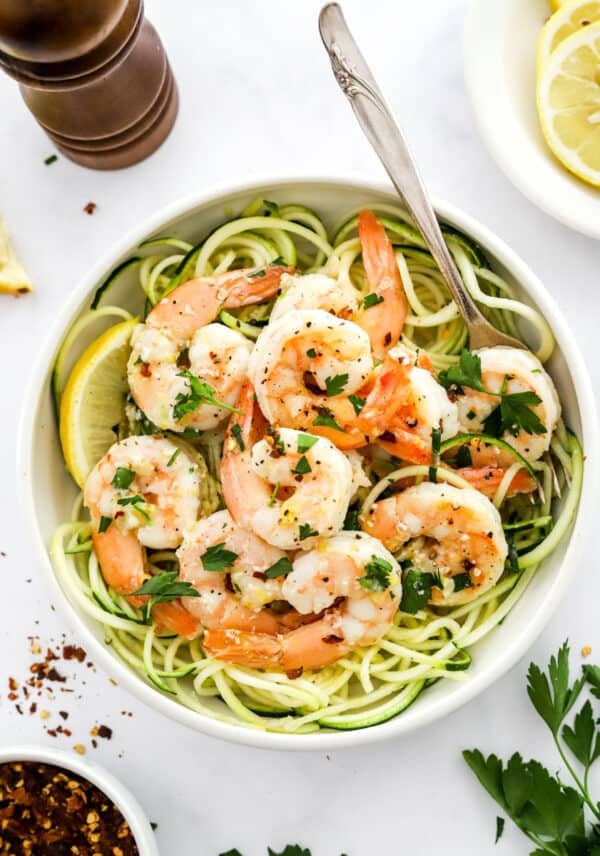
The sauce is where opinions diverge, and I have tested enough variations to have strong feelings about this. Some people skip the white wine entirely and rely on chicken broth. That is a reasonable choice, but it produces a noticeably flatter result. A dry white wine, something you would actually drink, not cooking wine from a bottle with a shaker cap, brings an acidity that cuts through the butter and ties the whole dish together.
Half a cup is usually enough. Let it reduce for a minute or two before adding the shrimp back in. I keep a bottle of Pinot Grigio in my fridge just for this purpose. The lemon juice matters too, and fresh is the only way to go. Bottled lemon juice has this metallic edge that ruins the brightness you are trying to achieve.
Pasta or no pasta is another debate worth having. Linguine is the traditional companion, and it makes sense: the long strands catch the sauce beautifully. But shrimp scampi over crusty bread, or simply on its own as a starter, is entirely defensible. The dish does not need pasta to be complete. Sometimes I serve it with a simple green salad and call it a day. Other times, I go all in on the pasta and double the sauce so every strand gets coated.
There is no wrong answer here, which is part of why I love this dish so much. Fresh parsley at the end is not optional. I learned this lesson the hard way when I once skipped it thinking nobody would notice. They noticed. Or at least, something felt missing even if they could not name it. Parsley brightens the color, adds a faint herbal note, and signals to everyone at the table that someone paid attention.
Shrimp scampi rewards that kind of attention. It is a simple dish, but simple dishes have the least margin for error and the most room for pride when you get them right. I should also mention that this recipe adapts well to feeding a crowd. Double everything and use your largest skillet. The key is not crowding the pan when you cook the shrimp work in batches if you need to.
Overcrowding drops the pan temperature and steams the shrimp instead of searing them. That golden edge I mentioned earlier? You lose it completely when the pan is too full. Looking for more reliable recipes like this one? Save this classic shrimp scampi recipe from Simply Recipes for a reliable version that never disappoints.
References
Parasecoli, F. (2004). Food, Identity, and Cultural Reproduction in Immigrant Communities. Social Research, 71(2), 55–66. https://doi.org/10.1353/sor.2004.0033
U.S. Food and Drug Administration. (2023). Selecting and Serving Fresh and Frozen Seafood Safely. https://www.fda.gov/food/buy-store-serve-safe-food/selecting-and-serving-fresh-and-frozen-seafood-safely
McGee, H. (2004). On Food and Cooking: The Science and Lore of the Kitchen. Scribner. https://www.simonandschuster.com/books/On-Food-and-Cooking/Harold-McGee/9780684800011
Davidson, A. (2014). The Oxford Companion to Food (3rd ed.). Oxford University Press. https://www.oxfordreference.com/display/10.1093/acref/9780199677337.001.0001/acref-9780199677337