
 Posted by
 From Italian American roots to passionate debates, explore this iconic sandwich. I have eaten a lot of sandwiches in my time, more than I probably should admit to anyone who cares about my cholesterol levels.
But there is one sandwich that keeps pulling me back, one that makes me think about the relationship between street food and pizza culture, and that sandwich is the Philly cheesesteak. Now, you might be wondering what a cheesesteak has to do with pizza, and honestly, that is a fair question. But stick with me here, because the connection runs deeper than you might think.
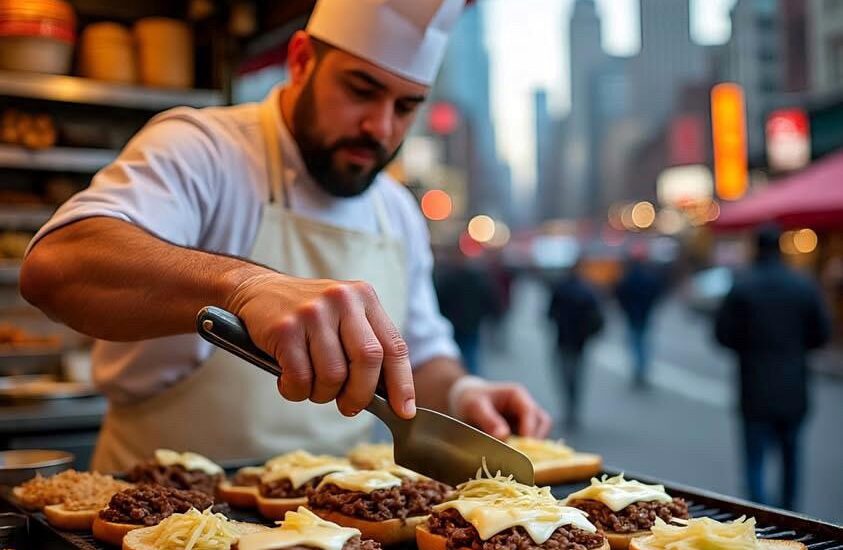
The Philly cheesesteak was born in the 1930s in South Philadelphia, around the same time pizza was gaining popularity in American cities. Pat Olivieri, a hot dog vendor, decided one day to grill up some beef from the butcher and throw it on an Italian roll. A cab driver smelled it, wanted to try it, and the rest became history.
Pat and his brother Harry opened up Pat’s King of Steaks, and suddenly Philadelphia had its signature sandwich. The timing matters here because this was an era when Italian American communities were shaping urban food culture in profound ways. While New York and New Haven were perfecting their pizza styles, Philadelphia was creating something equally important in the world of quick, satisfying, unpretentious food.
What strikes me most about the cheesesteak is how it shares the same DNA as great pizza. Both are working-class foods that became cultural icons. Both rely on quality ingredients prepared simply. Both inspire fierce loyalty and endless debates about the “right” way to make them. And both emerged from Italian American communities that understood something fundamental about food: it does not need to be fancy to be transcendent.
When I think about the pizza makers who emigrated from Naples and adapted their craft to American tastes and ingredients, I see the same spirit in those early cheesesteak pioneers who took the concept of a meat sandwich and elevated it into something worth traveling across the country to experience.
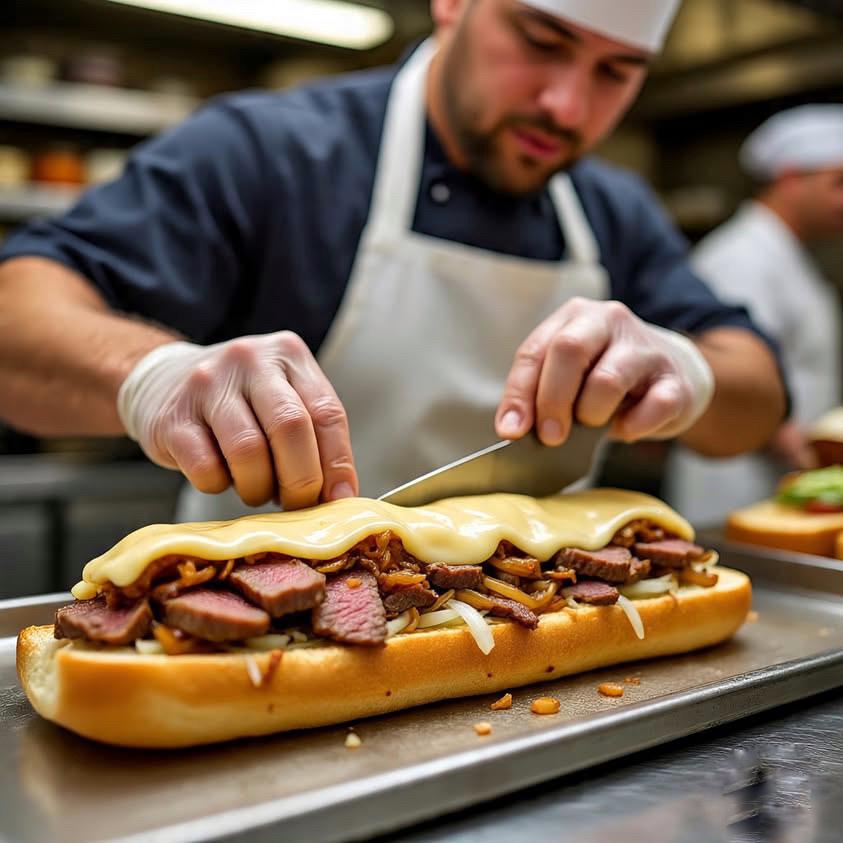
The construction of a proper Philly cheesesteak follows a logic that any pizza maker would understand. You start with your foundation, which in this case is an Amoroso roll, the Philadelphia bakery that has been supplying these perfect vessels since 1904. The roll needs to be soft enough to bite through but sturdy enough to hold everything together without falling apart in your hands. Sound familiar? That is exactly what we ask of good pizza dough.
Then comes the meat, traditionally ribeye sliced so thin you can practically see through it. The meat gets chopped on the griddle as it cooks, developing those crispy, caramelized edges that add texture and depth. Again, we see that interplay between technique and ingredient quality that defines both great pizza and great cheesesteaks.
Now we arrive at the cheese debate, which rivals any discussion about pizza toppings. The original did not even have cheese, but once it was added, people could not agree on which cheese belonged on a proper cheesesteak. Some swear by Cheez Whiz, which processed cheese sauce that melts into every crevice of the sandwich. Others insist on provolone for its sharp, sophisticated flavor. American cheese has its devotees, too.
I have had versions with all three, and honestly, each brings something different to the experience. The Whiz creates this unified, gooey texture that binds everything together. The provolone adds a more complex, mature flavor profile. The American sits somewhere in between. This is not unlike the endless debates in the pizza world about low-moisture mozzarella versus fresh mozzarella or whether buffalo mozzarella belongs on a Neapolitan pizza.
Walking through South Philadelphia, particularly around the intersection of 9th Street and Passyunk Avenue, where both Pat’s and Geno’s hold court, you feel something similar to what you experience in the great pizza neighborhoods of Brooklyn or New Haven. People are passionate. They have opinions.
They grew up with this food, and it means something to them beyond simple sustenance. The late-night crowds that gather at these cheesesteak spots mirror the pizza shop crowds in other cities, everyone looking for that perfect combination of salt, fat, protein, and carbs that somehow feels like home.
The ritual of ordering matters too. You need to know what you want before you get to the window. The standard question is “with or without,” meaning with or without onions. You do not stand there pondering. You do not ask for modifications that change the fundamental nature of the sandwich. This is the same unspoken etiquette you find in traditional pizza places, where the menu is what the menu is, and everyone understands that the simplicity is the point.
What both pizza and cheesesteaks teach us is that great food does not require complexity. It requires respect for ingredients, mastery of technique, and an understanding that sometimes the most satisfying meals are the ones that do not try too hard. They are both foods that bring people together, that spark conversations that create memories. They are both worth defending and worth seeking out in their authentic forms, even as variations and interpretations spread across the country and the world.
Reference
Diner, H. R. (2001). Hungering for America: Italian, Irish, and Jewish foodways in the age of migration. Harvard University Press.
Cinotto, S. (2013). The Italian American table: Food, family, and community in New York City. University of Illinois Press.
Levenstein, H. (2003). Revolution at the table: The transformation of the American diet. University of California Press.