
 Posted by
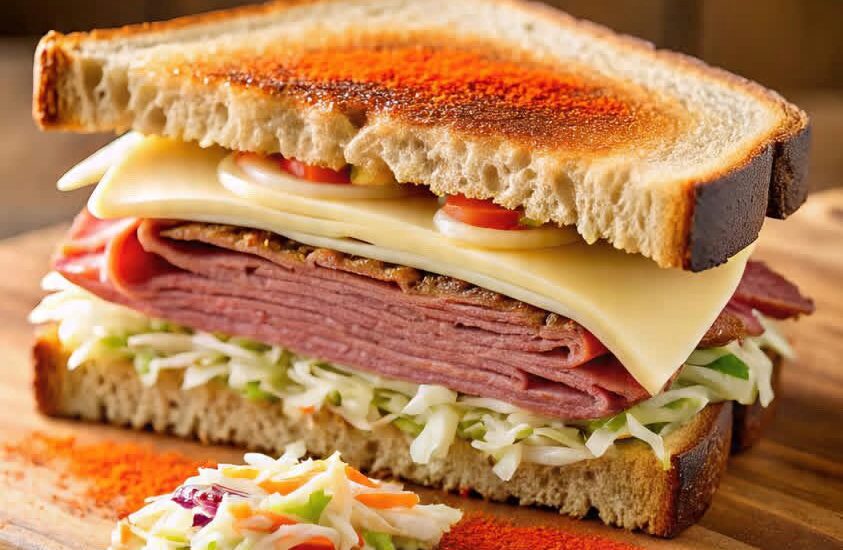
 I never really understood the appeal of the Reuben sandwich until I tried making one at home during a particularly ambitious cooking weekend. Like most people, I had always been more focused on pizza when it came to my comfort food cravings. But after diving deep into sandwich history while working on content for PIZZAPEDIA, I realized that the Reuben deserves just as much attention as any margherita or pepperoni pie. This stacked combination of corned beef, Swiss cheese, sauerkraut, and Russian dressing on rye bread has a story worth telling, and honestly, it has become one of my go-to meals when I want something hearty and satisfying. Find out why the Reuben sandwich deserves a spot alongside pizza in your meal rotation. From deli origins to perfecting the recipe at home with PIZZAPEDIA.
The thing about the Reuben is that it challenges everything you think you know about sandwich construction. Most sandwiches are pretty straightforward in their flavor profiles. You have your meat, your cheese, maybe some lettuce and tomato, and you call it a day. But the Reuben? It throws sauerkraut into the mix, which seems like an odd choice until you actually taste how the tangy fermented cabbage cuts through the richness of the corned beef and melted Swiss. That first bite I took of my homemade version completely changed my perspective on what a sandwich could be.
When you look at the history of iconic foods, and I mean really dig into the research like we do at PIZZAPEDIA, you find that most classics have murky origins. Pizza has its disputed stories about who invented the margherita. Sandwiches in general are credited to the Earl of Sandwich, though people were probably putting meat between bread long before he made it fashionable. The Reuben is no different. Some food historians point to Arnold Reuben, a German-Jewish deli owner in New York City who supposedly created it in the 1910s or 1920s. Others insist it was invented by Reuben Kulakofsky, a grocer in Omaha, Nebraska, who made it for his poker buddies sometime in the 1920s or 1930s.
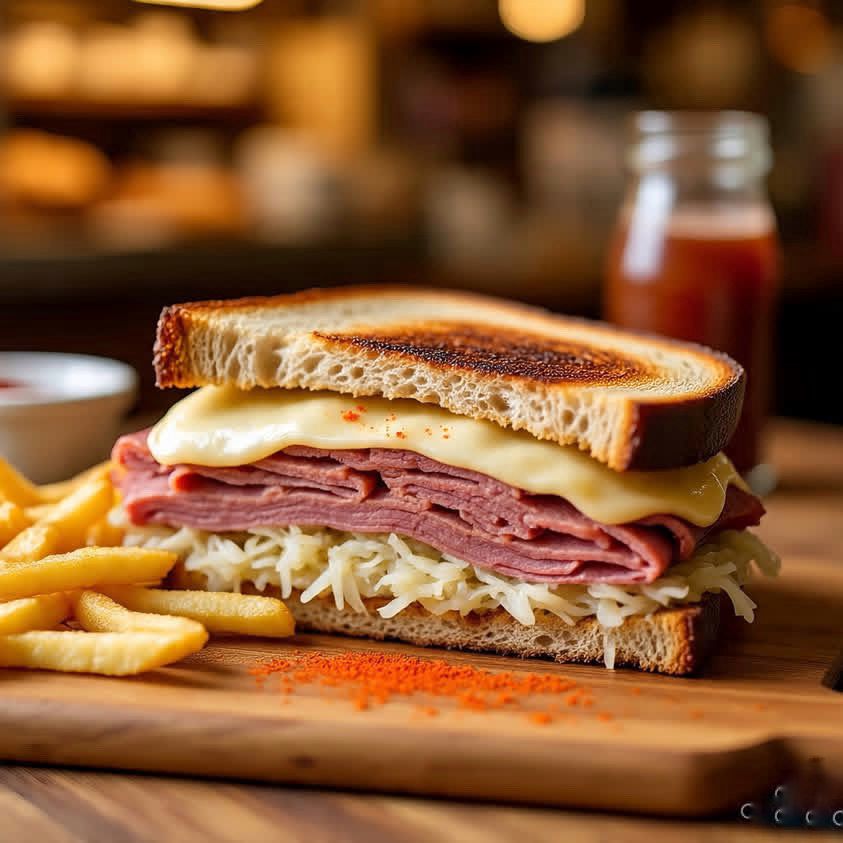
Does it really matter who invented the Reuben sandwich? I used to think these origin stories were crucial to understanding a dish, but the more I write about food history for PIZZAPEDIA, the more I realize that what matters is how a recipe evolves and why it endures. The Reuben has stuck around for nearly a century because it works. The combination of flavors and textures just makes sense in a way that transcends whoever first put those ingredients together.
Let me walk you through what makes this sandwich special from a technical standpoint. The corned beef is usually the star of the show, and it should be sliced thin enough to be tender but thick enough to have some substance. When I made my first Reuben, I bought pre-sliced corned beef from the deli counter, and while it was decent, it was not until I got my hands on a proper corned beef brisket and sliced it myself that I understood the difference quality meat makes. The brisket should be well-marbled and cooked until it practically falls apart.
Then you have the Swiss cheese, which melts beautifully and adds a creamy, slightly sweet counterpoint to the salty meat. I have seen people try to substitute other cheeses, and while cheddar or provolone might work in other sandwiches, they just do not have the right flavor profile for a Reuben. Swiss is non-negotiable in my book, much like how mozzarella is essential for a proper Neapolitan pizza.
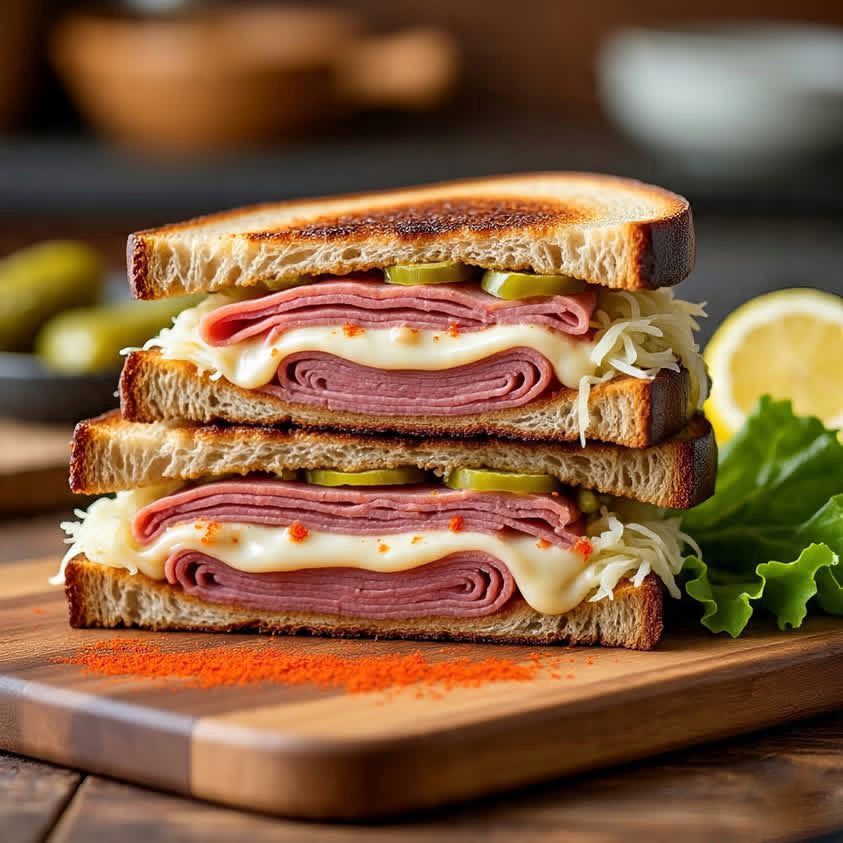
The sauerkraut is where things get interesting. A lot of people tell me they do not like sauerkraut, and I get it. Fermented foods can be polarizing. But in a Reuben, the sauerkraut is not overwhelming. You want to drain it well before adding it to the sandwich so it does not make everything soggy, and when you grill the sandwich, the sauerkraut mellows out and becomes this tangy, slightly sweet element that balances the richness of everything else.
Russian dressing is the final component, and this is another area where people have strong opinions. Some insist on Thousand Island dressing instead, and while the two are similar, Russian dressing typically has a bit more horseradish kick to it. I make mine from scratch now with mayonnaise, ketchup, horseradish, Worcestershire sauce, and a few other ingredients, and the difference between homemade and store-bought is as dramatic as the difference between homemade pizza sauce and the stuff from a jar.
Grilling the Reuben is where the magic happens, and this is another parallel to pizza making. Just like how a pizza needs the right oven temperature to get that perfect crust, a Reuben needs medium heat and patience. You want the bread to get golden and crispy while giving the cheese enough time to melt completely. Rush it with high heat, and you will burn the bread before the inside is properly heated through. I butter the outside of the rye bread slices before grilling, which helps achieve that restaurant-quality golden crust.
Reference
Smith, A. F. (Ed.). (2012). The Oxford encyclopedia of food and drink in America (2nd ed.). Oxford University Press. https://doi.org/10.1093/acref/9780199734962.001.0001
Kraig, B., & Sen, C. T. (2013). Street food around the world: An encyclopedia of food and culture. ABC-CLIO.
U.S. Department of Agriculture, Food Safety and Inspection Service. (2019). Corned beef and food safety. https://www.fsis.usda.gov/food-safety/safe-food-handling-and-preparation/meat-fish-seafood/corned-beef-and-food-safety