

 Posted by
 I did not grow up thinking much about herbs. My mother kept a small garden out back, and I remember brushing past the thyme plants without a second thought, just another green thing in a row of green things. It was not until I started paying closer attention to pizza, really paying attention, the way you do when you realize that good pizza is not just about the sauce or the cheese, that thyme finally got the recognition it deserved. And now I cannot imagine building a great pizza without it. Discover how this powerful herb enhances flavor, boosts your crust, and why every pizza lover needs it in their kitchen.
Thyme is one of those thyme herb uses that sneaks up on you. It does not shout the way oregano does. It does not bulldoze everything else on the pizza the way raw garlic can. What fresh thyme does instead is deepen the flavor of whatever it sits beside. On a roasted tomato pizza, it adds a faintly woodsy, almost floral note that makes the tomatoes taste more like themselves. On a white pizza with ricotta and olive oil, thyme turns the whole thing into something that feels almost ancient, like food that has been eaten in Mediterranean kitchens for centuries. Which, honestly, it has been.
The history of thyme as a culinary herb goes back a long way. The ancient Greeks used it extensively, and it spread through Europe as one of the foundational herbs in what we now think of as classic cooking. Thyme herb benefits were recognized not just in the kitchen but in medicine, too.
Thyme contains thymol, a natural compound with antimicrobial properties that has been studied in food preservation and health contexts. I am not saying your pizza is a health food, but knowing that the herb scattered across your slice has genuine nutritional and functional depth does make it feel like more than just a garnish.
When it comes to thyme and pizza specifically, the question I get asked most is whether to use fresh thyme or dried thyme for cooking. I have used both, and I will say this: they serve different purposes. Dried thyme is more concentrated, more aggressive in flavor, and it works beautifully when baked into a sauce or stirred into a ricotta base before the pizza hits the oven.
The heat mellows it out and lets it blend. Fresh thyme sprigs, on the other hand, are what you want scattered over the top after the pizza comes out, or maybe thrown on in the last minute of baking so they wilt just slightly without losing that bright, green quality. Both are right. It just depends on when and how you want the herb to show up in the final bite.
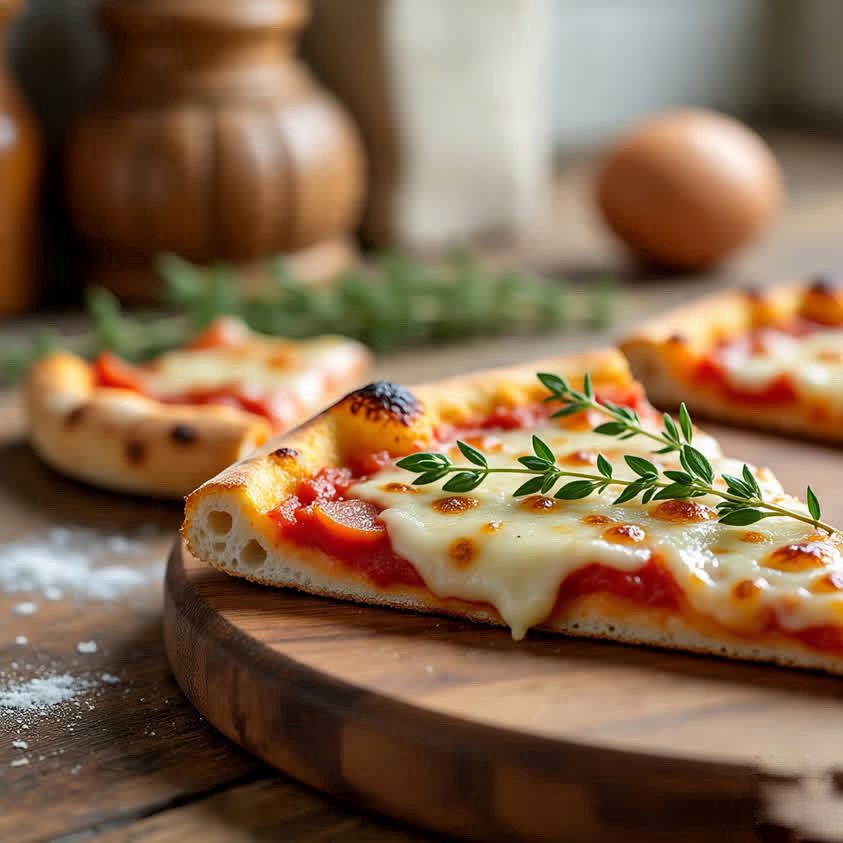
One of my favorite things to do at Pizzapedia is explore ingredient combinations that people overlook, and thyme on pizza consistently surprises people who have never tried it. I made a caramelized onion and goat cheese pizza last fall and finished it with fresh thyme and a drizzle of honey. It sounds fussy, I know.
But the thyme cut through the sweetness of the onions and gave the whole pizza a savory backbone that made it feel grounded. My friend, who had shown up expecting a basic margherita, ate three slices and asked what was in it before I even had to say anything. That is what thyme does. It makes people lean in.
There is also something to be said for thyme as a thyme seasoning in pizza dough itself. I started experimenting with working dried thyme into the dough a couple of years ago, inspired by some focaccia recipes I had been testing.
When it is baked into the crust, the flavor becomes subtle, almost imperceptible on its own, but somehow the crust tastes more complex, more interesting than a plain dough. It is the kind of detail that elevates a pizza without announcing itself loudly. Which is exactly the kind of detail I think home cooks should be paying more attention to.
Growing thyme at home is also worth mentioning because it is genuinely one of the easiest herbs to keep alive. It is drought-tolerant, it does not demand much in the way of soil quality, and it grows in small containers on a sunny windowsill without much complaint. I have a little pot on my kitchen counter that I have been snipping from for two years now. Having fresh thyme within arm’s reach changes how you cook. You stop measuring and start tasting, throwing a few sprigs into things on instinct. That instinct, over time, becomes second nature.
Reference
Baser, K. H. C., & Buchbauer, G. (Eds.). (2010). Handbook of essential oils: Science, technology, and applications. CRC Press.
Delaquis, P. J., Stanich, K., Girard, B., & Mazza, G. (2002). Antimicrobial activity of individual and mixed fractions of dill, cilantro, coriander, and eucalyptus essential oils. International Journal of Food Microbiology, 74(1–2), 101–109. https://doi.org/10.1016/S0168-1605(01)00734-6
Florou-Paneri, P., Christaki, E., & Bonos, E. (2013). Lactic acid bacteria as a source of functional ingredients. In A. Mendez-Vilas (Ed.), Microbial pathogens and strategies for combating them: Science, technology and education (pp. 572–582). Formatex Research Center.