
 Posted by
 Last year, I grew basil on my own kitchen windowsill, mostly because I killed it within two weeks. I overwatered it, under-lit it, and generally treated it like a houseplant instead of the fussy little herb it actually is. But that failure taught me something important about fresh basil that I carry into every pizza I make now, which is that this herb demands respect, and when you give it that respect, it repays you tenfold on top of a good pizza.
Basil is one of those ingredients that people assume is just a garnish, something you toss on at the end for a pop of color. I used to think that way too. Then I had a Margherita pizza at a tiny place that barely had seating, and the basil on top was not just decorative, it was the whole point. The tomato sauce and the mozzarella were doing their jobs, sure, but the basil tied everything together in a way that made me stop mid-bite and ask myself why I had never paid closer attention to this leaf before.
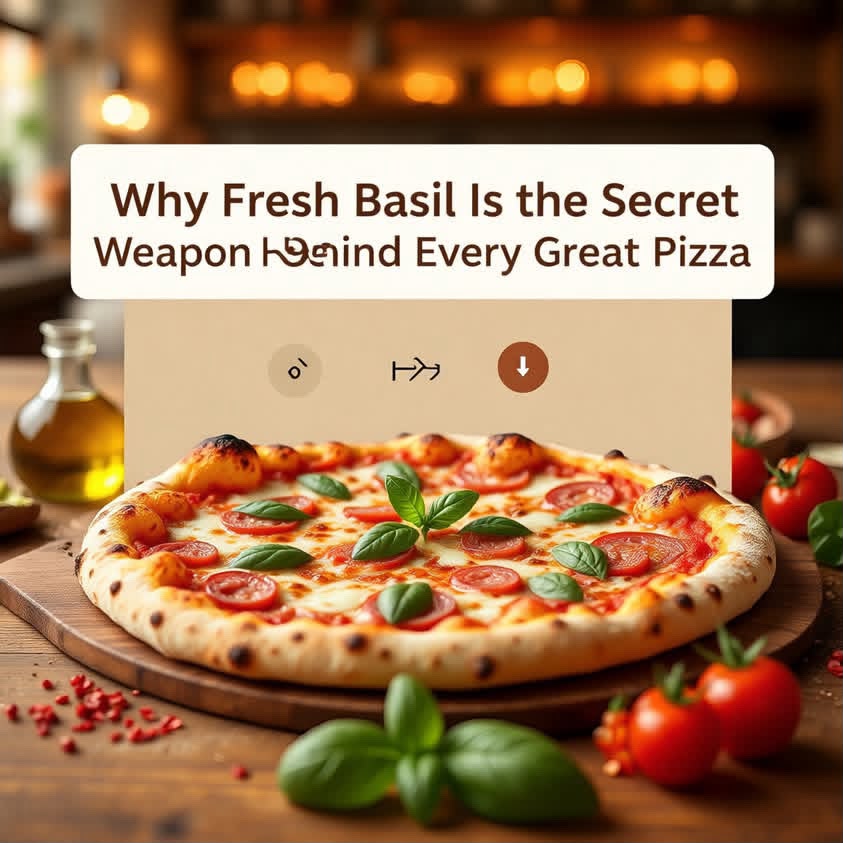
There is a reason basil pairs so naturally with tomato and cheese, and it comes down to chemistry as much as tradition. Basil contains compounds like linalool and eugenol, which give it that peppery, slightly sweet, almost minty aroma. When fresh basil hits the heat of a pizza oven, even for a few seconds, those aromatic oils release in a way that dried basil simply cannot replicate. Dried basil has its place in a spice rack, do not get me wrong, but if you are chasing that authentic pizzeria flavor, fresh basil leaves are non-negotiable in my opinion.
I have gone back and forth for years on the great basil timing debate. Do you add it before the pizza goes into the oven, or do you wait until it comes out? I used to be firmly in the pre-bake camp because I liked the slightly wilted, almost fried texture the leaves take on. But lately I have shifted toward adding basil right after the pizza comes out of the oven, torn by hand rather than sliced with a knife. Why torn and not sliced? Because tearing the leaves releases more of that essential oil along the rough edges, and it just feels more rustic, more like something your grandmother would do without measuring anything.
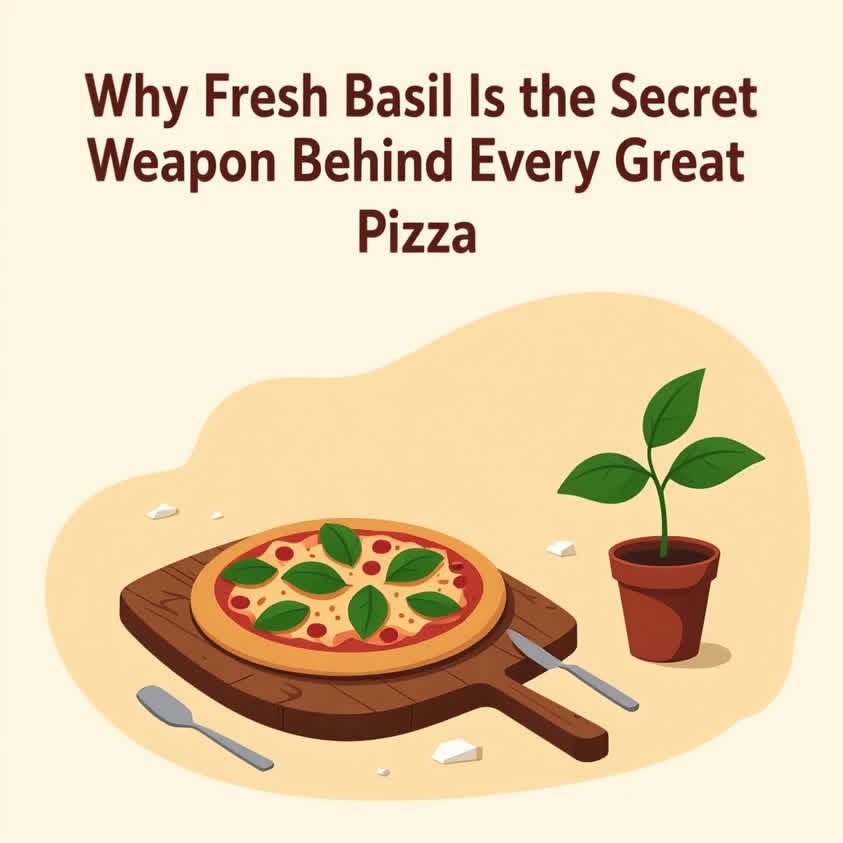
Genovese basil is the classic variety most of us picture when we think of pizza, with its broad, slightly ruffled leaves and that unmistakable sweet aroma. But I have also experimented with Thai basil on a spicier pie, and the anise-like kick it brings works surprisingly well against a spicy soppressata or a drizzle of chili oil. Lemon basil is another one worth trying if you want to catch people off guard in a good way. Not every pizza calls for the traditional route, and honestly, some of my favorite kitchen experiments happened because I got bored of doing things the expected way.
Growing your own basil, if you have the patience for it, changes your relationship with the herb entirely. Store-bought basil often sits in plastic clamshells for who knows how long before it reaches your kitchen, and by the time you unwrap it, half the leaves are already bruised or blackened at the edges. When you grow it yourself, even just a small pot near a sunny window, you get to pick the leaves at their peak, right before they go onto the pizza. There is something satisfying about walking a few feet from your oven to your basil plant instead of driving to the store because you forgot to buy some.
Storage matters more than people realize too. Basil hates the cold, which surprises a lot of home cooks who instinctively toss every green thing into the refrigerator. Cold temperatures cause basil leaves to blacken and lose their fragrance fast. I keep mine in a glass of water on the counter, like a bouquet of flowers, and it lasts noticeably longer than anything I have tried shoving into a crisper drawer.
At the end of the day, basil is not just a pizza topping, it is a flavor decision that affects the entire eating experience. Whether you are making a classic Margherita, experimenting with Thai basil on something spicy, or just tearing a few leaves over a slice from your favorite pizzeria, the herb deserves more credit than it usually gets. I certainly gave it more credit after that little windowsill disaster of mine, and my pizza has been better for it ever since.
Reference
Cai, X., Xu, X., Liu, C., & Chen, S. (2023). Identification of key aromatic compounds in basil (Ocimum L.) using sensory evaluation, metabolomics and volatilomics analysis. Foods, 12(1), Article 85. https://doi.org/10.3390/metabo13010085
Palermo, M., Paradiso, R., De Pascale, S., & Fogliano, V. (2022). A rapid procedure for the simultaneous determination of eugenol, linalool and fatty acid composition in basil leaves. Foods, 11(21), Article 3315. https://doi.org/10.3390/foods11213315
Purushothaman, B., PrasannaSrinivasan, R., Suganthi, P., Ranganathan, B., Gimbun, J., & Shanmugam, K. (2018). A comprehensive review on Ocimum basilicum. Journal of Natural Remedies, 18(3), 71–85. https://doi.org/10.18311/jnr/2018/21324