

 Posted by
 Discover why capicola pizza deserves a spot on your next order, from its cured Italian roots to easy tips for building the perfect capicola pie at home. The first time a coworker brought capicola to a work potluck and called it gabagool, and I genuinely thought she was joking. She was not joking. That is apparently just how a lot of Italian American families pronounce it, and once I started paying attention to pizza menus around town, I realized this cured meat has been quietly sitting on ingredient lists for years without me ever giving it a second thought. Capicola pizza is one of those toppings that people either grew up with or completely overlooked, and I fall into the second camp, which is a little embarrassing given how much pizza I eat.
So what exactly is capicola? In the simplest terms, it is a cured pork product made from the neck or shoulder area of the pig, seasoned with a mix of spices that usually includes paprika or hot pepper, then slow-cured for weeks or sometimes months. The name comes from the Italian words for head and neck, capo and collo, which tells you right away where on the animal this cut originates. There is a sweet version and a spicy version, sometimes labeled hot capicola, and the flavor difference is not subtle at all. I tried both on separate pizzas last month just to compare, and the hot version left my mouth tingling in a way that made me reach for water more than once.
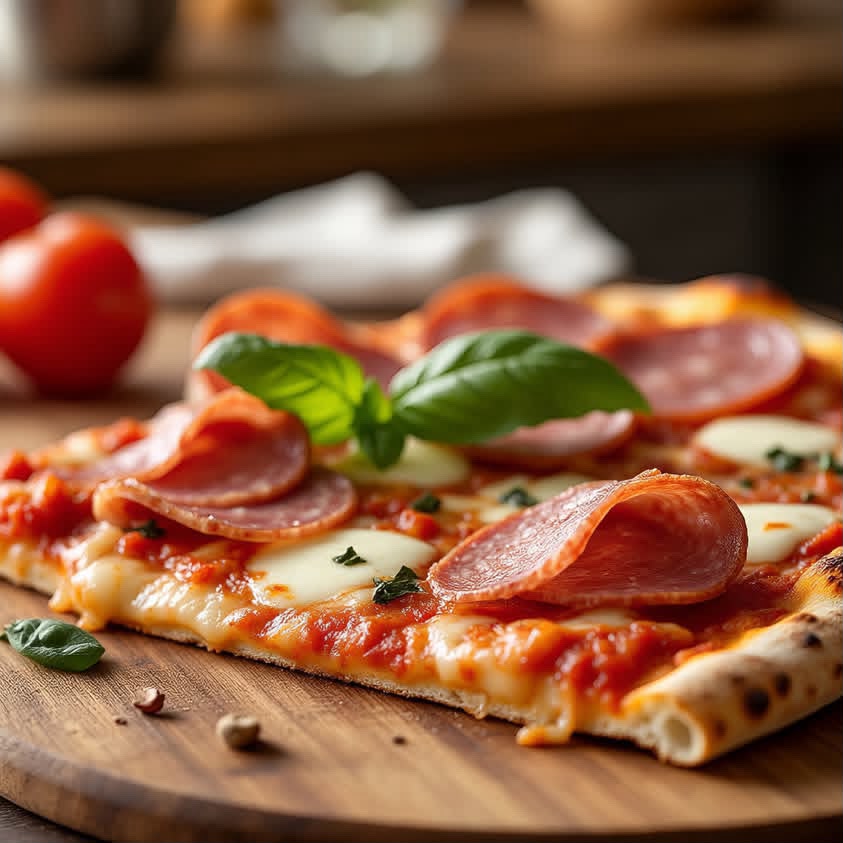
Capicola did not start as a pizza ingredient at all; it started as a way to preserve meat before refrigeration existed, which is true of most cured meats if you think about it. Italian immigrants brought the tradition with them to the United States, and it eventually found its way into sandwiches, antipasto platters, and yes, onto pizza dough alongside cheese and sauce. What makes capicola pizza different from something like pepperoni pizza is the texture. Pepperoni crisps up and curls at the edges when it bakes, but capicola tends to stay softer, almost silky, and it releases a different kind of fat that soaks into the crust in a way I did not expect to enjoy as much as I did.
Is capicola the same thing as prosciutto? No, and I used to think it was until someone corrected me at a deli counter, which was a little humbling. Prosciutto is a whole muscle cured differently and typically sliced paper-thin, often added after baking. Capicola can go either way depending on the pizzeria, though I prefer it baked into the pie so the spices have time to mingle with the cheese and sauce. There is something about smoky paprika flavor hitting melted mozzarella that just works, and I am not sure why more pizza places do not lean into it harder.
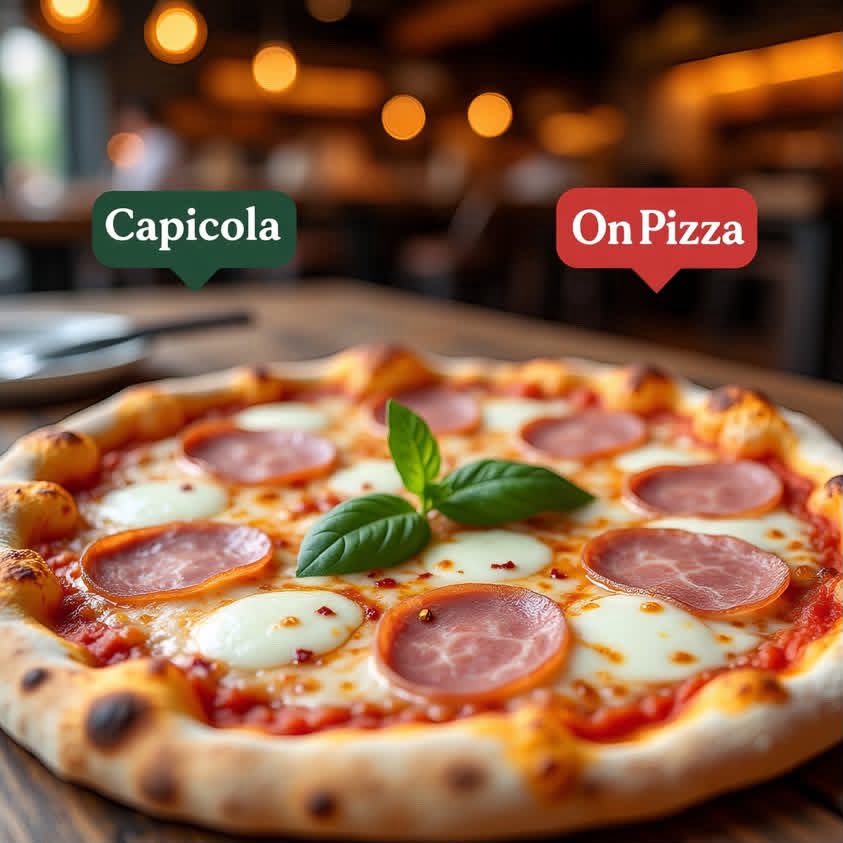
I tried making my own capicola pizza on a lazy Sunday a few weeks back, mostly because I had leftover slices from a sandwich and did not want them to go to waste. I laid the capicola over a simple base of fresh mozzarella and a light tomato sauce, then added a handful of arugula after the pizza came out of the oven, which added a peppery contrast that balanced out the richness of the cured pork. It was better than I expected for something thrown together out of leftovers, and my husband asked why we had never made it that way before. Good question. I did not have a great answer.
A few things I learned along the way might save someone else some trial and error. Capicola is fairly salty on its own, so I would go easy on additional salt in the sauce or crust. Pairing it with something slightly sweet, like caramelized onions or a drizzle of hot honey, cuts the saltiness and creates a more balanced bite. Thinner slices also work better than thick cuts, since thick pieces can turn tough after baking, and nobody wants to fight their pizza topping with a fork and knife.
Pizza culture in the United States tends to circle back to the same handful of toppings over and over: pepperoni, sausage, mushrooms, maybe olives if a place is feeling adventurous. Capicola rarely gets mentioned in that lineup, which feels like a missed opportunity given how much flavor it brings compared to more common cured meats. I have started asking local pizzerias if they carry it, and the responses have been a mixed bag; some places look at me like I invented a new language, while others light up because capicola pizza has a small but loyal following among people who grew up in Italian American households.
Will capicola ever become as mainstream as pepperoni on pizza menus across the country? I genuinely do not know, but I hope more people give it a try before writing it off as just another deli meat. There is a whole world of Italian cured meats beyond the usual suspects, and capicola happens to translate surprisingly well onto a pizza crust once you get past the odd name and the fact that most people cannot agree on how to pronounce it. My advice, for whatever it is worth, is to order it once and see for yourself. Worst case, you end up with a pretty good pizza and a new word to mispronounce at parties.
Reference
Centers for Disease Control and Prevention. (2026, March 31). About sodium and health. U.S. Department of Health and Human Services. https://www.cdc.gov/salt/about/index.html
Centers for Disease Control and Prevention. (2014, December 19). Prevalence of excess sodium intake in the United States—NHANES, 2009–2012. Morbidity and Mortality Weekly Report, 63(52), 1249–1254. https://www.cdc.gov/mmwr/preview/mmwrhtml/mm6452a1.htm
Cinotto, S. (2013). The Italian American table: Food, family, and community in New York City. University of Illinois Press.