

 Posted by
 I tried gorgonzola cheese on a pizza, and honestly, I was not ready for it. I had grown up on the usual mozzarella and pepperoni combo, the kind of pizza that never surprises you, and then a friend ordered a pie topped with gorgonzola at this little Italian spot near my old apartment. One bite in and I actually stopped talking mid-sentence, which does not happen to me often. That sharp, tangy, slightly funky bite hit different, and I have been a little obsessed with gorgonzola pizza ever since. Discover why gorgonzola cheese makes such a bold and creamy pizza topping. Learn its Italian origins, best flavor pairings, and tips for a tastier homemade pie.
Gorgonzola cheese comes from Italy, specifically the regions of Lombardy and Piedmont, and it has been made for over a thousand years using traditions that go back to the medieval period. Some food historians say the cheese was originally discovered by accident, when a cheesemaker left curds sitting a bit too long, and mold started to form. Whether that story is true or just a nice bit of folklore, I kind of love it. A lot of the best foods in history seem to come from happy accidents, and gorgonzola might just be one of them.
What makes gorgonzola so special for pizza toppings is the way it melts. Unlike a lot of blue cheeses that can turn grainy or overpowering when heated, gorgonzola softens into these creamy little pockets that spread flavor across every bite without taking over the whole slice. There are two main types worth knowing about if you are curious: gorgonzola dolce and gorgonzola piccante. The dolce version is younger, milder, and creamier, while the piccante is aged longer and brings a sharper, more assertive bite. For pizza, I tend to lean dolce because it blends so well with other toppings, but do not let me stop you if you like things a little more intense.
Why does gorgonzola pair so well with pizza dough anyway? I think it comes down to contrast. Pizza dough on its own is pretty neutral, a little chewy, a little crisp on the edges, and it needs something with personality to really shine. Gorgonzola brings that personality in spades. Pair it with caramelized onions, walnuts, or even a drizzle of honey, and you get this balance of salty, sweet, and tangy that keeps every bite interesting. Have you ever noticed how the best pizzas are the ones where no single ingredient dominates the whole thing? Gorgonzola somehow manages to be bold and cooperative at the same time.
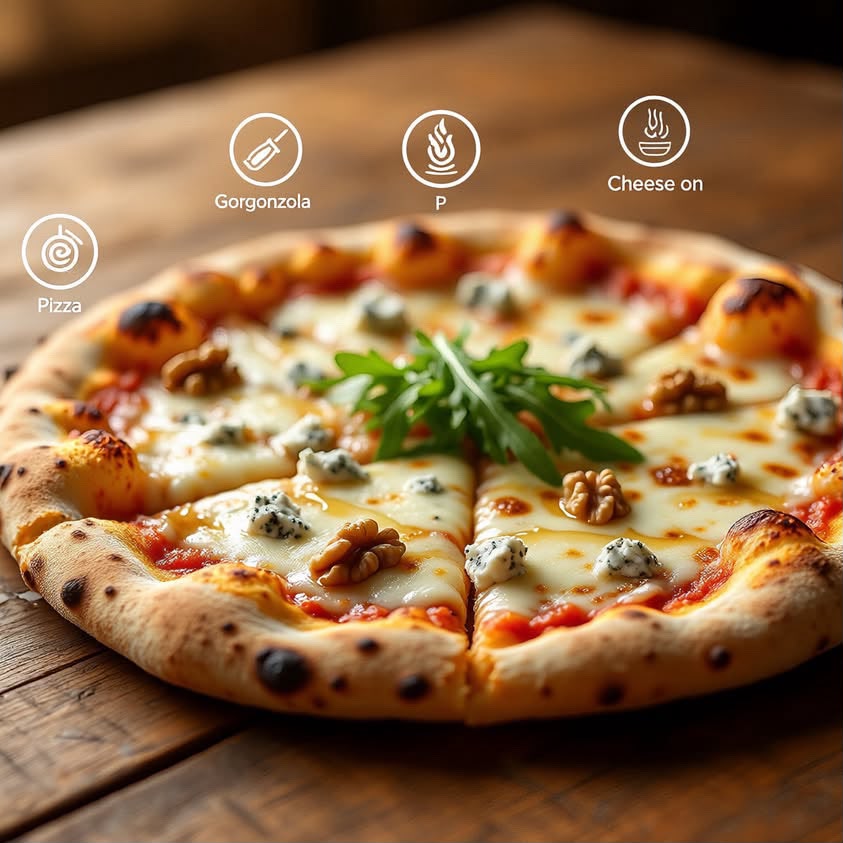
I have made gorgonzola pizza at home more times than I can count, and I will admit my first few attempts were kind of a mess. I used way too much cheese one time, and the whole pizza turned into this soupy, overwhelming situation that my roommate still brings up. Lesson learned, gorgonzola is strong, and a little goes a long way. Now I crumble it sparingly, maybe alongside some fresh mozzarella for balance, and the results are so much better. Cooking is often about learning from your failures, and this cheese taught me that lesson pretty quickly.
From a nutrition standpoint, gorgonzola is not exactly a health food, but it does offer some benefits worth mentioning. It is a good source of calcium and protein, and like many aged cheeses, it contains beneficial bacteria that can support gut health. Of course, moderation matters here since it is also higher in sodium and fat than milder cheeses. I try not to overthink that part too much, though. Pizza is not really a health food category to begin with, and I think everything in moderation is a perfectly fine approach to take.
Restaurants across Italy and increasingly across the United States have started featuring gorgonzola pizza as a signature menu item, often pairing it with pears, arugula, or prosciutto. There is something about the combination of sweet fruit and salty blue cheese that keeps showing up on menus for a reason; it just works. I have started requesting it whenever I see it listed, partly out of loyalty to that first slice that changed my mind years ago, and partly because I am always curious how each kitchen puts its own spin on the classic combination.
If you have never tried gorgonzola on pizza before, I would genuinely encourage you to give it a shot the next time you see it on a menu, or better yet, try making one yourself at home. Start light, pair it with something sweet like fig jam or honey, and let the cheese do its thing. Pizza has so much room for experimentation, and gorgonzola is proof that stepping outside your usual topping routine can lead to something memorable. It certainly did for me, and my taste in pizza has never quite gone back to where it started.
Reference
Romeo, F. (2023). Gorgonzola: Italian taste in the world between banquets, exhibitions, and technology, 1850s–1930s. Journal of Modern Italian Studies, 29(2), 1–20. https://doi.org/10.1080/1354571X.2023.2221063
U.S. Department of Agriculture, Agricultural Research Service. (n.d.). FoodData Central. National Agricultural Library. Retrieved July 18, 2026, from https://fdc.nal.usda.gov/
European Commission. (1996). Commission Regulation (EC) No 1107/96 of 12 June 1996 on the registration of geographical indications and designations of origin. Official Journal of the European Communities.