
 Posted by
 Discover why oregano is essential to great pizza, from Neapolitan Marinara traditions to home baking tips on timing, drying, and rich tomato and cheese flavor. I did not grow up thinking about oregano at all. It was just that green dust in the little shaker on the pizzeria table, sitting next to the red pepper flakes like a background actor nobody bothered to name. It took me years, and probably too many mediocre homemade pizzas, to realize that oregano is not a background actor. It is basically the reason pizza tastes like pizza and not just bread with tomato sauce on it.
Let me back up a little. The first time I really paid attention to oregano was when I tried making a Margherita pizza at home, and it came out tasting flat, almost sad, even though I used good mozzarella and a decent canned tomato. A friend of mine, who had spent a summer working in a pizzeria in Naples, took one bite and asked me a simple question. Where is your oregano? I told her I forgot it, thinking it was just a garnish, something sprinkled on top for looks. She laughed at me, not unkindly, and explained that oregano is not decoration on a pizza. It is structural. Remove it and the whole flavor profile sort of collapses in on itself.
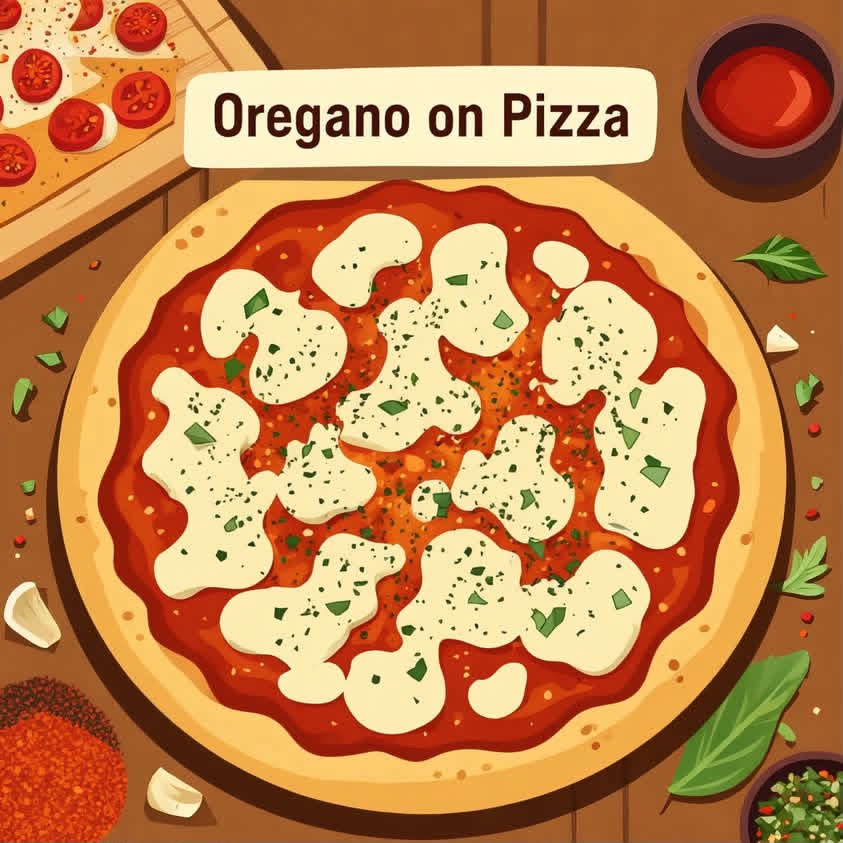
Oregano, if you want the useful botanical detail, is part of the mint family, which explains a lot once you know it. It has that same punchy, slightly bitter, slightly sweet edge that mint has, except oregano leans savory instead of cooling. The plant is native to the Mediterranean and parts of western Asia, used in cooking there for thousands of years, long before pizza as we know it existed. Italians did not invent oregano, but they did figure out that it belongs on pizza in a way that feels almost inevitable now.
Here is something I find genuinely interesting, and maybe you will too. Oregano actually gets more flavorful when it is dried, which is the opposite of how most herbs work. Basil, for example, loses a huge amount of its character once dried, turning into a pale imitation of itself. Oregano does not really care. Drying it concentrates the oils that give it that peppery, slightly bitter punch, which is why almost every classic pizza recipe calls for dried oregano rather than fresh. I used fresh oregano once on a pizza, thinking I was being fancy and authentic, and it tasted watery and weak compared to what a pinch of the dried stuff would have done. Sometimes the fancier choice is not the better choice, and pizza has taught me that lesson more than once.
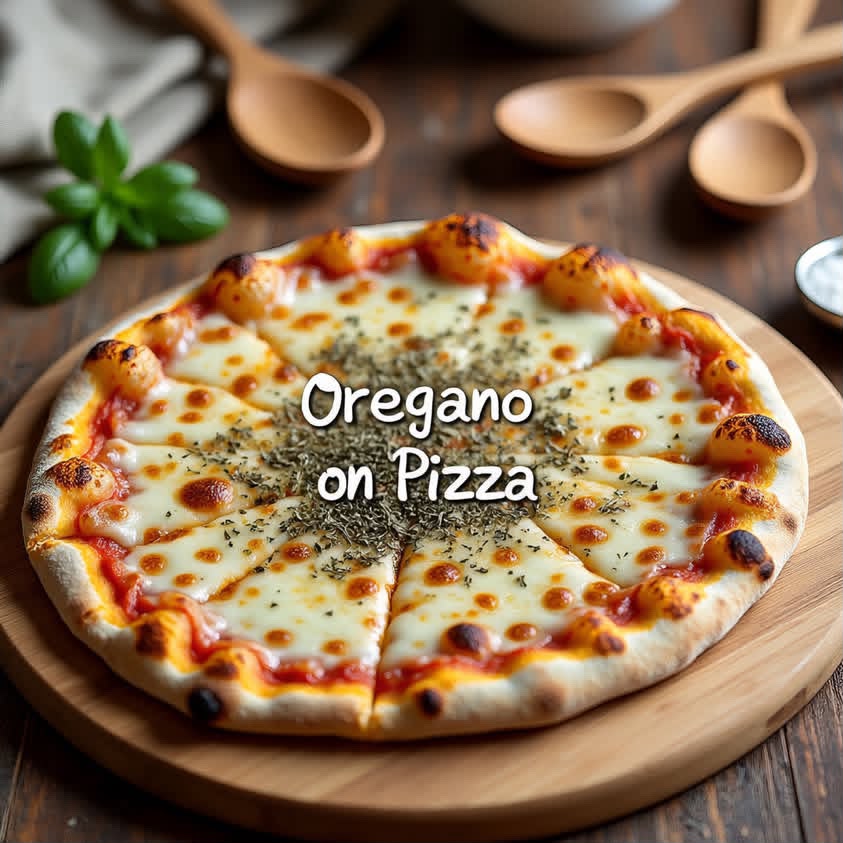
Why does oregano work so well specifically with tomato and cheese? I have thought about this more than a reasonable person probably should. My best guess, and I am not a food scientist, so take this with a grain of salt, is that oregano’s bitter and peppery notes cut through the richness of melted cheese and balance out the acidity of tomato sauce. Without it, a slice can taste one-dimensional, as if it is missing a kind of backbone. With it, everything clicks into place. The sauce tastes brighter. The cheese tastes richer. It is a strange kind of alchemy for something that costs about two dollars at the grocery store.
I want to talk for a second about timing, because this took me embarrassingly long to figure out. Do you sprinkle oregano before the pizza goes in the oven, or after it comes out? I used to just throw it on before baking every time, no questions asked. Then I started experimenting, because that is what happens when you make too much pizza on weekends. Adding oregano before baking lets the heat mellow it out and infuse the oil and cheese with its flavor. Adding it after baking keeps it sharper, more aromatic, and almost fresher tasting, even though it is the same dried herb. Now I do a little of both, which probably sounds excessive, but it works for me.
There is also a regional angle here that I think gets overlooked. Neapolitan pizza traditions lean heavily on oregano for the classic Marinara style pizza, which does not even have cheese, just tomato, garlic, oil, and oregano. That pizza forces oregano to do a lot of heavy lifting, and it succeeds every time I have had it done well. American pizza, on the other hand, often treats oregano as one ingredient among many in a blended Italian seasoning mix, alongside basil and thyme. Both approaches work, but they tell you something different about how a culture thinks about this herb. Is oregano the star, or part of an ensemble cast? I go back and forth on which version I prefer, which is not a very decisive answer, but pizza does not always require decisiveness.
If you take one thing away from all of this, let it be that oregano deserves more respect than it usually gets. It is cheap, it is durable, it lasts practically forever in your pantry, and it single-handedly elevates a plain slice into something that tastes as if it belongs in a trattoria outside Naples. Next time you are making pizza at home, do not treat oregano as an afterthought sprinkled on out of habit. Think about when you add it, how much you use, and whether you want that bright aromatic hit or the mellow, baked-in version. Your pizza will thank you, which is the only way pizza knows how to say thanks.
Reference
Cervato, G., Carabelli, M., Gervasio, S., Cittera, A., Cazzola, R., & Cestaro, B. (2000). Antioxidant properties of oregano (Origanum vulgare) leaf extracts. Journal of Food Biochemistry, 24(6), 453–465. https://doi.org/10.1111/j.1745-4514.2000.tb00715.x
Coccimiglio, J., Alipour, M., Jiang, Z. H., Gottardo, C., & Suntres, Z. (2016). Antioxidant, antibacterial, and cytotoxic activities of the ethanolic Origanum vulgare extract and its major constituents. Oxidative Medicine and Cellular Longevity, 2016, 1404505. https://doi.org/10.1155/2016/1404505
Grumezescu, A. M., & Holban, A. M. (2022). Natural diversity in phenolic components and antioxidant properties of oregano (Origanum vulgare L.) accessions grown under the same conditions. Scientific Reports, 12, Article 5911. https://doi.org/10.1038/s41598-022-09742-4