
 Posted by
I will say it plainly, and I have said it in my own kitchen more times than I can count. If I had to choose one cheese to bake on a pizza, I would choose mozzarella every single time. Burrata is lovely. I will defend it to the end. But it belongs on the pizza after the oven, not inside it. Let me explain why I feel so strongly about this, because I have learned the hard way.
Start with what the two cheeses actually are. Both come from the pasta filata tradition, where curd is heated and stretched until it turns smooth and elastic. Mozzarella is then shaped into a firm, springy mass. Burrata takes that same stretched curd and forms it into a thin pouch, which is filled with stracciatella, shreds of curd soaked in cream. Cut it open and the inside spills out. That is the whole charm, and also the whole problem for pizza.
Heat changes everything, and water is the main troublemaker. In the United States, federal rules set specific standards for mozzarella. Regular mozzarella must contain more than 52 percent but not more than 60 percent moisture, while low-moisture mozzarella must fall between 45 and 52 percent . Burrata is usually served fresh, and its creamy center makes it wetter and richer still. Put that in a hot oven and the liquid has nowhere to go.
You end up with puddles on the crust, a soggy middle, and a cheese that has lost the very thing that made it special. I still remember the first time I tried baking burrata on a homemade pie. I was so proud of that pizza until I pulled it out and watched a pool of cream and water spread across the center. The crust was ruined, and so was my dinner.
Mozzarella, especially the low-moisture kind, is practically built for the job. A review in the Journal of Food Science and Technology describes the melt and stretch of mozzarella as central to pizza making, and notes that low-moisture part-skim mozzarella is used more widely on pizza than the traditional, wetter version because of its better shredding and slicing qualities . That matches what I see in good pizzerias.
The cheese browns, blisters a little, and pulls into those long strings everyone loves to photograph. There is a reason the classic cheese pull shot almost always involves mozzarella and not burrata. What about nutrition? I would not lean too hard on that argument, because pizza is rarely healthy food. Still, the numbers are worth a glance. USDA data list whole-milk, low-moisture mozzarella at 318 calories and about 24.6 grams of fat per 100 grams.
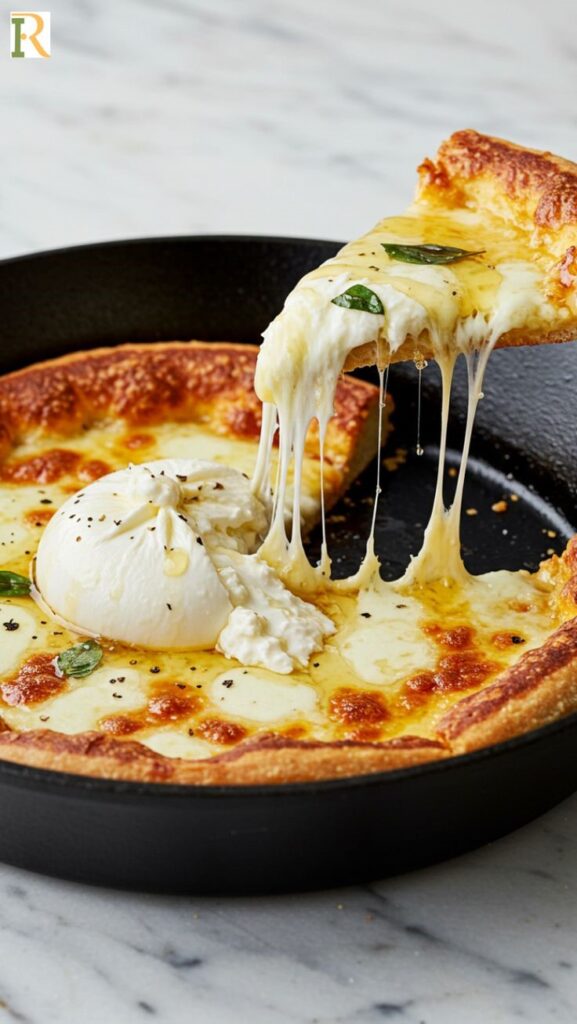
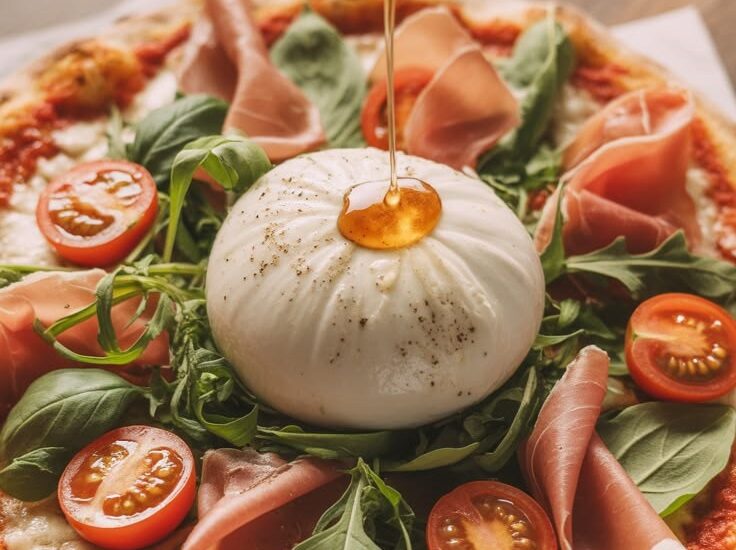
Burrata, thanks to its cream filling, is still richer. If you are watching your intake, the baked mozzarella slice is the lighter route, though neither cheese is exactly delicate on the scale. So where does burrata fit? Right at the end. Bake a margherita or a prosciutto pizza, pull it out, then tear the burrata over the top and let the heat of the crust soften it just enough. The creamy center meets the warm sauce and the basil, and nothing gets cooked away.
I think that is the only fair way to treat such a gentle cheese. I have started doing this with a simple prosciutto and arugula pie, and the contrast between the hot crust and the cool, creamy burrata is something I look forward to all week. Some people will argue that putting burrata on before baking is bold and worth the mess. I understand the appeal, and a few kitchens may pull it off. But for the home cook or the neighborhood pizzeria, the risk is too high.
Mozzarella gives you consistency. Burrata gives you a moment. And honestly, I would rather have a reliable pizza every Friday night than a gamble that might turn into soup. My advice is simple. Use mozzarella for the bake, burrata for the finish, and never confuse the two jobs. Do that, and you get the best of both cheeses without the soggy crust. Your pizza will taste better, your guests will be happier, and you will have one less reason to argue with the oven.
I think about this every time I stand at my counter with a ball of burrata in one hand and a block of low-moisture mozzarella in the other. It used to feel like a choice between two good things. Now it feels like a sequence. The mozzarella goes in first because it can take the heat, and the burrata comes last because it cannot. That order is not a rule I read somewhere.
It is something I learned from a few ruined pizzas and a lot of good ones, and it is the kind of lesson that sticks because you taste the difference yourself. So the next time you plan a pizza night, think about what each cheese is actually good at before you turn on the oven. Mozzarella and burrata do not compete for the same spot on the pie. They just need to be invited at the right time.
References
Functional properties of Mozzarella cheese for its end use application. (2017). Journal of Food Science and Technology, 54(12), 3766–3778. https://doi.org/10.1007/s13197-017-2886-z
U.S. Department of Agriculture. (n.d.). Cheese, mozzarella, whole milk, low moisture (FDC ID 170846). FoodData Central. https://fdc.nal.usda.gov/food-details/170846/nutrients
U.S. Department of Agriculture, Agricultural Marketing Service. (2012, September 24). USDA specifications for mozzarella cheeses. https://www.ams.usda.gov/sites/default/files/media/mozarella.pdf
U.S. Food and Drug Administration. (2013). Low-moisture mozzarella and scamorza cheese, 21 C.F.R. § 133.156. U.S. Government Publishing Office. https://www.gpo.gov/fdsys/pkg/CFR-2013-title21-vol2/pdf/CFR-2013-title21-vol2-sec133-156.pdf