
 Posted by
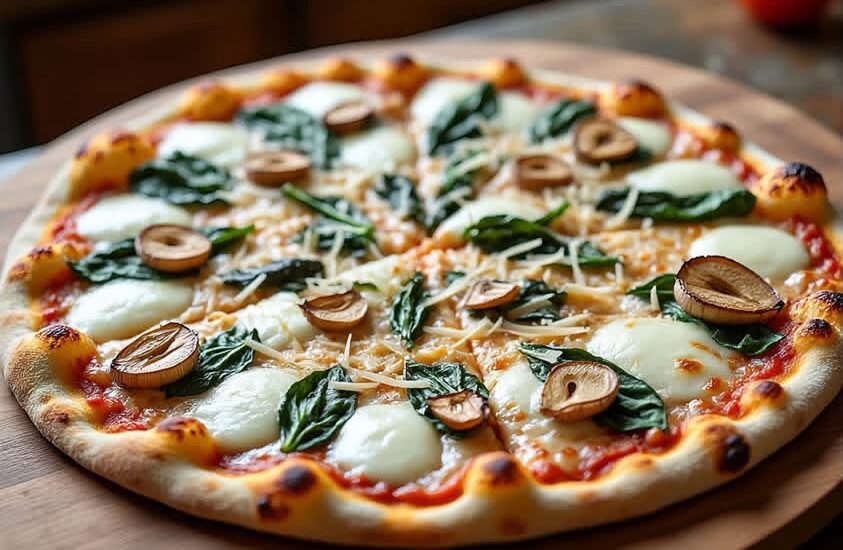
 Discover why spinach and ricotta pizza is such a creamy, savory favorite, with tips on wilting spinach, seasoning ricotta, and picking the right crust. I did not grow up thinking spinach belonged anywhere near a pizza. My early idea of a good pie was pepperoni, extra cheese, maybe a few mushrooms if I was feeling adventurous. Then one night at a tiny place near my old apartment, I ordered a spinach and ricotta pizza almost by accident, mostly because I was tired of the usual toppings and wanted to try something different. I remember taking that first bite and being genuinely surprised. The ricotta was soft and a little sweet, the spinach added this earthy freshness, and somehow the whole thing worked better than it had any right to. That slice sort of changed how I think about pizza toppings, and I have been making spinach and ricotta pizza at home ever since.
What makes this combination so good, anyway? Spinach on its own can be a little plain, even boring if it is overcooked. Ricotta on its own is creamy but kind of one note. Put them together on a pizza crust with some garlic and olive oil, and something clicks. The mild, slightly grassy flavor of the spinach balances out the richness of the ricotta cheese, and neither one overwhelms the other. I think that balance is really the whole point. A lot of pizza toppings compete with each other for attention, but spinach and ricotta pizza feels more like a collaboration.
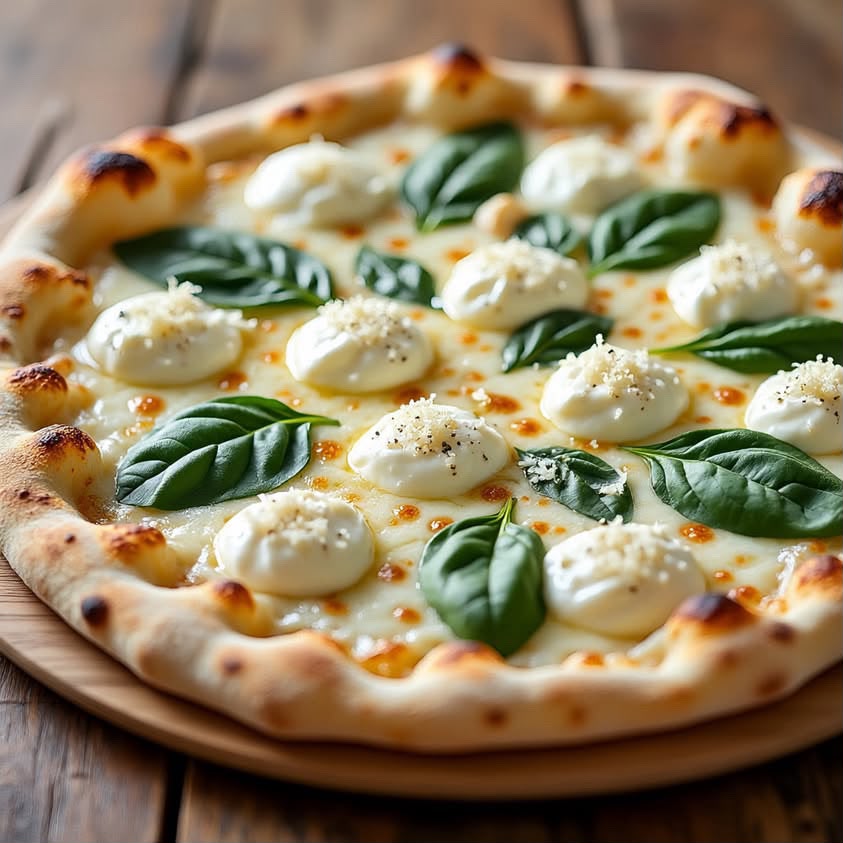
I want to be honest, my first few attempts at making this at home were not great. I dumped raw spinach straight onto the pizza and it shrank down to almost nothing while releasing a bunch of water that made my crust soggy in the middle. Lesson learned. Now I always wilt the spinach first, either in a hot pan with a touch of olive oil and garlic, or sometimes I just blanch it quickly and squeeze out the excess moisture with a clean towel. It sounds like a small step, but it makes a real difference in the final texture of the pizza. Nobody wants a soggy crust, especially not after waiting for the dough to rise.
For the ricotta itself, I tend to season it before it even touches the dough. A little salt, some black pepper, maybe a pinch of nutmeg, and sometimes a small handful of grated parmesan mixed right in. Does this step matter that much? Honestly, yes. Plain ricotta straight from the tub can taste a bit flat once it bakes, so giving it a bit of seasoning ahead of time helps the whole pizza taste more intentional rather than like an afterthought. I usually dollop the seasoned ricotta across the dough in small spoonfuls rather than spreading it evenly, because I like getting those creamy pockets in random bites instead of a uniform layer.
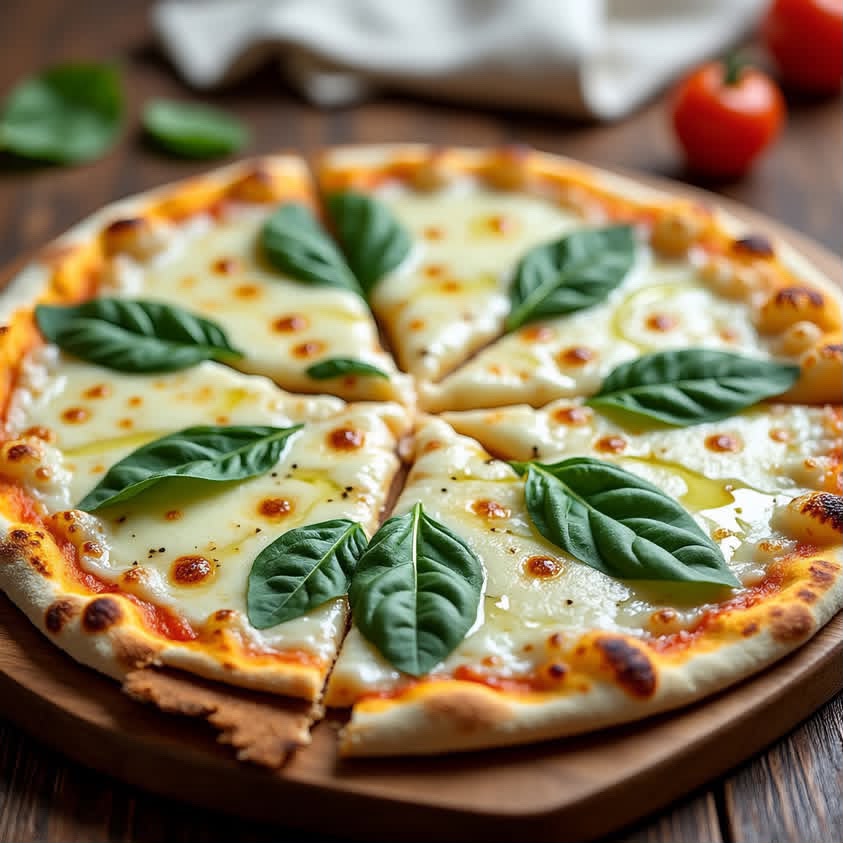
Garlic is another ingredient I refuse to skip. Whether I mince it fresh and scatter it over the crust or infuse it into the olive oil I brush on before baking, garlic gives this pizza a little punch that keeps it from tasting too soft or too safe. Some people like to add a squeeze of lemon after baking too, which sounds strange on pizza, but the acidity cuts through the richness of the ricotta in a way that reminds me a little of how lemon works on roasted vegetables. I did not expect to like it as much as I do.
As for the crust, I have made this pizza on thin crust, thick crust, and even on a whole wheat base when I was trying to convince myself I was being healthy. Thin crust is probably my favorite because it lets the ricotta and spinach really be the stars of the show without a heavy, doughy base competing for space. That said, a slightly thicker crust holds up well if you are someone who likes to load your pizza generously, and there is nothing wrong with that either.
Mozzarella often makes an appearance too, though I go light on it. This pizza already has plenty going on with the ricotta, so a small amount of shredded mozzarella just helps everything melt together and adds a bit of stretch when you pull that first slice away from the pan. Too much mozzarella and you lose the personality of the spinach and ricotta underneath, which feels like a waste after all that prep work.
If you have never tried making spinach and ricotta pizza at home, I would genuinely encourage you to give it a shot this week. It does not require any complicated technique, just a little patience with the spinach and a willingness to season your ricotta like you actually care about it. Pizza night does not always have to mean pepperoni and cheese on repeat. Sometimes the more unexpected combination turns out to be the one you keep coming back to, and for me, this green and creamy pie has become exactly that.
Reference
Fathi, (2026). Development of a functional whole wheat flour for pizza dough: Nutritional enhancement and rheological optimization. Journal of Food Science, 91. https://ift.onlinelibrary.wiley.com/doi/10.1111/1750-3841.71076
Florio, M., Cimini, C., Bennato, F., Ianni, A., Grotta, L., & Martino, G. (2024). Evaluation of chemical and nutritional characteristics of ricotta cheese from two different breeds: The endangered Italian Teramana goat and the cosmopolitan Saanen goat. Foods, 13(8), Article 1239. https://doi.org/10.3390/foods13081239
Mangione, (2023). Graduate student literature review: History, technologies of production, and characteristics of ricotta cheese. Journal of Dairy Science, 106(6), 3807–3821. https://doi.org/10.3168/jds.2022-22855