
 Posted by
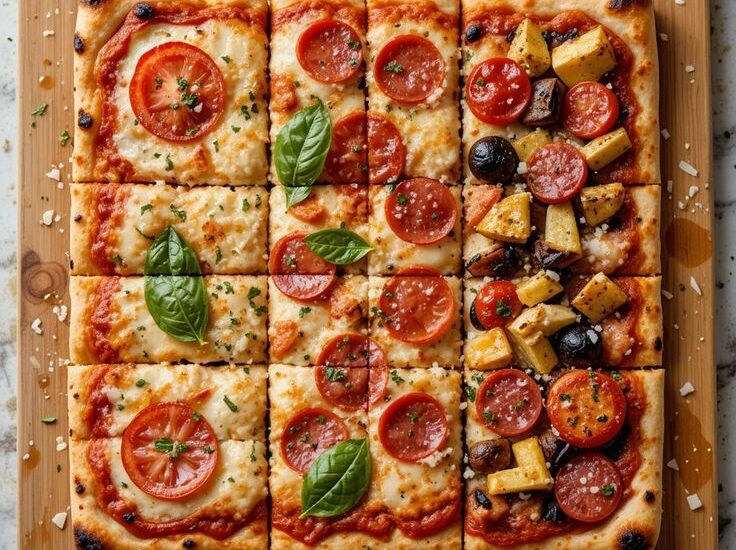
 I come down firmly on the side of square pizza, and I know that puts me at odds with a lot of traditionalists. Round pizza has history and romance on its side. Square pizza has something better: better crust, better portioning, and a better ratio of crispy edge to soft center. When I am being honest about what actually makes a slice enjoyable to eat, square wins.
When you are trying to decide between square pizza vs round pizza for your next gathering, it is worth considering not just tradition but the actual eating experience. Start with the crust. Detroit-style and Sicilian-style pizzas, both square by tradition, are baked in heavy steel or aluminum pans that create a distinct fried, caramelized edge along every border of the pizza. That edge, sometimes called the frico in Detroit-style circles, is the best part of the pie.
A round pizza gives you that crisp edge only around the outer circumference. A square pizza, cut into pieces, gives a meaningful share of slices two crisp edges instead of one, because the pan itself produces structure on multiple sides. If crust texture is the measure of a good pizza, square pans simply produce more of what people are chasing.
I remember the first time I had a proper Detroit-style square pizza. It was at a small shop in Michigan, and I honestly did not know what to expect. When I bit into that corner slice with the caramelized cheese clinging to the edge, I actually laughed out loud. It was that good. The crunch gave way to this pillowy, airy interior, and I thought to myself, where has this been all my life? That is the moment I became a square pizza convert.
Portioning is the other argument in square pizza’s favor, and it is a practical one. Round pizzas, when cut into wedges, taper to a thin, often flimsy point that barely holds toppings. Square or rectangular slices keep a more even width from edge to edge, meaning every bite carries a similar ratio of cheese, sauce, and crust. Anyone who has eaten the last thin sliver of a round pizza and been left with mostly crust knows the frustration I am describing. Square-cut pizza avoids that problem by design.
Think about it. When you are eating a round pizza slice, you start at the wide end with all that glorious cheese and sauce, and by the time you reach the tip, you are basically eating a breadstick. Not that I have anything against breadsticks, but that is not what I signed up for when I ordered pizza. A square slice gives you a consistent experience from first bite to last. That consistency matters more than we give it credit for.
I recognize the counterargument. Round pizza is the traditional Neapolitan form, shaped by hand and stretched into a circle because that is how dough naturally wants to move under gentle pressure. There is real craftsmanship in that shape, and a properly made Neapolitan pie, blistered and thin, is a legitimate culinary achievement. I am not arguing that round pizza is bad. I am arguing that, for the everyday eating experience most people actually have, square pizza solves more problems than it creates.
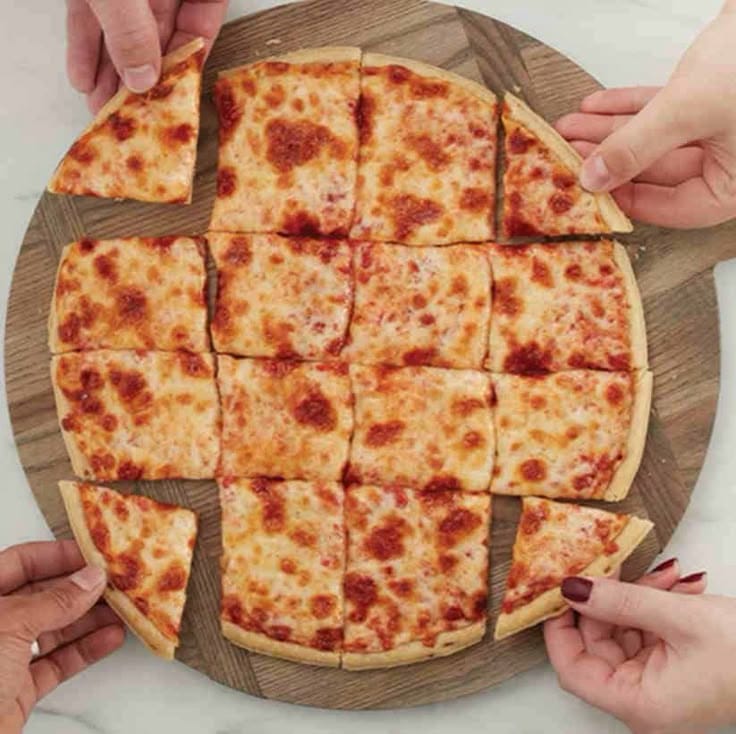
And let us be honest, there is something deeply satisfying about the square shape when you are feeding a crowd. Square pizza for events is incredibly practical because it is easy to serve and handle. A square slice fits neatly on a plate and holds its toppings without that awkward fold or droop you get with a round slice.
Square pizza also tends to travel and reheat better, since thicker, pan-baked styles hold moisture and structure longer than thin, round pies that go soggy or stiff within an hour. For anyone ordering pizza for a group, cutting a rectangular pan into even squares is also simply more efficient than trying to divide a circle into equal wedges for a crowd with different appetites.
Now, I will admit that round pizza has an edge when it comes to the classic pizza experience. There is something nostalgic about that triangular slice, and the ability to order half-and-half toppings is genuinely useful when you have picky eaters in the group. But if I am being completely honest, most of the time I am not ordering pizza for its aesthetic appeal. I am ordering it because I am hungry and I want something delicious.
Square pizza also has a unique visual appeal that gets people talking. In the age of social media, a Detroit-style square pizza with those crispy edges and sauce stripes on top is genuinely Instagram-worthy. It stands out from the sea of round pies and gives you something to chat about while you are eating.
Have you ever wondered why round pizza comes in a square box? It is one of those quirks of the food world that I find endlessly amusing. The reason is simple: square boxes are cheaper to produce, easier to stack, and require just a single sheet of cardboard. A round box would need multiple sections and special machinery. So even the pizza industry itself seems to have a preference for square things, at least when it comes to packaging.
Round pizza will always have cultural weight behind it, and I do not expect to change anyone’s mind who grew up devoted to a wood-fired pizzeria. But on pure eating merits, crust quality, portion consistency, and practicality, square pizza is the better format, and I think more people would agree if they gave Detroit-style or Sicilian-style a real chance.
So the next time you are ordering pizza, do yourself a favor and try a square one. Not just because it is different, but because it is genuinely better. Your taste buds will thank you, and you might just find yourself joining the square pizza revolution. I certainly did, and I have not looked back since.
Reference
United States Department of Agriculture, FoodData Central, nutrient and preparation data for pizza crust
Smithsonian National Museum of American History, food history collections on regional American pizza styles: https://americanhistory.si.edu/
Library of Congress, food history and culinary heritage research guides: https://www.loc.gov/rr/main/foodhistory/