
 Posted by
 I have eaten more onion-topped pizza than I care to admit, and I am ready to plant a flag right here: caramelized onions belong on pizza, and sautéed onions, frankly, do not hold up. I know this is a controversial stance in certain kitchens, but let me walk you through the reasoning before you write me off as an onion snob. This is not just about preference; it is about what actually works when that pie hits the heat.
The difference between these two preparations comes down to chemistry, not just cooking time. Sautéed onions are cooked quickly over medium-high heat until they turn translucent and slightly golden, usually in about five to fifteen minutes. Caramelized onions, on the other hand, are cooked low and slow, sometimes for forty-five minutes or longer, until the natural sugars break down and the onion transforms into something sweet, jammy, and deeply savory.
This transformation happens through a combination of caramelization, which is the browning of sugar itself, and the Maillard reaction, a separate process involving amino acids and sugars that produces the complex, roasted flavors we associate with browned food. Raw onions contain roughly four grams of sugar per hundred grams, and that sugar content matters enormously once heat is applied over an extended period.
If you have been searching for a reliable pizza topping guide that settles the caramelized onions vs sautéed onions pizza debate once and for all, you have come to the right place. I remember the first time I actually committed to the full hour-long process instead of rushing through it in twenty minutes and calling it close enough. The difference was night and day.
That deep, sweet, savory flavor completely transformed the pizza, and I have never gone back to the quick version since. There is something almost meditative about standing over a pan, watching those sliced onions slowly turn from pale and sharp to dark and jammy, releasing that incredible aroma that fills the whole kitchen. It is the kind of patience that feels impractical in our rush-rush world, but for pizza, it is absolutely worth every second.
Here is my issue with sautéed onions on pizza specifically. Pizza already asks a lot of its toppings. The crust brings char and chew, the sauce brings acidity, and the cheese brings fat and salt. A sautéed onion, still holding onto some bite and a fair amount of sharpness, competes with those elements instead of complementing them.
It can taste almost raw in places, and that sharpness clashes with the sweetness of a good tomato sauce. Caramelized onions, by contrast, bring something the rest of the pizza cannot provide on its own: a deep, almost umami sweetness that rounds out the whole bite. They melt into the cheese rather than sitting on top of it.
Think about the last time you bit into a slice and got a big chunk of undercooked onion that pulled away with the whole cheese layer. Frustrating, right? That is the sautéed onion failing its one job. But with caramelized onions, they become one with the mozzarella, almost like a condiment rather than a separate topping.
They do not fight for attention; they elevate every other ingredient. When you are thinking about the best pizza toppings, texture and flavor integration really do make all the difference, and this is where the slow-cooked version shines.
I also think caramelized onions are more forgiving across pizza styles. On a Neapolitan-style pie, where the toppings need to be light and the bake time is short, sautéed onions do not get enough time in the oven to soften further, so you are stuck with whatever texture you started with.
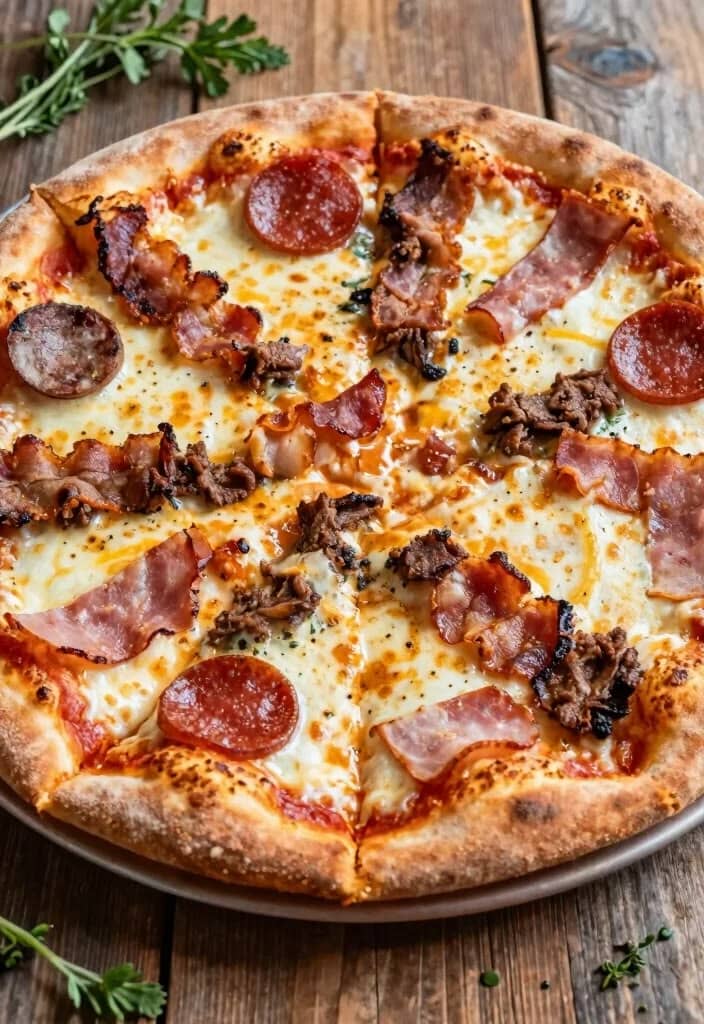
Caramelized onions arrive already soft, so a quick blast in a hot oven only warms them through rather than trying to finish cooking them. If you have read my earlier piece comparing Neapolitan and American-style pizza, you know I care about matching the topping to the bake, and this is exactly the kind of detail that separates a thoughtful pizza from a thrown-together one.
For a thicker, pan-style pizza, the longer bake time can sometimes rescue a sautéed onion, but honestly, why take that risk? The oven temperature is so high that those onions often end up burnt on the edges and still raw in the center. Caramelized onions eliminate that variable entirely. They are already done. They are ready to be the hero. For anyone looking into how to cook onions for pizza, the long, slow method is really the only answer that guarantees success every single time.
None of this means sautéed onions have no place in cooking. They work beautifully in stir-fries, on burgers, or folded into eggs, where a little bite is welcome. I use them all the time for a quick weeknight pasta or to add a pop of sharpness to a grilled cheese. But pizza rewards patience with its toppings, the same way it rewards patience with its dough.
A caramelized onion has already done the work of becoming something better than a raw onion, and that effort shows on every slice. It is the difference between a topping that is merely present and one that is truly memorable.
I recall a pizza night with friends where I made two batches: one with quick-sautéed onions and one with the real deal. Everyone gravitated toward the caramelized version without even knowing which was which. They just kept reaching for that slice, commenting on the sweetness and how well it paired with the salty pepperoni. That is the power of doing it right.
If you have not tried caramelizing your own onions at home, start with a heavy pan, a low flame, and more time than you think you need. Slice them thinly, add a little oil or butter, and let them do their thing, stirring occasionally. Do not crank up the heat to speed things along, because that is how you end up with burnt, bitter onions instead of sweet, jammy ones.
I learned that lesson the hard way after ruining two batches in a single afternoon. And if you are feeling adventurous, a tiny pinch of baking soda can speed up the Maillard reaction, but honestly, the old-fashioned way is worth the wait. A splash of balsamic vinegar or a sprinkle of salt near the end can also brighten everything up, but even plain, they are extraordinary.
Your pizza will thank you. Your dinner guests will thank you. And honestly, your own taste buds deserve that level of care. For more on the science behind this delicious transformation, you can check out Britannica’s explanation of the Maillard reaction and caramelization. Now go ahead, grab those onions, and give them the time they truly deserve.
References
Britannica. (2024, January 29). How to caramelize onions quickly using chemistry. https://www.britannica.com/video/chemistry-onions/-207565
U.S. Department of Agriculture, Agricultural Research Service, Beltsville Human Nutrition Research Center. (n.d.). FoodData Central. https://fdc.nal.usda.gov/
Wikipedia contributors. (n.d.). Caramelization. Wikipedia. https://en.wikipedia.org/wiki/Caramelization