
 Posted by
 A friend of mine ordered a gluten-free pizza last month and told me she was eating healthier. I smiled, nodded, and said nothing. But the comment stuck with me. Is gluten-free pizza actually better for you, or has clever marketing convinced us of something that is not true? I have thought about that question more than I expected, mostly because I love pizza and I care about people who cannot eat gluten for medical reasons.
I do not have celiac disease. I do not have a diagnosed gluten sensitivity. So when I see a gluten-free pizza on a menu, I usually see a choice, not a necessity. For some people, though, that pizza is not a trend. It is a medical requirement. That difference matters, and I think it gets lost in the health food aisle. I kept digging, and this gluten-free pizza vs regular pizza guide explains who really needs the swap, from celiac disease to gluten sensitivity, plus nutrition, taste, and cost. The answer is more personal than a marketing slogan.
Let me start with the people for whom this is not a choice. Celiac disease is an autoimmune condition in which eating gluten damages the lining of the small intestine. The National Institute of Diabetes and Digestive and Kidney Diseases explains celiac disease and estimates that it affects about one in one hundred people worldwide. For them, a gluten-free pizza is essential. I have nothing but respect for any kitchen that takes that seriously.
Safety, though, depends on more than the dough. In the United States, the Food and Drug Administration requires that foods labeled gluten-free contain fewer than twenty parts per million of gluten. A pizzeria that bakes a gluten-free crust on the same surface as a regular pizza, or uses the same cutter, can undermine that promise through cross-contact. If you have celiac disease, ask how the kitchen handles this before you order. I know that question can feel awkward. Ask anyway.
Now for everyone else. Many people assume that removing gluten automatically improves a meal. Does it? The evidence does not support that idea. Gluten-free crusts are usually made from refined starches such as rice, tapioca, and potato. Some products end up lower in fiber and protein than their wheat-based counterparts. A review in the journal Gastroenterology and Hepatology noted that people without celiac disease may gain little benefit from avoiding gluten and could face nutritional downsides. That does not mean every gluten-free pizza is junk food. It means the crust alone does not make the meal healthier.
Taste is the other question, and here I am honest. Gluten gives dough its stretch and chew. Without it, crusts tend to turn either crumbly or gummy. I have had gluten-free pizzas that surprised me in a good way. Some pizzerias have improved enormously by blending flours and extending fermentation. A good gluten-free pie can be delicious. There is a small pizzeria near my old apartment that makes a gluten-free crust with a blend of flours and a long ferment.
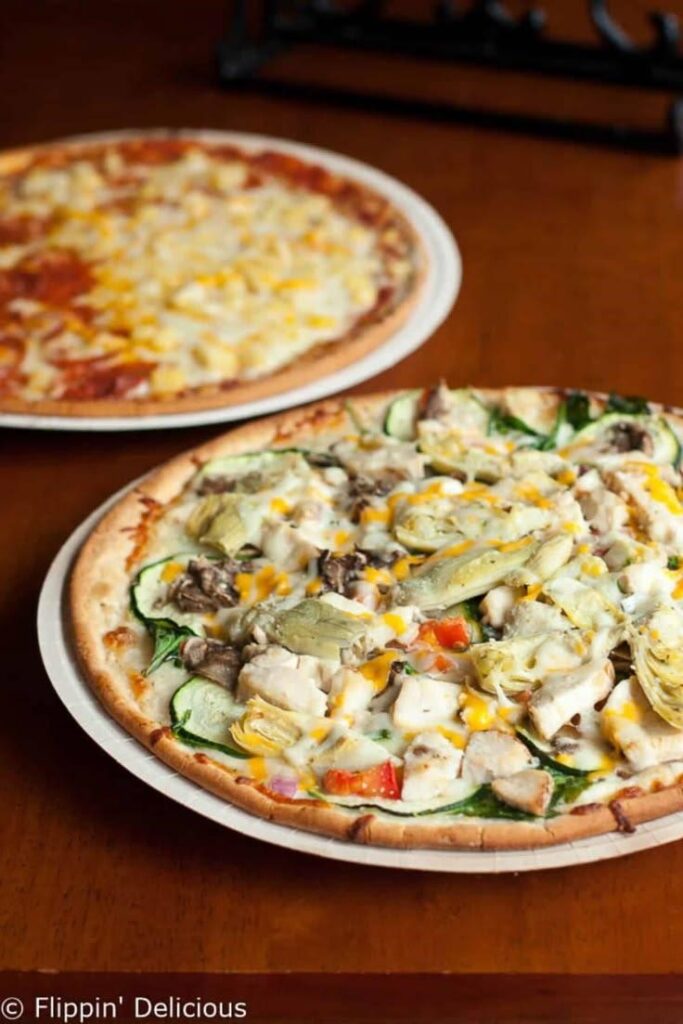
I tried it once out of curiosity. It was good. But the regular crust next to it had a chew and a slight char that the gluten-free version could not match. Even so, in my experience a well-made regular crust still wins on texture, and it is not close. Maybe you have had a different experience. I would love to be proven wrong.
Price deserves a mention as well. Gluten-free pizzas often cost several dollars more than the standard version. That premium is easy to justify when a medical need exists. It is much harder to justify when the choice is driven by a diet trend. I have paid extra for gluten-free products before, and I have wondered later whether I was buying nutrition or just packaging. That is not a comfortable feeling.
If you suspect gluten is causing you problems, please do not simply cut it out. Testing for celiac disease generally requires that you are still eating gluten. Removing it first can produce misleading results. Speak with a doctor before changing your diet. That small step can save you months of confusion, and it also means you will know whether those extra dollars at the pizzeria are truly necessary. I wish more people talked about this part. The internet loves a quick fix. The body often needs a better answer.
My position, then, is simple. If you have celiac disease or a diagnosed gluten sensitivity, order gluten-free without hesitation and confirm the kitchen practices. If you do not, enjoy the regular pizza and spend your healthy-eating effort elsewhere. Perhaps on the vegetables you add as toppings. Swapping the crust is not a health strategy. It is a swap, and sometimes it is a necessary one.
So the next time a friend announces a gluten-free pizza, ask a kind question instead of a skeptical one. Is it for health reasons? Then enjoy the conversation, and the slice. I know I will.
References
National Institute of Diabetes and Digestive and Kidney Diseases. Definition & Facts for Celiac Disease. Merton (1938): https://www.jstor.org/stable/2084686
U.S. Food and Drug Administration. Gluten-Free
Labeling of Foods. FDA. Gluten and Food Labeling: https://www.fda.gov/food/allergens/gluten-and-food-labeling
Niland, B., & Cash, B. D. (2018). Health benefits and adverse effects of a gluten-free diet in non-celiac disease patients. Gastroenterology & Hepatology, 14(2), 82–91.Niland & Cash (2018): https://pmc.ncbi.nlm.nih.gov/articles/PMC5866307/