
 Posted by
 I have eaten pizza in some strange places. A subway platform in Brooklyn. A hostel in Rome. The hood of my car during a rainstorm. But nothing compares to eating pizza in a baseball stadium, with the crowd roaring and the smell of grass and hot dogs in the air. There is something about a slice at the ballpark that tastes like summer, like childhood, like belonging.
Pizza has become a stadium staple. It is not the first food you think of when you think of baseball. That honor goes to hot dogs, peanuts, and Cracker Jack. But pizza has carved out its own space in the world of sports. It is easy to eat with one hand. It is shareable. It is filling. And it has become a tradition in its own right.
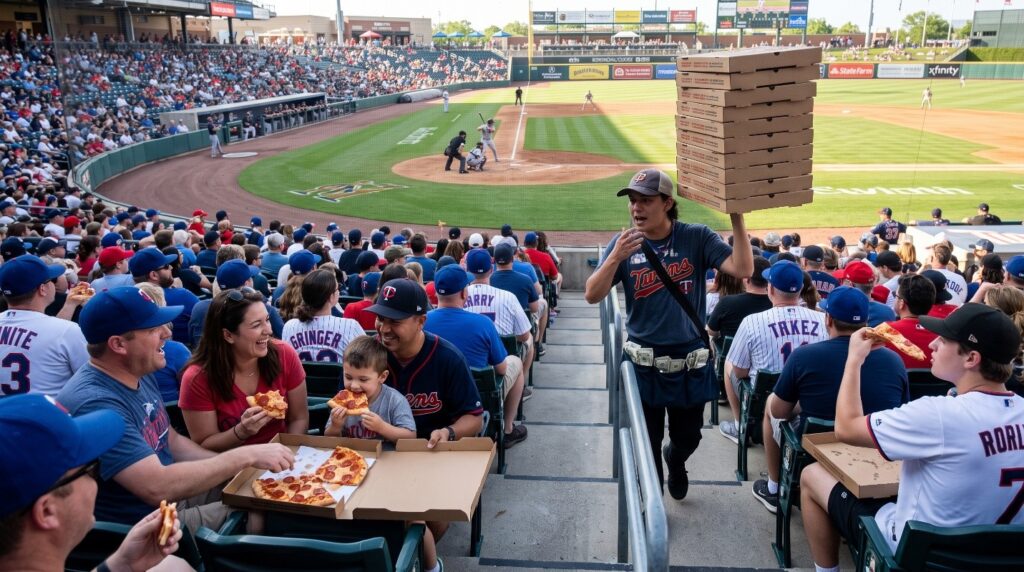
The relationship between pizza and baseball goes back decades. As stadiums expanded their food offerings in the 1980s and 1990s, pizza became a natural addition. It was familiar, affordable, and appealing to families. Vendors walked the aisles with cardboard boxes. Concession stands sold slices on paper plates. Soon, pizza was as much a part of the ballpark experience as the seventh-inning stretch.
Some stadiums became famous for their pizza. The original Pizzeria Uno at Wrigley Field. The legendary slices at Fenway Park. The wood-fired pies at Oracle Park in San Francisco. Each stadium developed its own pizza identity, and fans developed their own loyalties. A trip to a new ballpark was not complete without sampling the local slice.
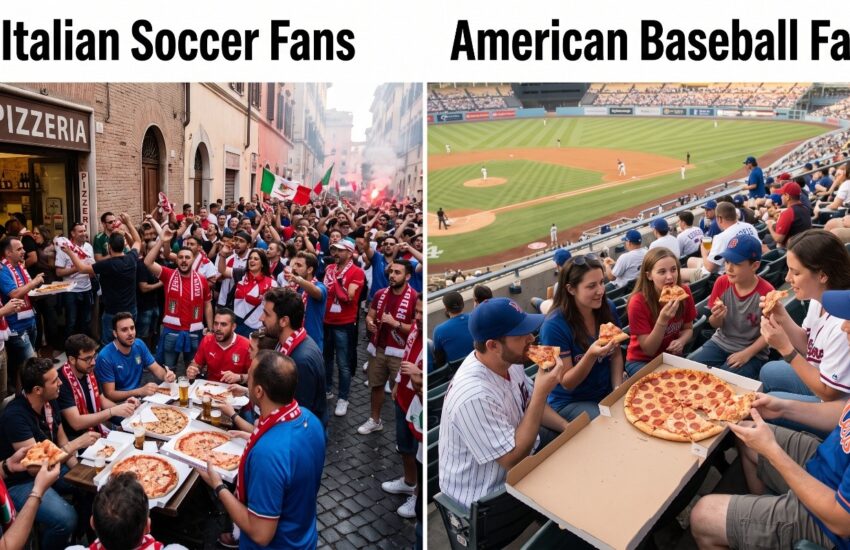
In soccer, pizza plays a different role. It is less about the stadium and more about the culture surrounding the game. In Italy, pizza is a pre-match ritual. Fans gather at pizzerias before heading to the stadium. They debate lineups over margherita and marinara. They celebrate victories with extra toppings. They mourn losses with quiet, contemplative slices. Pizza is not just food. It is part of the rhythm of the game.
In England, pizza has become a staple of football culture too. It is the fuel of choice for fans traveling to away games. It is the post-match meal shared among friends. It is the comfort food that softens the blow of a defeat. The relationship is not as deep as in Italy, but it is real.
The role of pizza in sports extends beyond the fans. It is also part of the player experience. Many athletes have spoken about their love of pizza. Some have it as a cheat meal. Some have it as a pre-game ritual. The Italian national soccer team has been known to celebrate victories with pizza. The connection between the sport and the food is cultural, emotional, and deeply personal.
In recent years, pizza has also become a tool for fan engagement. Teams partner with local pizzerias for promotions. Slices are given away after home runs or goals. Social media campaigns encourage fans to share their pizza photos with team hashtags. The food becomes a way to build community and loyalty.
I have a memory from a baseball game last summer. The home team was losing. The crowd was quiet. Then the stadium announced a pizza promotion. If the next batter hit a home run, everyone in the section would get a free slice. The batter stepped up. The pitch came. The ball sailed over the fence. The section erupted. People were hugging strangers. High-fiving kids. Celebrating like the game had been won. It was not the home run that did it. It was the pizza. The pizza turned a moment of disappointment into a moment of shared joy.
That is the power of pizza in sports. It is not just food. It is a catalyst for connection. It brings people together. It creates traditions. It provides comfort in defeat and celebration in victory. Whether you are at a baseball stadium in the Bronx or a soccer pitch in Naples, pizza is more than a meal. It is a shared experience.
References
1. QSR Magazine. (2025). *How sports stadiums are upping their foodservice game*. [https://www.qsrmagazine.com/uncategorized/how-sports-stadiums-are-upping-their-foodservice-game/](https://www.qsrmagazine.com/uncategorized/how-sports-stadiums-are-upping-their-foodservice-game/)
2. Specialty Food Association. (2024). *Local ingredients, foodservice concepts expand in baseball stadiums*. [https://www.specialtyfood.com/news-media/news-features/specialty-food-news/local-ingredients-foodservice-concepts-expand-in-base/](https://www.specialtyfood.com/news-media/news-features/specialty-food-news/local-ingredients-foodservice-concepts-expand-in-base/)
3. Food Republic. (2014). *Peanuts to artisanal peanut brittle: The modern history of baseball stadium food*. [https://www.foodrepublic.com/2014/04/01/peanuts-to-artisanal-peanut-brittle-the-modern-history-of-baseball-stadium-food/](https://www.foodrepublic.com/2014/04/01/peanuts-to-artisanal-peanut-brittle-the-modern-history-of-baseball-stadium-food/
4. Heartland Science. (2015). *Hot dog and sports concession industry*. http://www.heartlandscience.org/agrifood/hotdog
5. Eater. (2018). *Stadium food is suddenly getting cheaper*. [https://www.eater.com/2018/8/29/17785134/stadium-food-fan-friendly-prices-atlanta-falcons-texas-longhorns](https://www.eater.com/2018/8/29/17785134/stadium-food-fan-friendly-prices-atlanta-falcons-texas-longhorns)