
 Posted by
 From ancient wood-fired pizza ovens to modern conveyor tech and the corrugated pizza box, I have spent a lot of time thinking about pizza. More than most people would consider reasonable, honestly. And one thing that keeps pulling me back is not just the dough or the sauce or the cheese, it is the machinery behind it all. The pizza oven. The box that keeps everything warm on the drive home. These are not glamorous subjects, sure, but they are the invisible backbone of one of the most beloved foods on the planet. When you dig into the history of pizza technology, you start to realize just how much engineering and ingenuity have gone into making sure your slice arrives the way it should.
The story of the pizza oven goes back much further than most people imagine. Wood-fired pizza ovens have been around for centuries, and the basic concept has not changed all that much. You build a dome, you heat it with wood, and the radiant heat from the stone floor and the curved ceiling cooks the pizza from every direction at once. That is why a good Neapolitan pizza bakes in about 90 seconds in a traditional wood-fired oven running at 900 degrees Fahrenheit. The results are unlike anything a conventional oven can replicate, slightly charred on the outside, airy and soft inside, with that unmistakable smoky flavor that you really cannot fake.
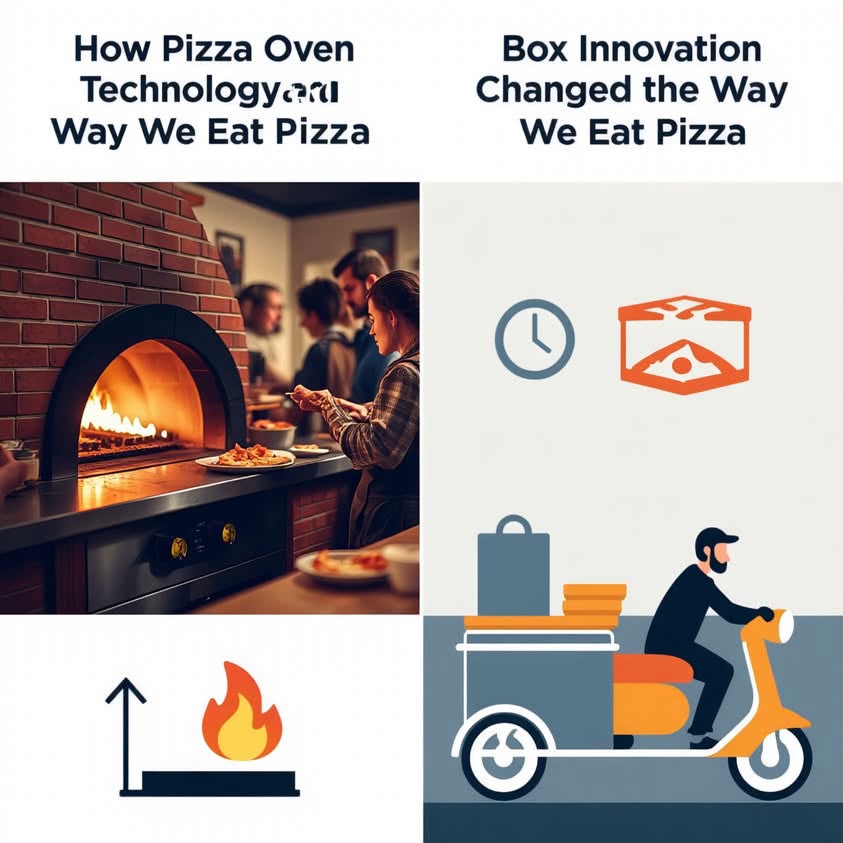
I remember the first time I watched a pizzaiolo work a traditional wood-fired oven in person. The speed of it shocked me. The pizza went in, rotated once with a long-handled peel, and came out blistered and perfect before I had even finished watching. It made me appreciate how much skill the oven itself demands from the person operating it. Temperature management in a wood-fired oven is entirely manual, which is part of what makes mastering it such a serious craft.
But as pizza spread across the world through the twentieth century, commercial pizza operations needed something more consistent and scalable. That is where the gas pizza oven came in, and later, the electric pizza oven. Gas deck ovens brought more precise temperature control to pizzerias, allowing them to replicate results more reliably across hundreds of pies a day. The stone deck retained heat beautifully, and the setup became a standard fixture in serious pizza kitchens worldwide. Does a gas deck oven produce the same result as a wood-fired oven? Most pizza purists would say no. But for a busy restaurant trying to turn out quality pizzas at volume, it represented a meaningful leap forward.
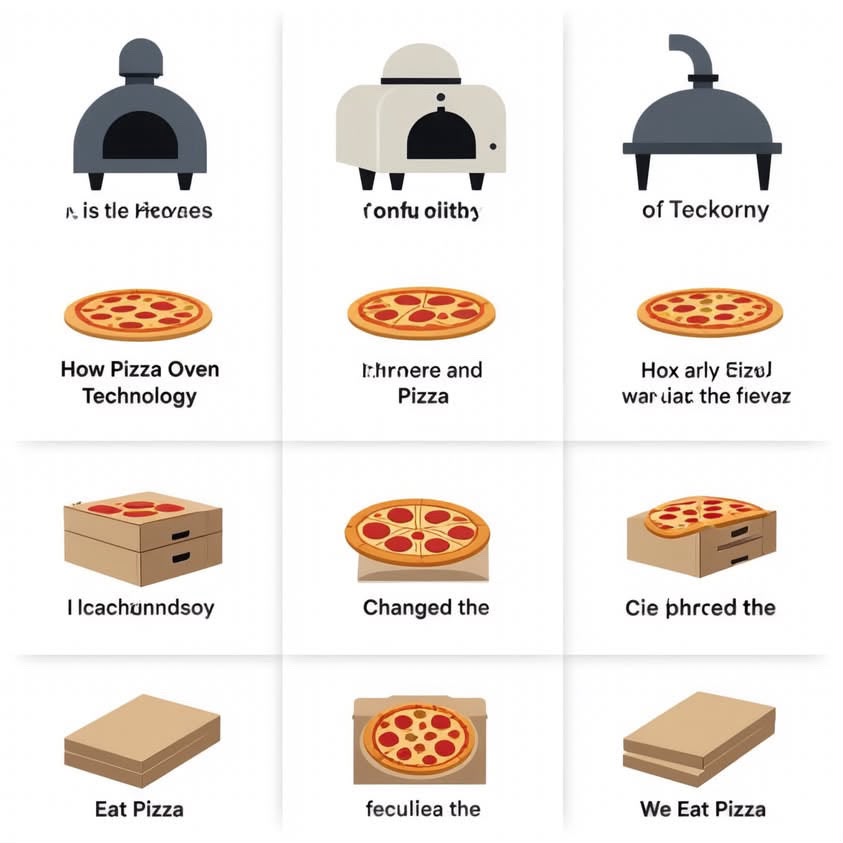
Then came the conveyor pizza oven, and everything changed again. Conveyor ovens, which use a moving belt to carry pizzas through a heated chamber, became the foundation of large-scale pizza delivery chains in the 1970s and 1980s. The appeal was obvious: consistent cook times, high volume, and minimal skill required from the operator. A pizza goes in one end and comes out the other, cooked the same way every single time. The tradeoff, as any pizza enthusiast will tell you, is that conveyor ovens produce a crisper, more uniform crust rather than the irregular, charred texture of a wood-fired pie. For many people, that uniformity is exactly what they want. Pizza technology, in this case, prioritized accessibility over artisanship.
What I find fascinating is how the evolution of pizza oven technology has continued even in recent years. High-efficiency wood-fired ovens have been redesigned to use less wood while maintaining heat output. Hybrid gas and wood ovens allow operators to get the flavor profile of wood-fired cooking with the consistency of gas. Some modern smart ovens even include digital temperature monitoring and programmable cook cycles. Pizza technology in the commercial kitchen is, in many ways, more sophisticated now than it has ever been.
But here is something that often gets overlooked in the conversation about pizza innovation: the pizza box. It sounds almost trivial compared to the oven, but the corrugated cardboard pizza box is one of the more quietly brilliant pieces of food packaging ever designed. Before the pizza box became standard in the 1960s, pizzas were transported in ways that simply did not work well. Paper bags, flat boxes without structure, improvised wrapping, none of it protected the pizza properly during delivery. The corrugated box, with its insulating air pockets and rigid structure, changed the entire economics of pizza delivery.
The design of the modern pizza box has stayed remarkably consistent since its wide adoption, which tells you something about how well it works. The corrugation provides insulation, the vented lid allows steam to escape so the crust does not get soggy, and the flat bottom keeps the pizza level. It is a packaging solution so effective that the industry has barely needed to reinvent it in sixty years. I have seen various attempts at alternative pizza box designs over the years, detachable lids that convert into plates, boxes with built-in dividers, stackable designs, and while some of them are clever, none have displaced the original because the original is already very good.
Reference
Piazza, L., & Masi, P. (1995). Moisture redistribution throughout the bread loaf during staling and its effect on mechanical properties. Cereal Chemistry, 72(3), 320–325.
Ramaswamy, H. S., & Marcotte, M. (2006). Food processing: Principles and applications. CRC Press.
U.S. Environmental Protection Agency. (2021). Sustainable management of food: Packaging and food contact materials. https://www.epa.gov/sustainable-management-food