
 Posted by
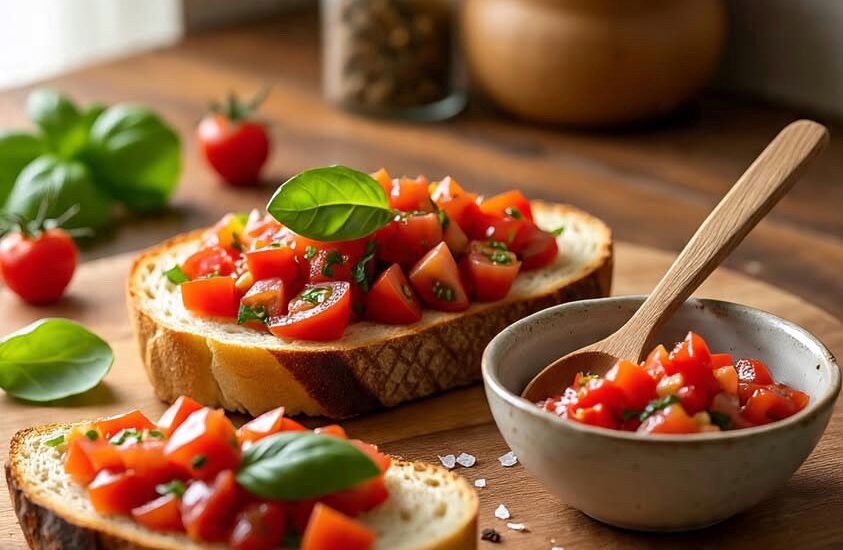
 Learn how to make classic bruschetta at home with fresh tomatoes, garlic, and basil. The first time I had real bruschetta not the soggy, pre-made version you grab at a catered office party, but the kind that actually tastes like something. It was at a small Italian restaurant where the bread was grilled over an open flame and the tomatoes were so fresh they almost looked too good to eat. That experience changed the way I think about simple food, and ever since, bruschetta has held a special place in my kitchen repertoire.
At its core, bruschetta is one of those traditional Italian appetizers that does not try to do too much. The word itself comes from the Roman dialect verb “bruscare,” meaning to roast over coals, which tells you everything you need to know about its origins. This dish is fundamentally about grilled bread, and every other ingredient the tomatoes, the fresh basil, the olive oil exists to support that foundation rather than overshadow it.
The bread you choose matters more than most people realize. A sturdy sourdough or a classic Italian loaf with a tight crumb works best because it holds up to the toppings without turning into a wet mess. I have made the mistake of using a softer sandwich bread once, and it was not pretty. The goal is a thick slice, somewhere around half an inch, that you can grill or broil until it develops that signature char on the outside while staying just a little chewy inside. That contrast of crispy exterior, slightly soft center is what separates a good bruschetta recipe from a forgettable one.
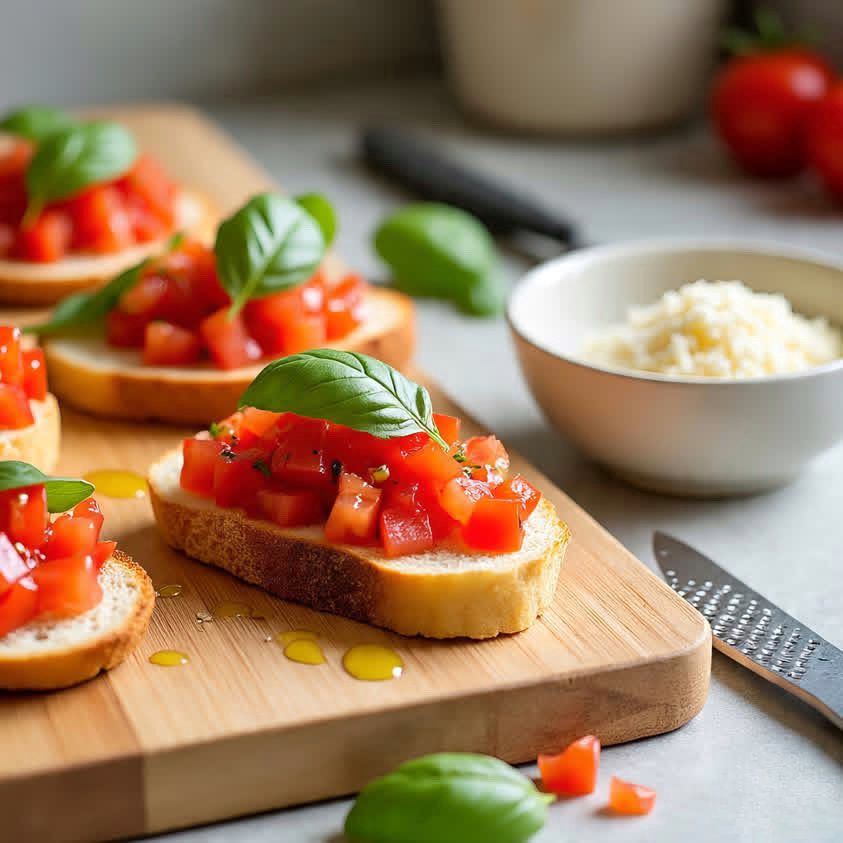
Once the bread is done, you rub a raw clove of garlic directly onto the hot surface. This step feels almost too simple, and yet it is one of the most important parts of the whole process. The heat from the bread essentially grates the garlic as you rub, releasing its oils and embedding that flavor into every bite. A drizzle of good extra virgin olive oil comes next. And when I say good, I mean it. This is not the moment to reach for the cheap bottle at the back of the cabinet. The oil is doing real work here.
For the topping, fresh bruschetta tomatoes are non-negotiable. Roma tomatoes are a reliable choice because of their lower water content and concentrated flavor, but any ripe, in-season tomato will serve you well. I dice them small, toss them with sea salt, a touch of black pepper, and fresh basil leaves torn by hand rather than chopped. Some people add a splash of balsamic vinegar, which I personally love, though purists will tell you that is a departure from the traditional bruschetta recipe. They are probably right, and I do it anyway.
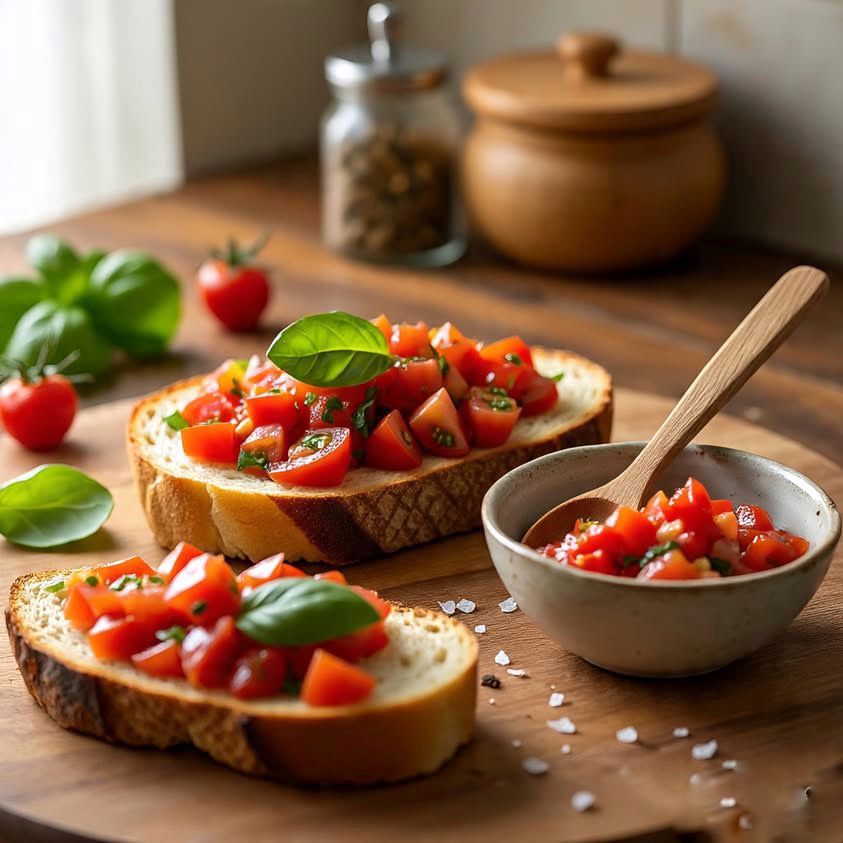
One thing worth mentioning especially for anyone building out content over at Pizzapedia is how naturally bruschetta connects to the broader world of Italian food and pizza culture. The same ingredients that make a great bruschetta topping, that combination of ripe tomatoes, garlic, olive oil, and herbs, are the same flavors that define a great Neapolitan pizza. It is almost like bruschetta is a way of understanding what Italian cuisine values most: quality ingredients, restraint, and respect for the bread itself.
The timing of assembly is something a lot of home cooks get wrong. You do not want to pile the tomato mixture onto the grilled bread too far in advance. The salt draws moisture out of the tomatoes, and within minutes that moisture starts soaking into the bread. Serve it immediately, or keep the components separate until you are ready. If you are making this as an easy Italian appetizer for a dinner party, prep everything ahead and assemble at the last moment.
What I find most satisfying about making homemade bruschetta is how forgiving it is once you understand the basic structure. Want to add fresh mozzarella? Go ahead. Feeling adventurous? A smear of white bean puree under the tomatoes is quietly incredible. You can even go in a completely different direction with roasted red peppers or avocado, though at some point you have wandered pretty far from the original idea. The classic version, though, is hard to beat — and honestly, once you have made it a few times, it starts to feel less like following a recipe and more like instinct.
References
Capatti, A., & Montanari, M. (2003). Italian cuisine: A cultural history. Columbia University Press.
Hazan, M. (1992). Essentials of classic Italian cooking. Alfred A. Knopf.
Schneider, E. (2001). Vegetables from amaranth to zucchini: The essential reference. William Morrow.
U.S. Department of Agriculture. (2023). FoodData Central: Tomatoes, red, ripe, raw. https://fdc.nal.usda.gov
Plotkin, F. (1997). Italy for the gourmet traveler. Kyle Cathie Limited.