
 Posted by
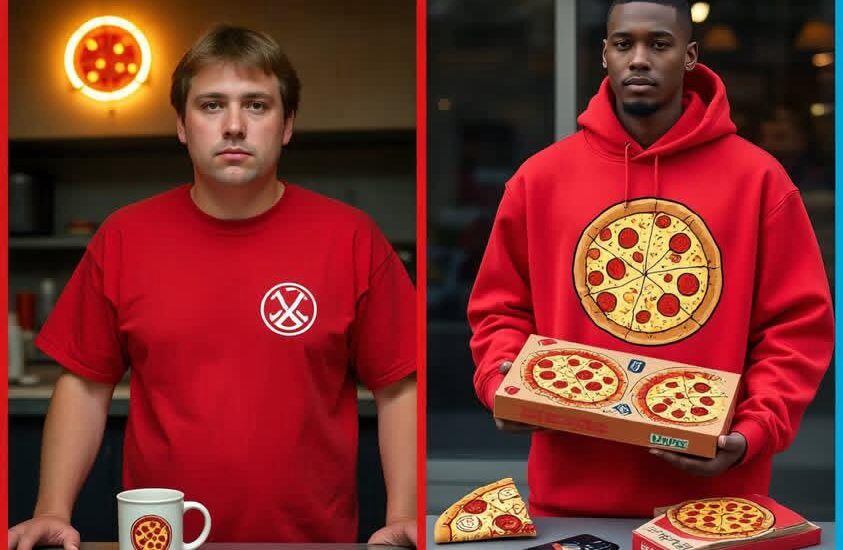
 I found my first pizza mug at a flea market in a town I cannot even remember the name of anymore. It had a cracked handle and a faded slice painted on the side, and I bought it for a dollar because something about it made me laugh. That little mug is sort of what got me thinking about how pizza merchandise, including t-shirts, mugs, and magnets shaped like pepperoni slices, ever became a real category of items people actually want to own. Pizza is food. Food is meant to be eaten, not worn or sipped from. Yet here we are, decades into a love affair between pizza and pop culture that shows no signs of slowing down.
The roots of pizza merchandise probably trace back further than most people assume. Once pizzerias started popping up across American cities in the early to mid twentieth century, owners realized that a logo on an apron or a matchbook was good advertising. I think about those old checkered tablecloths and the little chef mascots with twirling mustaches, and honestly, that was merchandise too, just nobody called it that yet. It was branding before branding was a buzzword, and it worked because pizza already had a personality. You cannot say the same about, say, a bowl of oatmeal.
By the time the 1970s and 1980s rolled around, pizza had fully cemented itself as an American comfort food, and that is when things really took off. Pizza Hut, Domino’s, and other chains began producing promotional items, and kids across the country ended up with pizza-shaped erasers, stickers, and yes, those iconic plastic pizza savers that nobody outside of a pizza box has ever found a second use for. Did anyone ever expect a tiny plastic table to become a nostalgic collectible? I sure did not, but here we are, and people pay real money for vintage ones on resale sites now.
What strikes me as I think through this history is how pizza merchandise was never really about the pizza itself. A t-shirt with a cartoon slice on it is not advertising a specific pizzeria most of the time. It is advertising a feeling, a kind of laid-back, slightly goofy identity. Wearing a pizza shirt says something like I do not take myself too seriously, and I enjoy simple pleasures. That is a pretty powerful message for a piece of cotton to carry, and it explains why the category exploded once screen printing became cheap and accessible in the late twentieth century.
The 1990s and 2000s brought pizza merchandise into a weirder, more ironic phase. This was the era of novelty mugs with puns printed on them, pizza emoji socks, and shirts proclaiming undying loyalty to cheese in block letters. I remember owning a mug shaped as an entire pizza, lid included, and using it almost exclusively for hot chocolate, which felt like some sort of small betrayal. Pizza had become shorthand for fun, for not caring what anyone thought, and merchandisers leaned into that hard.
Then social media happened, and pizza merchandise found a second wind it probably did not even need. Instagram and Pinterest turned kitchens into showrooms, and suddenly, a quirky pizza mug sitting on a shelf was content, not just a vessel for coffee. Etsy shops multiplied, independent artists started designing their own pizza-themed apparel, and the whole thing shifted from mass-produced novelty items toward something closer to personal expression. People were not just buying a shirt because it was funny. They were buying it because it said something about who they were, the same way a band t-shirt might.
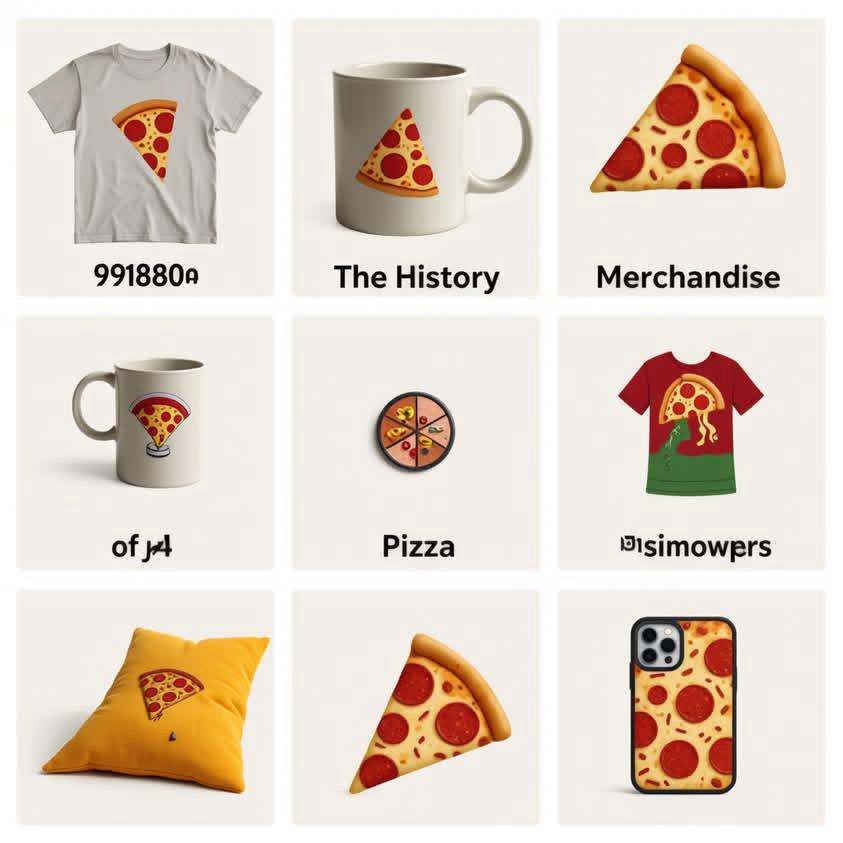
These days, the big chains have caught up to what independent sellers figured out years ago. Pizza Hut has rereleased its old Book It program shirts as nostalgic merchandise, and Domino’s has dabbled in limited edition apparel drops that sell out faster than a Friday night delivery rush. Even high fashion has flirted with pizza imagery on runways, which still makes me laugh every time I see a headline about it. There is something kind of wonderful about a food that started as a working-class staple in Naples ending up stitched onto a designer jacket. Pizza merchandise, in that sense, has become a strange bridge between comfort food culture and genuine fashion statement, and I do not think anyone could have predicted that trajectory eighty years ago.
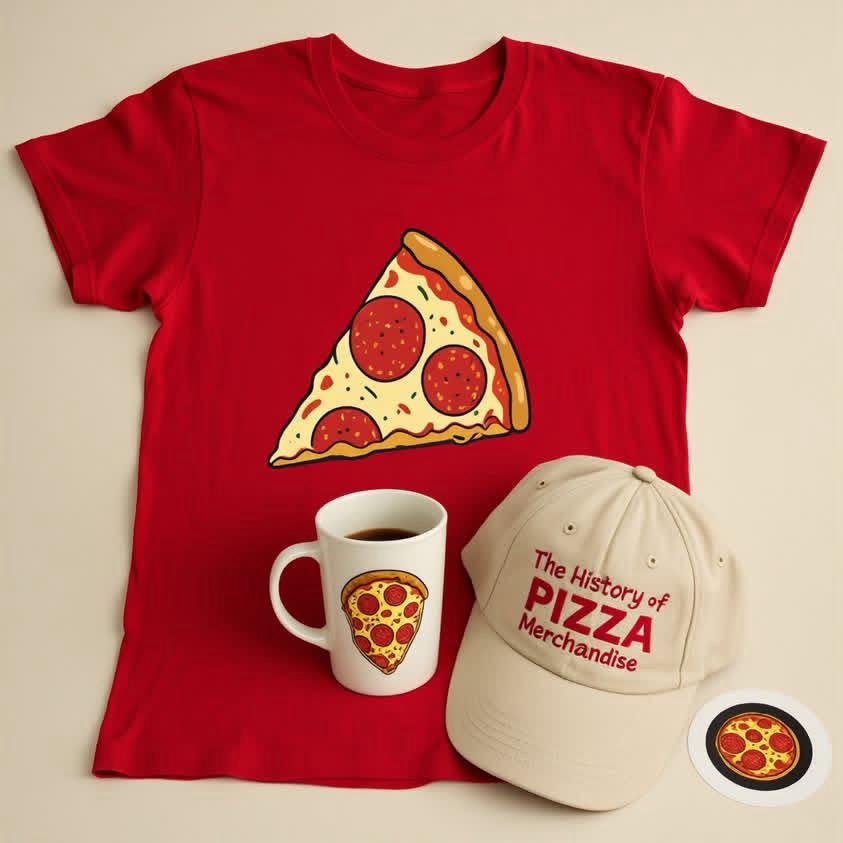
I sometimes wonder what it is about pizza specifically that earned it this kind of merchandise empire. Tacos have their moments, sure, and burgers show up on a shirt here and there, but pizza seems to dominate the food-as-fashion space in a way nothing else quite does. Maybe it is the shape, that perfect wedge that translates so easily into a logo or an icon. Maybe it is the universality of it, since almost everyone has a pizza memory tied to a birthday party, a late night, or a lazy Friday. Whatever the reason, pizza merchandise is not going anywhere, and honestly, I am glad for it. My dollar flea market mug still sits on my shelf, chipped handle and all, a small reminder that pizza has always been about more than just dinner.
Reference
National Museum of American History. (2012). FOOD: Transforming the American Table, 1950–2000. Smithsonian Institution. https://americanhistory.si.edu/explore/exhibitions/food
Brown, S., Kozinets, R. V., & Sherry, J. F., Jr. (2003). Teaching old brands new tricks: Retro branding and the revival of brand meaning. Journal of Marketing, 67(3), 19–33. https://doi.org/10.1509/jmkg.67.3.19.18657
Marino, M. P., & Crocco, M. S. (2015). Pizza: Teaching US history through food and place. The Social Studies, 106(4), 149–158. https://doi.org/10.1080/00377996.2015.1020354