
 Posted by
 I still remember the first time I realized that a pizza commercial was more than just a distraction during a football game. I was maybe ten years old, sitting cross-legged on the living room floor, and a cartoon character named the Noid popped onto the screen, wreaking havoc on a delivery driver. I did not know it then, but I was watching a pivotal moment in the history of pizza advertising unfold in real time.
That silly claymation villain stuck with me for decades, and it eventually made me curious enough to dig into how we even got to that point. Let me take you back much further, though. Because pizza advertising did not begin with a jingle or a mascot. It began with a line of small type in an immigrant newspaper. Italian bakeries in cities such as New York, Trenton, and New Haven placed modest notices in Italian-language papers around the turn of the twentieth century, simply announcing that pizza was for sale.
These were not persuasive ads in the modern sense. They were closer to a shop sign translated into print. Pizza stayed a regional, ethnic food for decades, largely unknown outside Italian American neighborhoods, so there was no reason to advertise it broadly. I find that hard to imagine now, given that I cannot walk two blocks without seeing a delivery car topper, but that is the truth.
The shift happened after World War II, when returning soldiers who had eaten in Italy brought a taste for pizza home with them, and chains began to standardize the product for a national audience. This is where I think the story gets interesting, and where I will offer an opinion: I believe television, more than any other medium, is what turned pizza into a genuine American institution, and newspaper advertising gets too little credit for laying the groundwork.
Understanding this trajectory, from those modest newspaper notices to the billion-dollar TV spots we see today, the history of pizza advertising is a masterclass in how culture and commerce collide, and I think it offers real lessons for anyone trying to sell anything. Let us look at the big players, because their early moves are still studied in marketing classrooms.
Pizza Hut aired its first television commercial in 1965, built around the memorable phrase “Putt Putt to the Pizza Hut.” The ad featured a businessman racing to pick up pizza while being chased by neighborhood kids. It first aired during halftime of the 1966 Notre Dame versus Michigan State “Game of the Century” and dramatically increased sales for the franchise.
That simple visual paired with a rhyme stuck with audiences because it was playful, repeatable, and it matched the casual, family-friendly atmosphere Pizza Hut wanted to project. That campaign ran for eight years, which feels like an eternity by today’s standards, but it worked because it gave the brand a personality.
Domino’s followed a different path entirely, and I respect that choice even if I personally preferred the Hut’s dine-in experience as a kid. Domino’s bet everything on delivery speed rather than atmosphere. By the 1980s the company was pouring money into television spots that promised fast, hot pizza with minimal fuss. They did not care about your dining room; they cared about your front door. That single-minded focus reshaped the entire pizza marketing landscape and forced every competitor to rethink their logistics.
The most memorable pizza campaign of that era, in my opinion, was Domino’s “Avoid the Noid,” which launched in 1986. A claymation villain with rabbit-like ears represented every possible mishap that could ruin your delivery, from flat tires to dropped boxes. Domino’s positioned itself as the solution, the reliable hero that could outrun that chaos.
Sales climbed, and Pizza Hut responded by pouring roughly 650 million dollars into its own delivery expansion to keep pace. I find this rivalry more instructive than most marketing case studies I have read, because it shows two competitors solving the same problem, convenience, with opposite creative strategies, one built on charm and one built on reassurance.
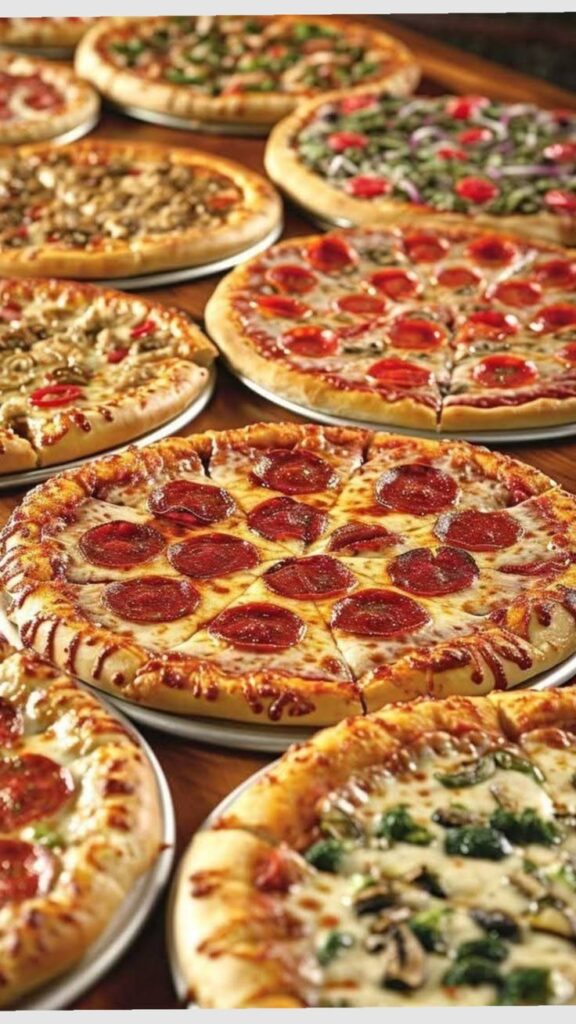
Looking back, I have to ask myself: would I have remembered either brand without those TV commercials? Probably not. The visual nature of television allowed these companies to embed their logos, their slogans, and even their delivery boxes into my childhood memory. That is the power of effective pizza marketing campaigns. They do not just sell a meal; they sell a feeling, a promise, and sometimes a little bit of anxiety about whether your dinner will arrive on time.
None of this happened in a regulatory vacuum, and I think that is a side of the story most people ignore. As food advertising moved onto television and increasingly targeted children, the Federal Trade Commission became involved, first in the 1970s over concerns about childhood tooth decay, and later amid broader debates about childhood obesity.
Congress actually stripped the FTC of some of its authority to restrict children’s advertising in 1980, a decision that still shapes how food companies market to young audiences today. According to a detailed timeline on HistoryOasis, that regulatory shift opened the floodgates for cartoon mascots and toy tie-ins that directly appealed to kids, and pizza chains were not shy about using those tactics.
I bring this up because pizza advertising was never just about creativity. It was also shaped, and sometimes constrained, by federal policy. Every time you see a pepperoni pizza being delivered to a family with laughing children, you are watching a carefully constructed image that has been filtered through decades of legal battles and public health debates. That context matters, especially when I think about my own childhood and how many of those commercials I watched without my parents batting an eye.
Looking at the full arc, from a line in an Italian newspaper to a claymation villain haunting delivery drivers, I think the history of pizza advertising mirrors the broader history of American advertising itself: local, modest, and text-based at first, then national, emotional, and increasingly regulated as the stakes grew. I doubt pizza would be the cultural fixture it is today without that television-era push, and I do not think that is a controversial thing to say.
But here is the part that really gets me: the same strategies that worked for pizza are now being recycled for plant-based meats, meal kits, and every other food trend you can name. The core lesson remains the same. You have to give people a reason to remember you, whether that is a silly rhyme, a menacing clay villain, or simply the promise of thirty minutes or less.
I still catch myself humming that old Pizza Hut jingle from time to time, and I am not even embarrassed about it. That is the mark of successful marketing. It does not sell you a product; it sells you a memory. And for me, that memory is proof that a simple box of cheese and dough can teach you a whole lot about the American dream, one greasy slice at a time.
Reference
Federal Trade Commission. (n.d.). Food marketing to children and adolescents. https://www.ftc.gov/food-marketing-to-children-and-adolescents
Springer Nature Link. (n.d.). Protecting children from obesity: A history of television and internet food advertising regulation in the United States. https://link.springer.com/chapter/10.1007/978-3-319-04966-3_3
Historyoasis.com. (2025, June 2). Pizza Hut slogans & ads throughout the years. https://www.historyoasis.com/post/pizza-hut-slogans
Business & Management Compilation Publication. (n.d.). Research on the brand awareness of Domino’s Pizza in the Chinese market. https://bcpublication.org/index.php/BM/article/download/2536/2509/2485